Stablecoins reshape global payments, pushing illicit and capital-flight flows away from Bitcoin

Authored On
Modified
Stablecoins increasingly replace parts of real-world payment functions
Illicit financial flows continue shifting away from Bitcoin
Governments tighten rules as the race for monetary control accelerates

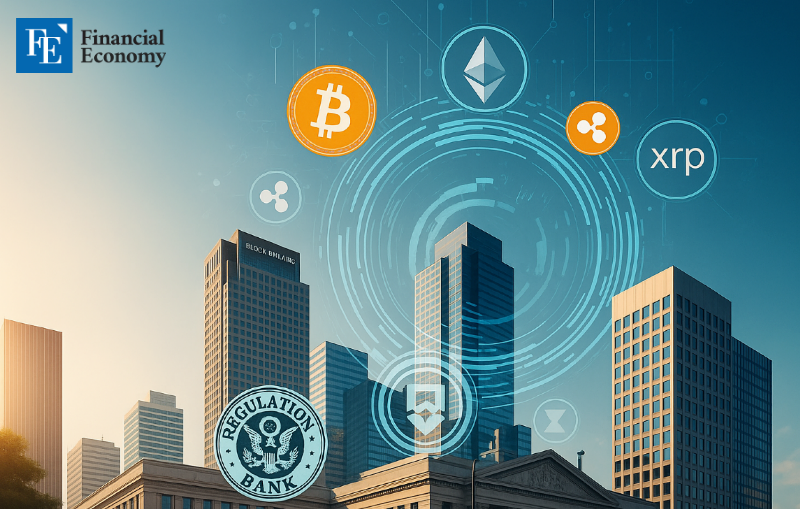
As stablecoins rise to the center of the global payments system, Bitcoin’s limitations as a scalable settlement asset have become increasingly apparent. New data showing illicit flows shifting from Bitcoin to stablecoins has added weight to the “end-of-cycle” debate, and major jurisdictions are moving quickly to establish regulatory frameworks aimed at reducing risks. These efforts reflect a broader shift toward the idea that, once sufficient stability is ensured, settlement and clearing mechanisms could structurally migrate to stablecoin rails.
Growth in real-world use across trade settlement and payments
According to crypto media outlet TronWeekly on the 24th, Bitcoin is increasingly perceived as unsuitable for routine payments. Citing Robbie Mitchnick, head of digital assets at BlackRock, the outlet noted that some large investors hold Bitcoin primarily for its long-term store-of-value properties. Mitchnick argued that Bitcoin’s future as a payments instrument is more akin to an “out-of-the-money option value” than a near-term practical utility.
This assessment reinforces the idea that Bitcoin, once the symbol of decentralized payment innovation, is now viewed mainly as an investment asset. Mitchnick added that Bitcoin would require significant technological improvements before its payment activity can meaningfully scale. He noted that Bitcoin would need a reliably performing auxiliary layer—such as the Lightning Network—to provide the speed and low-cost transactions needed to replace existing financial infrastructure, while emphasizing that the long-term viability of such solutions remains uncertain.
Stablecoins, by contrast, are seen as a payment technology already in active use. Mitchnick said stablecoins offer a clear product-market fit because they allow fast, low-friction value transfers and integrate naturally into real-world payment needs. Because stablecoins are pegged to traditional fiat currencies such as the U.S. dollar, they avoid the price volatility that makes Bitcoin difficult to use as a settlement asset.
The Korea International Trade Association’s Institute for International Trade and Commerce Research offered a similar assessment. In a recent report, it noted that using stablecoins for trade settlement can cut international remittance fees from an average of 6 percent to around 1 percent. The report argued that such efficiencies will accelerate digitalization and automation across trade finance, shift banks’ roles from payment guarantors to providers of risk-management and compliance services, and drive a major transformation in global settlement. As stablecoin potential becomes increasingly evident, Bitcoin’s competitiveness in payments appears limited to narrow use cases.
Corrections to bullish Bitcoin forecasts gain momentum
The “Bitcoin end-cycle” narrative has intensified with data showing illicit funds now primarily move through stablecoins rather than Bitcoin. Hyun Song Shin, economic adviser and head of research at the Bank for International Settlements, said at the World Congress of Economists in Seoul in August that 63 percent of crypto-related criminal activity now occurs via stablecoins. He warned that stablecoins could become a major channel for illicit flows in the international financial system. Their technology enables seamless cross-border movement, and dollar-linked stablecoins like USDT and USDC hold a 98.9 percent market share—surpassing Bitcoin as a conduit for illegal capital.
Shin also cautioned that non-dollar stablecoins could become pathways for capital flight. Because they can be used to bypass foreign-exchange controls, stablecoins increasingly serve the role once attributed to Bitcoin as a vehicle for evading capital restrictions. This shift, backed by empirical data rather than sentiment alone, strengthens the view that Bitcoin’s functional role in the market is contracting.
Market voices also illustrate the weakening of Bitcoin’s position. Cathie Wood, CEO of Ark Investment Management, lowered her 2030 Bitcoin price target from 1.5 million dollars to 1.2 million dollars, citing the rapid rise of stablecoins. She noted that USDT and USDC have already reached a combined supply of 260 billion dollars as they gain traction as payment and savings instruments in emerging markets. Wood argued that while Bitcoin’s payment functionality has not scaled as expected, stablecoins have expanded their real-world demand base.
Financial-system migration expectations gain strength
Regulators worldwide are now working to eliminate risks and establish legal frameworks as stablecoins increasingly replace parts of traditional fiat-money functionality. The United States took the lead with the Geniuses Act, which requires issuers to hold 100 percent reserves and undergo accounting-firm verification. As stablecoins’ share of remittances and commercial payments grows, the U.S. aims to raise their stability to the level of regulated financial instruments.
Since the Geniuses Act, U.S. institutions have accelerated efforts to expand financial infrastructure around stablecoins. Circle is strengthening reserve transparency through its planned New York Stock Exchange listing and major capital raises. Visa has implemented a USDC-based settlement system to overhaul cross-border settlement speed and cost. PayPal launched its own stablecoin, PYUSD, for integration into its payment network, while Stripe introduced stablecoin-based account services in 100 countries to broaden its role in digital payments.
Elsewhere, policymakers are also concluding that delaying stablecoin regulation is no longer an option. Hong Kong requires foreign-issued stablecoins to register with local authorities before circulating domestically. The United Arab Emirates permits foreign-currency-linked stablecoins only for crypto trading, not for payment settlement. In Korea, active debate over a won-denominated stablecoin has led to the introduction of bills on digital-asset fundamentals, value-stable digital assets, and payment innovation.
Taken together, these developments reflect a growing expectation that, once stability thresholds are met, stablecoins could rapidly expand into settlement, clearing, and B2B payment networks. Regulatory frameworks signal that major jurisdictions now acknowledge stablecoins as potential pillars of future payments infrastructure. The trend also shows that issues of financial stability and monetary sovereignty are now central to regulatory efforts—underscoring that the integration of stablecoins into mainstream finance is not a marginal policy change but a structural transition with far-reaching impact.
Similar Post