The U.S. Demand for “USD 400 Billion Plus Training” From Taiwan Takes Shape Amid TSMC Losses and the Georgia Fallout

Niamh O’Sullivan is an Irish editor at The Economy, covering global policy and institutional reform. She studied sociology and European studies at Trinity College Dublin, and brings experience in translating academic and policy content for wider audiences. Her editorial work supports multilingual accessibility and contextual reporting.
Authored On
Modified
Possibility of incorporating Taiwan’s science-park model
Reasons behind TSMC’s losses in the United States
Lessons learned from the Georgia detentions
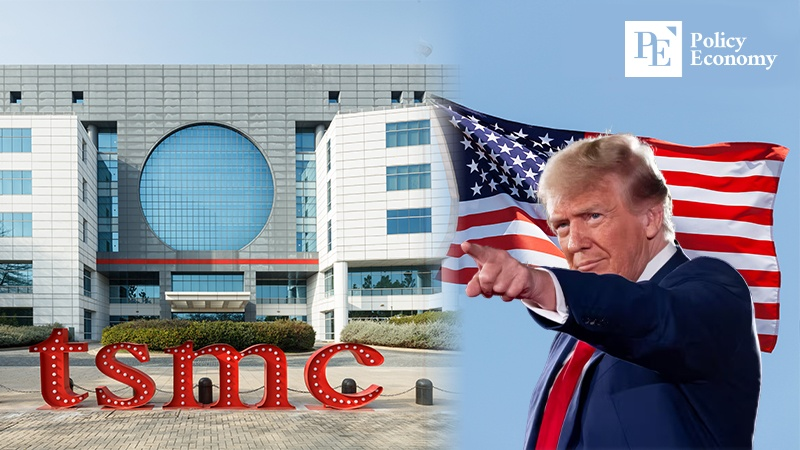
The United States is increasingly clarifying the focus of its proposed trade agreement with Taiwan as it places a combined package of semiconductor investment expansion and training for American workers on the negotiating table. The two sides are reportedly discussing a framework in which Taiwanese companies dispatch both capital and technical personnel to U.S. sites to operate production facilities while simultaneously training local workers in manufacturing processes, with the potential adoption of Taiwan’s science-park operations model also under consideration.
Investment and training package
On the 26th (local time), Reuters reported that the Donald Trump administration is reviewing an outline for a new trade agreement with Taiwan that would include expanding U.S.-based semiconductor investment by Taiwanese firms and establishing training programs for American workers. Citing multiple sources, the report stated that Taiwanese companies, including TSMC, are discussing a plan to send both capital and technical personnel to the United States so they can operate fabrication plants while teaching American workers, a structure similar to the investment agreements signed with South Korea and Japan but potentially incorporating Taiwan’s unique science-park model.
The proposal confirmed in the report features a package combining expanded Taiwanese production facilities in the U.S. with a local worker training system. The United States seeks to leverage Taiwan’s semiconductor capabilities to strengthen its domestic manufacturing base, while Taiwan aims to reduce the 20 percent tariff applied to its products in the U.S. market. Because the plan includes a concrete scheme for Taiwanese engineers to directly participate in on-site worker training, the scope of the negotiations is viewed as having expanded significantly.
The scale of investment and the breadth of the training programs requested by the United States are also said to exceed previous agreements with other countries. One source said Washington asked Taiwan for USD 400 billion in investment—roughly the midpoint of the commitments previously made by South Korea and Japan—adding that this figure includes TSMC’s USD 165 billion U.S. project. Taiwan’s Office of Trade Negotiations likewise stated that its negotiation team is discussing supply chain cooperation with the United States under what it calls the “Taiwan model.”
Training requirements for American workers have, for the first time, taken shape as specific provisions in the negotiations. President Donald Trump previously stated at the U.S.-Saudi Investment Forum that foreign companies investing billions of dollars in the semiconductor sector must bring their own personnel to teach Americans if the United States is to succeed. Reflecting that stance, the training program sought by Washington is expected to cover the entire semiconductor manufacturing process, including advanced equipment operation, process-quality management, and production-technology skills.
Delayed upgrades and accumulating losses
These discussions have accelerated largely because TSMC, the world’s largest contract chipmaker, has been recording unusually severe losses at its U.S. factories. Despite reporting record revenue and profit at its headquarters and leading-edge fabs last year due to soaring AI-related demand, the company’s Washington plant has followed a completely different trajectory. Established in 1998, the facility remained locked into outdated 200mm wafers and 0.35–0.16 micron processes—technology that dates back 25 years—and failed to match the industry’s shift to 300mm production. As a result, it posted a USD 32 million net loss last year.
The rapid deterioration of profitability at the Camas plant stemmed not only from technological stagnation but also from cost burdens, location issues, and workforce structure. TSMC founder Morris Chang wrote in his memoir that the early days in Camas were “pure chaos,” noting that the company had to spend 50 percent more on labor compared with Taiwan to mobilize 1,000 workers. Over time, the plant became firmly defined by aging equipment, high labor costs, and limited production volume, deepening its competitive weaknesses and leaving it disconnected from the growth trajectory of the headquarters.
The example of the new Arizona plant highlights even more starkly the limits facing TSMC’s U.S. manufacturing operations. TSMC stated in its annual report that the Arizona fab recorded a loss of USD 4.5 billion last year, while its Nanjing fab in China posted a profit of USD 8.3 billion during the same period. China’s state-run Global Times commented that the United States is now facing fundamental difficulties after attempting to reshape the semiconductor supply chain through political intervention rather than market forces.
The losses and operational struggles at both the Washington and Arizona facilities have directly influenced the United States’ push for a combined investment and workforce-training package in the new trade agreement with Taiwan. Since merely building additional facilities or installing more equipment has not been enough to resolve supply-chain and labor shortages, Washington intends to make technology-staff deployment and training mandatory conditions. This is why the new deal package includes carefully designed requirements for capital investment alongside education and technology-transfer programs.
Production disruptions following visa crackdown
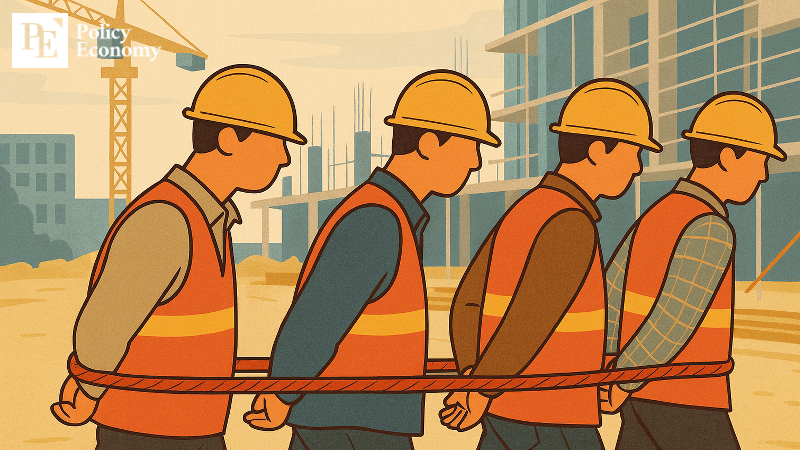
The detention of South Korean technical workers in Georgia last September also served as a critical lesson for the Trump administration. U.S. Immigration and Customs Enforcement and Homeland Security Investigations conducted a large-scale crackdown on undocumented workers at the construction site of a joint Hyundai Motor–LG Energy Solution EV battery plant, arresting 475 individuals. Roughly 300 of them were South Koreans responsible for equipment installation and technology transfer at the site. They were temporarily detained on grounds related to U.S. visa verification procedures. Although the South Korean and U.S. governments moved quickly to resolve the situation, many of the detained Korean engineers returned home afterward, causing unavoidable project delays.
Local economic development authorities later stressed that the Korean workforce could not be replaced. Trip Tollison, CEO of the Savannah Economic Development Authority, which oversees the region where the Hyundai EV plant is located, told local media that their return was essential, noting that the Korean workers were the only ones capable of installing equipment and teaching American employees the technology required for battery-cell production. Korean technicians handle not only complex equipment installation and test runs but also initial stabilization of production lines, transferring step-by-step process procedures, safety standards, and quality-control expertise to American workers.
Political and federal responses soon followed. Georgia Governor Brian Kemp initially defended the immigration crackdown as lawful enforcement but later acknowledged the need to reexamine the U.S. visa system. President Trump also expressed strong opposition to the manner in which the raids were conducted, emphasizing that foreign specialists must remain on-site to train American workers as the United States builds advanced facilities and strengthens its manufacturing workforce. Still, criticism persisted over the contradiction of detaining the very experts invited to enhance U.S. manufacturing competitiveness.
This is also why the United States has incorporated “technical training” requirements into its negotiations with Taiwan. The temporary shutdown and delays at the Georgia battery plant demonstrated that foreign skilled labor is indispensable during the early stages of technology transfer and production ramp-up. The Trump administration now believes that simply supplying capital and equipment will only replicate the losses seen in Arizona and Camas unless Taiwanese companies also secure operational capabilities by providing training and hands-on technical transfer. Consequently, provisions on dispatching Taiwanese engineers, establishing training programs for Americans, and raising on-site skill levels have emerged not just as investment requirements but as conditions to ensure sustainable plant operation and production efficiency.
Niamh O’Sullivan is an Irish editor at The Economy, covering global policy and institutional reform. She studied sociology and European studies at Trinity College Dublin, and brings experience in translating academic and policy content for wider audiences. Her editorial work supports multilingual accessibility and contextual reporting.
Similar Post