“AI-Enhanced and Increasingly Sophisticated”: A Global Super-App Battle Accelerates

Authored On
Modified
Global IT Firms Race Toward Super-App Transformation
From “Conversation to Action,” Platforms Expand Their Ecosystems
Fierce Competition to Advance Apps Through AI
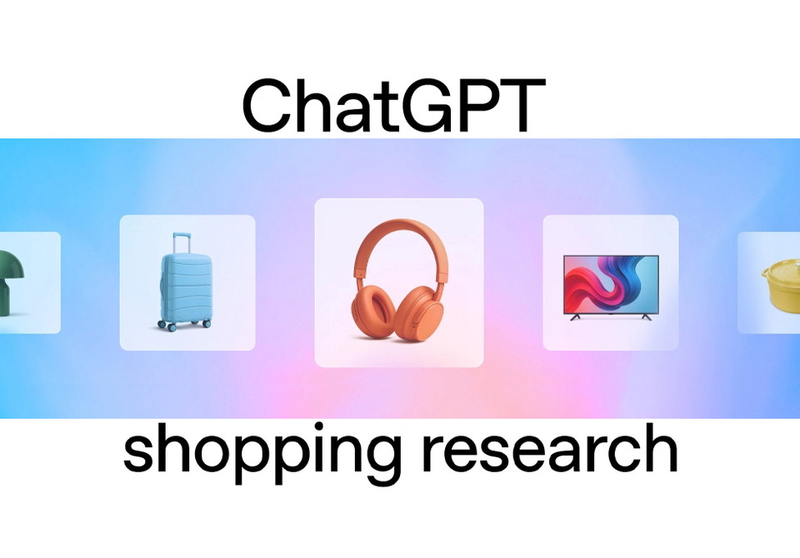
As the platform market shifts toward an “AI agent” paradigm, the evolution of super-apps—integrating messaging, search, commerce, payments, and content—is accelerating at unprecedented speed. With OpenAI linking shopping research and instant checkout to ChatGPT in a bid to penetrate e-commerce, platform companies across China, the United States, and Japan are redeploying their services around AI. As AI begins to resolve long-standing constraints of super-apps such as complexity and cost burdens, a new user experience—where “conversation becomes action”—is emerging as a pivotal inflection point in the global platform landscape.
Super-App Momentum in the IT Industry
According to the IT sector on the 27th, OpenAI recently added a “shopping research” tool to ChatGPT. The feature provides purchase guidance by independently searching the internet whenever a user simply describes what they want to buy. Shopping Research is also integrated into ChatGPT Pulse (for Pro users), which actively recommends personalized buying guides based on previous conversations.
OpenAI plans to merge Shopping Research with its instant payment system, “Instant Checkout,” to enter the e-commerce sector. Instant Checkout, unveiled last September, enables users to purchase products from partner vendors directly within the ChatGPT interface. OpenAI has also begun moving into messaging and social media spaces, launching a pilot group chat feature on the 21st.
China is also seeing rapid movement toward super-app adoption. With access to ChatGPT and other foreign AI services limited domestically, Alibaba’s newly launched multi-purpose AI application, Qwen, is quickly emerging as a functional and accessible local alternative. Qwen, built on Alibaba Cloud’s open-source LLM, goes beyond a simple conversational chatbot to support an extensive range of work and entertainment functions, including AI-based document drafting, presentation generation, image creation, research analysis, and voice calls. Alibaba plans to evolve Qwen into an AI-based super-app by integrating key lifestyle and productivity services such as maps, delivery, travel reservations, shopping, education, and healthcare.
Korean IT companies are also in a competitive race toward super-app models. KakaoTalk, the country’s dominant messenger, is a prime example. Once centered solely on messaging, it now hosts dozens of services ranging from shopping and reservations to public administration tools. Last month, a “ChatGPT tab” was added directly to KakaoTalk chatrooms, enabling integration with existing services. Naver, which began as a search app, is expanding across finance, maps, and content, ultimately aiming to connect all Naver services through an AI agent–driven unified ecosystem. Toss, which launched as a simple money-transfer service, now offers more than 100 different functions.
AI Assistant Integration Extends Reach to Reservations, Search, and Content Creation
Competition to enhance existing super-apps through AI assistants is intensifying. In China, Tencent recently integrated its AI assistant Yuanbao into the WeChat ecosystem, enabling document search, content generation, and immersive conversational experiences. As WeChat has expanded from messaging into taxis, food delivery, payments, and shopping, AI now allows users to move seamlessly across these services. As a result, user engagement continues to rise. In the second quarter this year, average daily usage reached 79 minutes and 42 seconds, and with WeChat’s monthly active users (MAU) at 1.4 billion, the platform’s total daily user time amounts to 1.87 billion hours.
WhatsApp in the United States is also advancing its services with Meta’s AI. The platform now supports image generation, chat summarization, and voice chat, and allows users to invite Meta AI directly into group conversations. Japan’s LY Corporation, which aims to transform all its services into AI-agent–driven features, launched the Line AI Assistant. The service recommends responses and stickers during chats and enhances interaction with AI characters. Telegram offers content bots, utility bots, and even AI trading bots for cryptocurrency transactions.
Major global messenger companies had previously pursued super-app strategies to increase user time by offering multiple features within a single app. However, as functions multiplied, apps became heavy and cluttered, often leaving users struggling to locate desired services. With the advance of AI, these issues are beginning to dissipate. AI agents can now handle complex functions and connect them seamlessly.

The term “super-app” was first defined in 2010 at the Mobile World Congress (MWC) by BlackBerry founder Mike Lazaridis, who envisioned a platform delivering a wide range of everyday functions in a frictionless environment. Lazaridis identified five essential elements of super-apps: seamlessness, integration, efficiency, contextualization, and daily use.
Through super-apps, users can access diverse services without installing multiple apps or undergoing separate registration steps, while also receiving benefits such as points and rewards from cross-service linkages. For companies, super-apps increase user engagement, enhance data acquisition, and enable incremental revenue generation and business expansion. Global research firm Gartner forecasts that by 2027, over half of the world’s population will use multiple super-apps every day.
Super-apps originally aimed to capture user attention by consolidating messaging, finance, shopping, reservations, and gaming within a single app. Previously, individual functions required separate apps, whereas super-apps connect them via mini-apps and digital wallets. Now, with AI agents added to the system, users can experience a shift where “conversation becomes action.” For example, simply asking about a flight in a chat window can trigger reservation, payment, and cancellation processes, while complex document tasks or summarization can be executed instantly within the chat interface.
AI is gaining attention for alleviating super-apps’ traditional weaknesses—complexity and high navigation costs. While users previously struggled to locate menus among numerous embedded functions, AI agents now search and connect services on their behalf, dramatically improving usability. With multimodal (MM) processing capabilities enabling the simultaneous handling of text, voice, images, and payments, super-apps have the potential to evolve into operational hubs for both daily life and work. This integration of AI and super-apps is emerging as a central axis reshaping the platform order.
Similar Post