Amid China–Japan clashes, Trump’s “limited mediation attempt” stirs alarm within Japan’s political circles

Stefan Schneider brings a dynamic energy to The Economy’s tech desk. With a background in data science, he covers AI, blockchain, and emerging technologies with a skeptical yet open mind. His investigative pieces expose the reality behind tech hype, making him a must-read for business leaders navigating the digital landscape.
Authored On
Modified
Anxiety grows over Washington’s lack of explicit support
Russia and North Korea criticize Japan and back China
Signs of widening tensions along the South China Sea littoral
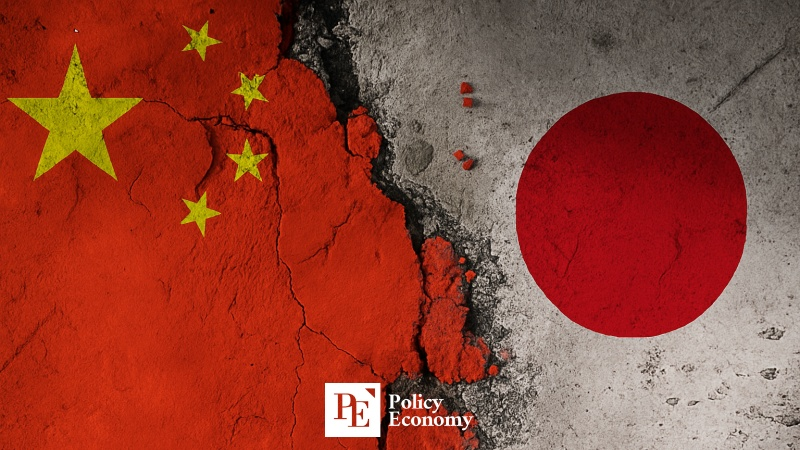
Following Japanese Prime Minister Sanae Takaichi’s remarks about possible involvement in a Taiwan contingency, frictions between China and Japan have continued, and debate over the United States’ “strategic ambiguity” is intensifying. President Donald Trump avoided expressing a clear position on the dispute during his talks with Japan, prompting mounting concerns in Tokyo that the United States may not be fully committed to de-escalation.
Concerns over diminished national leverage
According to a report by the Asahi Shimbun on the 26th, a growing sense of unease has taken hold in Japan as President Donald Trump maintains a vague posture toward frictions with China. Although Trump showed some signs of mediation—speaking with Chinese President Xi Jinping and then holding a separate conversation with Prime Minister Sanae Takaichi—the lack of clarity over his intentions has deepened worries that the situation could deteriorate further.
During his call with Xi, Trump conveyed messages that partially aligned with China’s position, yet in his conversation with Takaichi he refrained from expressing explicit support regarding the China–Japan dispute or the Taiwan issue. Japanese political figures commented that although the U.S. leader offered friendly gestures, he did not reaffirm concrete security commitments. This has amplified uncertainty across Japanese society about how far the United States would stand with Japan in a crisis.
Trump’s recent reference to the United States and China as a “G2” earlier this month has also contributed to Japan’s sense of crisis. Many in Japan interpret the phrase as implying a division of influence across the Pacific. Tokyo has long relied on its alliance with the United States to counterbalance China’s rise, but Trump’s remarks were viewed as elevating China to a status comparable to Washington’s, undermining that strategic foundation. This has fueled growing pessimism that Japan may ultimately have to face China without U.S. support.
The Japanese government continues to insist publicly that the U.S.–Japan relationship remains firm, yet internally there is concern that Japan’s diplomatic leverage could shrink if Chinese retaliation coincides with shifts in U.S.–China relations. After raising the possibility of Japan’s involvement in a Taiwan contingency, Prime Minister Takaichi has faced sharp backlash from China and the prospect of economic and diplomatic pressure, but has not secured explicit U.S. backing. As tensions with China escalate, Japan faces increasingly complex calculations over how much risk it must shoulder under the United States’ strategic ambiguity.
East Asia enters a phase of factional alignment
The international community is watching the unfolding situation closely. If tensions between China and Japan continue to escalate, the impact could spread throughout East Asia. Because the conflict stems from the Taiwan issue, regional diplomatic and security frameworks face immediate pressure to shift. As China intensifies pressure through live-fire drill announcements, bans on Japanese seafood imports, and advisories discouraging travel or study in Japan, observers widely believe that the dispute will not remain confined to the two countries.
Russia has openly criticized Prime Minister Takaichi’s remarks and aligned itself with China. On the 21st, Russian Foreign Ministry spokesperson Maria Zakharova said in an interview with domestic media that Japan’s wartime militarism caused devastating harm to Asia and the world, and warned that Japanese political leaders must reflect deeply on history and consider the consequences of their actions.
North Korea did not directly attack Takaichi but joined China in criticizing Japan’s historical misdeeds. At the UN Security Council reform debate in New York on the 18th, North Korea’s representative said the international community still remembers Japan’s unprecedented crimes against humanity and accused Tokyo of denial, refusal to compensate victims, and attempts to distort history. On the same day, China sharply criticized Japan and declared that Tokyo was unqualified to seek a permanent Security Council seat.
Washington’s renewed emphasis on defending the Senkaku Islands and highlighting the U.S.–Japan alliance is seen as a response to concerns over further escalation. Deputy State Department spokesperson Tom Piggott wrote on X that the U.S. commitment to defending Japan, including the Senkaku Islands, remained unwavering, calling the alliance the cornerstone of peace and stability in the Indo-Pacific. He added that the United States firmly opposes any unilateral attempts to alter the status quo in the Taiwan Strait, East China Sea, or South China Sea through force or coercion.
South Korea is not insulated from these developments. Seoul’s efforts to restore relations with China risk clashing with its revived shuttle diplomacy with Japan and strengthening cooperation with the United States. China’s recent announcement of live-fire drills in the southern Yellow Sea—part of its pressure campaign against Japan—suggests that the dispute could escalate into concrete military and diplomatic challenges. As tensions persist, neighboring states may face growing pressure to articulate clearer positions, making it increasingly difficult to maintain strategic ambiguity.
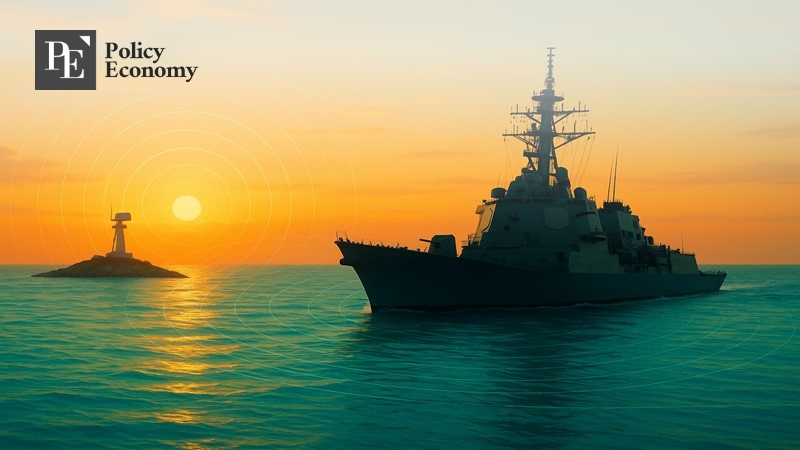
Risk of expansion into multilateral conflict zones
Signs have recently emerged that some Southeast Asian states bordering the South China Sea, such as the Philippines and Vietnam, may also be drawn into the dispute. Conflicts in the region involve overlapping territorial claims in the Spratly and Paracel Islands, rights to oil and gas development, control of sea lanes, and questions over militarization, making it difficult for these countries to remain uninvolved. As China has increased patrols and deployed naval vessels in response to the China–Japan tensions, both Vietnam and the Philippines issued public statements and hinted they might take more direct action.
Vietnam has recently adopted a tougher stance toward China, citing an incident in which its fishing vessels were subjected to warning shots by Chinese patrol ships in the Spratly region. Hanoi’s foreign ministry condemned the act as a violation of national sovereignty, and protests erupted in major cities such as Hanoi, reflecting rising anti-China sentiment. The Philippines, meanwhile, summoned the Chinese chargé d’affaires to demand clarification over China’s installation of outposts and unloading of construction materials in the Spratlys. Some in the Philippines have even called for U.S. mediation, as tensions in the South China Sea have escalated beyond isolated incidents into matters influencing regional alliances and security structures.
Diplomatic observers widely argue that the China–Japan confrontation is merely a trigger, and that the South China Sea is a region with deep-rooted potential for escalation involving multiple states whose interests collide simultaneously. With the Philippines and Vietnam already raising the level of diplomatic and military response, analysts warn that the front lines could extend to areas around Taiwan, the Yellow Sea, and the East China Sea. As tensions sparked by the China–Japan conflict show signs of spreading into multilateral dispute zones such as the South China Sea and Taiwan, diplomatic instability and security pressures across East Asia continue to intensify.
Stefan Schneider brings a dynamic energy to The Economy’s tech desk. With a background in data science, he covers AI, blockchain, and emerging technologies with a skeptical yet open mind. His investigative pieces expose the reality behind tech hype, making him a must-read for business leaders navigating the digital landscape.
Similar Post