TSMC Former Executive’s Technology Leak Scandal Shakes Taiwan’s ‘Semiconductor Security’

Authored On
Modified
TSMC Executive Luo Weiren Moves to Intel After 21 Years
Faces Lawsuit for Alleged Breach of Non-Compete and Trade Secrets Law
Industry Sees Rising Temptation to Poach Talent, Leading to Frequent Leaks of Proprietary Know-How

Taiwan Semiconductor Manufacturing Company (TSMC), the world’s largest contract chipmaker, has filed a lawsuit against a former executive who recently moved to Intel, reigniting concerns over technology-leak risks across the semiconductor sector. With cutting-edge innovation requiring astronomical time and capital, and technological gaps serving as the decisive driver of market leadership, disputes over trade-secret theft have become persistent. The escalating race for semiconductor talent is unfolding under legal and ethical dilemmas that increasingly threaten corporate survival.
“I’m Retiring to Teach” — TSMC Executive Joined Intel Three Months After Leaving the Company
According to Taiwan’s Liberty Times and other local media outlets on the 28th, TSMC filed a lawsuit on the 25th against former Senior Vice President Luo Weiren with the Intellectual Property and Commercial Court. TSMC argues in the complaint that Luo violated his employment contract, non-compete agreement, and Taiwan’s Trade Secrets Act. Luo, who joined TSMC in July 2004 and worked there for 21 years, had overseen mass-production development for cutting-edge nodes, including 5nm, 3nm, and 2nm. His abrupt move—just three months after his July 27 departure—to Intel as an Executive Vice President stunned the industry.
TSMC claims Luo breached confidentiality obligations and the non-compete covenant he signed during his tenure. Details revealed in the lawsuit suggest he prepared carefully for his departure. TSMC General Counsel Sylvia Fang conducted his exit interview on July 22, 2025—five days before his official departure—reiterating his non-compete obligations and stressing the importance of the contractual commitments. Luo reportedly told the company he planned to go to “an academic institution,” giving no indication of any plan to join Intel. He had signed both a non-disclosure agreement (NDA) and a non-compete provision while at TSMC. Yet despite saying he would return to academia to train future engineers, he printed business cards as an Intel Executive Vice President shortly after leaving the company in late October.
TSMC says Luo copied confidential documents related to advanced semiconductor technologies—including 2nm—before leaving, removing up to 80 boxes of materials. The company also alleges that Luo, while serving in a department unrelated to R&D, attempted to access advanced process technologies. In March 2024, Luo was appointed Senior Vice President of Corporate Strategy Development, a staff unit advising the Chairman and CEO that had no oversight or management role over R&D. Despite this, he reportedly summoned R&D employees to request briefings on next-generation processes—including 2nm, A16 (1.6nm), and A14 (1.4nm)—and removed large volumes of related documents. “We concluded there is a high likelihood that Luo may use, leak, transmit, or transfer TSMC’s trade secrets and confidential information to Intel, prompting us to take legal action,” TSMC stated.
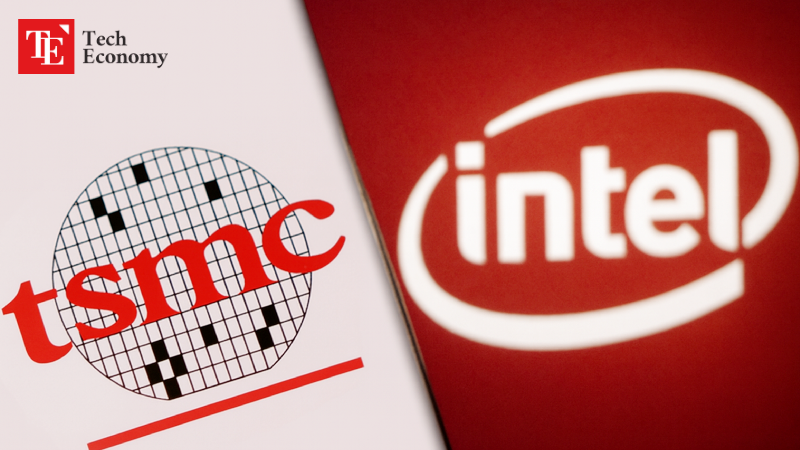
Intel’s Urgent Need to Rebuild Competitiveness Faces Backlash Amid Survival Push
Intel immediately denied the allegations. In a statement issued on the 26th (local time), the company said, “Based on everything we know at this time, there is no evidence supporting any of the allegations involving Luo.” Intel added, “We strictly prohibit the use or transfer of third-party confidential information or intellectual property and enforce these rules rigorously.” The company further emphasized, “Talent mobility is a normal and healthy dynamic in our industry, and this case is no different.”
Despite Intel’s rebuttal, critics note that the company’s aggressive talent-poaching efforts have long drawn scrutiny, suggesting public criticism will not subside easily. Intel urgently needs to restore competitiveness in semiconductor foundry and advanced packaging, where it has struggled to win customers. After suffering severe financial strain from excessive R&D and fabrication investments, Intel recently secured equity funding from the U.S. government, Nvidia, and SoftBank, giving it an opportunity to stage a turnaround. Still, without major foundry clients, it remains difficult for Intel to justify the outcomes of its upcoming research and production ramp-up.
Intel’s decision to recruit Luo is widely interpreted as part of this survival push. Luo previously spent about 18 years at Intel in semiconductor manufacturing before joining TSMC in 2004. He is credited with contributing to TSMC’s EUV lithography and its flagship advanced nodes—5nm, 3nm, and 2nm. Analysts suggest Intel considered his recruitment indispensable for rapidly elevating its foundry competitiveness, even at the risk of facing allegations of technology theft.
Two TSMC Employees Leak 2nm Technology to Former Colleague Who Joined Japanese Competitor
TSMC’s decision to take strong legal action against a former senior executive highlights how the global talent war in semiconductors increasingly unfolds at the edge of legal and ethical boundaries. As transistor widths shrink, chips consume less power and operate faster, but process-node miniaturization dramatically increases development complexity and capital intensity. This environment creates persistent pressure to offer generous compensation packages to employees who may have access to rival firms’ trade secrets.
In August, Taiwan’s High Prosecutors Office indicted three former TSMC engineers on charges of violating the National Security Act and misappropriating trade secrets. One of them—identified as Chen—left TSMC to join a subsidiary of Tokyo Electron (TEL), a major Japanese semiconductor equipment maker and key TSMC supplier. Prosecutors say Chen sought to strengthen his position at the new employer by soliciting trade secrets from two TSMC employees—identified as Wu and Ge.
The information they attempted to obtain involved TSMC’s next-generation 2nm etching equipment, a technology central to the company’s future competitiveness. Wu and Ge provided Chen with 1,000 pages of 2nm process design blueprints. They allegedly accessed TSMC’s intranet from company-issued laptops during remote work to retrieve the confidential documents.
TSMC filed its initial complaint on July 8. Taiwan’s Intellectual Property Office launched an investigation into nine former and current TSMC employees. Authorities conducted searches of employees’ residences and TEL facilities in the Hsinchu Science Park, seized laptops and mobile phones, performed forensic analysis of cloud data, and traced financial accounts. The suspects were arrested on August 6. Economic-espionage crimes in Taiwan may be prosecuted under the amended 2022 National Security Act, which aims specifically to protect sensitive technologies—particularly in the semiconductor industry—from foreign actors.
Similar Post