Michael Burry Bets on an AI Bubble Burst With Nvidia Puts — But the Industry Rejects the Bubble Narrative

Aoife Brennan is a contributing writer for The Economy, with a focus on education, youth, and societal change. Based in Limerick, she holds a degree in political communication from Queen’s University Belfast. Aoife’s work draws connections between cultural narratives and public discourse in Europe and Asia.
Authored On
Modified
Michael Burry, the Real-Life Investor Behind The Big Short, Bets on Another Market Downturn
He Shuts Down His Hedge Fund and Repositions Himself as a Market Analyst and Blogger
Big AI Firms Reject the “Bubble” Narrative, Calling It a Natural Phase of Technological Revolution
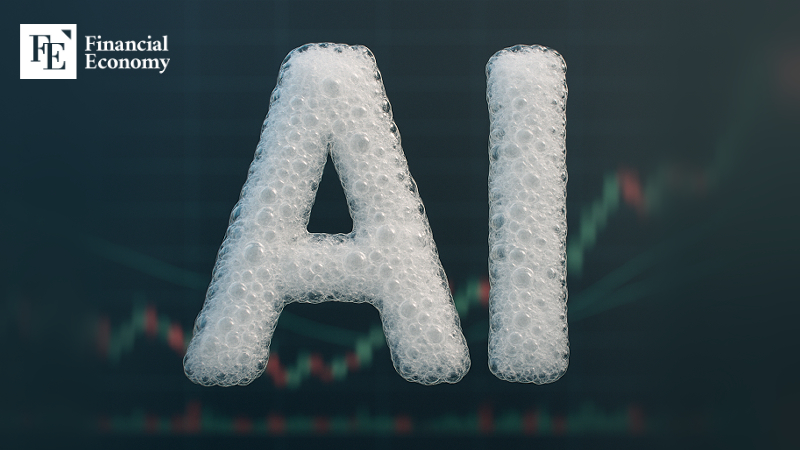
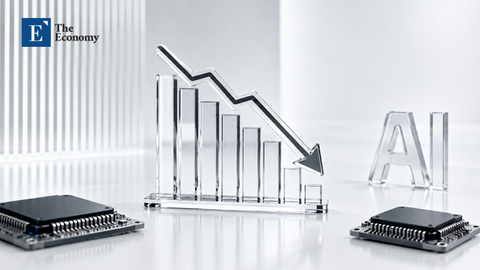
Michael Burry, who gained fame for accurately predicting the 2008 U.S. subprime mortgage crisis, has purchased a large number of put options on Nvidia, betting once again on a “bubble collapse” amid the AI frenzy he has long criticized; however, the industry argues that concerns about an AI bubble are merely growing pains in a period of rapid technological change and that AI’s long-term market potential remains intact.
Michael Burry’s AI Pessimism
On the 26th, Quartz reported that Michael Burry — the real-life protagonist of The Big Short — purchased roughly $187 million worth of Nvidia put options. According to filings submitted to the U.S. Securities and Exchange Commission (SEC), Burry’s hedge fund, Scion Asset Management, held put options on 1 million shares of Nvidia as of the end of last quarter.
Burry’s aggressive bet on a decline in Nvidia’s share price stems from his pessimistic view of the AI market. In his recent newsletter, Cassandra Unchained, he described the current AI boom as a “glorious folly.” He argued that “supply-side gluttony is the decisive sign of a bubble,” pointing to the collapse of Cisco Systems during the dot-com era as an example. Cisco once dominated the internet equipment market, but when the bubble burst, its stock price fell by nearly 90%. Burry said, “There is a Cisco-like figure at the center of this cycle as well — the company offering picks and shovels to everyone while promoting an expansive vision — and that name is Nvidia.” His view is that Nvidia today closely resembles Cisco at its peak.
Burry has also suggested on X (formerly Twitter) that the AI investment cycle is approaching a peak that could trigger a sharp market downturn. He has criticized the “give-and-take” model between Big Tech companies and AI startups, where cloud giants invest in startups, and those startups in turn purchase large quantities of Nvidia chips or lease cloud servers. He argues that this circular flow artificially inflates revenues and resembles financial engineering more than real economic demand. Burry has also criticized Nvidia’s stock-based compensation and share-buyback policies, claiming that these practices fail to properly reflect their dilutive cost and that the company’s reported figures obscure the true financial burden.
Scion Asset Management Also Pulls Back From the Market
Scion Asset Management is heading toward liquidation as market-overheating warnings intensify. According to SEC filings, Scion’s investment adviser registration was terminated on the 10th. Investment advisers managing more than $100 million in assets are required to register with the SEC and submit periodic operational reports. In this context, the Financial Times reported that Burry shut down his hedge fund while warning that “stock prices have detached from fundamentals.”
According to the FT, Burry told investors in a letter dated the 27th of last month that he would “liquidate positions by year-end and return capital,” adding that “my assessment of securities’ value does not align with the market today, and hasn’t for some time.” Scion had been betting on a downturn not only through put options on Nvidia but also through puts on Palantir — another major beneficiary of the AI boom. Scion purchased the Palantir puts at about $1.84 per share, and their current trading price has risen more than 70%.
Having exited the hedge-fund industry, Burry launched a blog to publicly share his analysis and forecasts. On his “About” page, he wrote that he left the hedge-fund world to “focus on what I’ve always loved — writing and sharing investment ideas,” noting that managing client money imposed hidden constraints that prevented him from speaking openly. He now uses the blog to criticize excessive investment and oversupply in the AI sector, expressing skepticism toward companies like Nvidia that have attracted massive capital inflows.

Optimism Persists in the AI Industry
However, industry leaders argue that such “AI pessimism” is premature. In a recent seven-page “Fact-Check FAQ” sent to major investors, Nvidia acknowledged that AI startups are making heavy investments that strain short-term cash flow, but emphasized that “it is not surprising that AI companies are highly valued even if their commercial results are modest today.” Market analysts note that it is unusual for a company to circulate a formal rebuttal document directly to investors. Addressing concerns around circular investments, Nvidia said its strategic investments account for only “3–7% of revenue,” making revenue inflation effectively impossible. Regarding the sharp rise in third-quarter inventory, the company stated that “higher inventory does not necessarily indicate weakening demand” and explained that it had built inventory ahead of new product launches to avoid shortages.
Google, Amazon and OpenAI are also pushing back against the AI-bubble narrative. According to CNBC, Google CEO Sundar Pichai responded to an employee’s criticism of overinvestment during an all-hands meeting on the 6th, saying “the risk of underinvestment is far greater.” Last month, Amazon founder Jeff Bezos and OpenAI CEO Sam Altman each acknowledged the possibility of an “AI bubble” in separate events and interviews, but maintained that it represents an “industrial bubble, not a financial one,” adding that AI’s benefits to society will be enormous and that the sector is undergoing “a new technological revolution.”
Meanwhile, practical examples of AI driving meaningful innovation and efficiency continue to accumulate across the market. In the platform industry—now reorganizing around “AI agent” competition—the evolution of super apps integrating messaging, search, commerce, payments and content is accelerating rapidly. A recent example is OpenAI’s addition of a “shopping research” tool to ChatGPT, which allows users to describe what they want and receive AI-generated buying guides based on web searches. OpenAI plans to pair this tool with “instant checkout,” its one-click purchase system unveiled in September, enabling users to buy products from partner retailers directly within the ChatGPT interface as it expands further into e-commerce.
Aoife Brennan is a contributing writer for The Economy, with a focus on education, youth, and societal change. Based in Limerick, she holds a degree in political communication from Queen’s University Belfast. Aoife’s work draws connections between cultural narratives and public discourse in Europe and Asia.
Similar Post