Germany Drafts Secret Plan to Mobilize 800,000 NATO Troops in Case of Russian Attack — Europe’s Anti-Russia Posture Hardens

As one of the youngest members of the team, Tyler Hansbrough is a rising star in financial journalism. His fresh perspective and analytical approach bring a modern edge to business reporting. Whether he’s covering stock market trends or dissecting corporate earnings, his sharp insights resonate with the new generation of investors.
Authored On
Modified
Germany Drafts a 1,200-Page Secret Operational Plan to Prepare for a Possible Russian Attack
Military Tensions Rise Across NATO’s Eastern Flank, Including Poland
European Nations Begin Expanding Forces and Procuring Weapons as They Strengthen Defense Capabilities
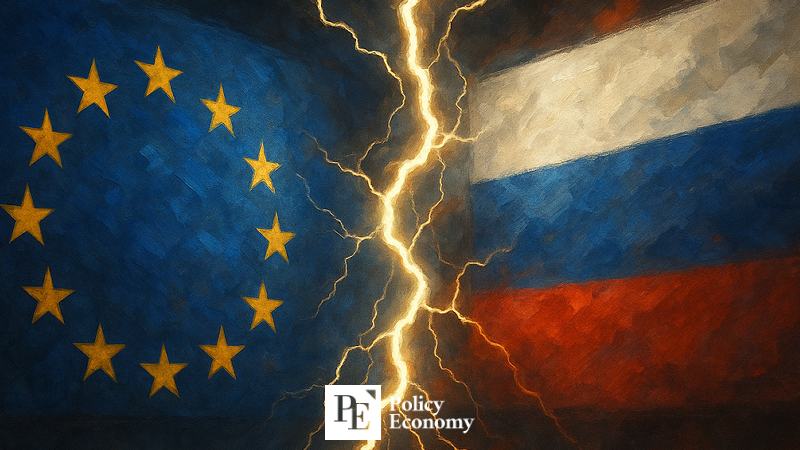
German senior military officers have drawn up an operational plan exceeding 1,000 pages in preparation for a potential Russian attack. Since the outbreak of the Russia–Ukraine war in 2022, concerns have grown that Russia could directly strike NATO territory, accelerating efforts across Europe to prepare for a potential full-scale conflict.
Germany on Alert for a Possible Russian Attack
On the 26th, The Wall Street Journal reported that Germany has drawn up a 1,200-page classified operational plan to prepare for a potential full-scale war with Russia, outlining the rapid deployment of up to 800,000 German, U.S. and NATO troops to the eastern front. Known as OPLAN DEU, the blueprint was drafted by twelve senior officers at Berlin’s Julius Leber Barracks shortly after Russia’s full invasion of Ukraine in 2022.
The core of the plan is to ensure the swift transport of up to 800,000 German, American and NATO personnel to the eastern front if Russia attacks a NATO member state. Because the Alps make large-scale troop and equipment movement through southern Europe nearly impossible, NATO forces would have to move across Germany in the event of a war with Russia — placing Germany not on the front line but in a critical forward-staging role. The plan specifies the ports, rivers, railways and roads that troops would use, along with detailed provisions for resupply and protection during transit. Determining that the Bundeswehr alone cannot support logistics at this scale, Germany identified a “whole-of-society approach” as a central requirement for executing the operation.
Russia Issues Direct Threats to Poland
Germany’s preparations for a potential full-scale conflict stem from a growing belief across Europe—intensified after Russia’s invasion of Ukraine in February 2022—that Moscow could strike additional NATO territory. In June, Ralph Tiesler, head of Germany’s Federal Office of Civil Protection and Disaster Assistance (BBK), told local media that “for a long time, Germans believed war was not a scenario we had to prepare for,” adding, “but that has changed. We are now concerned about the possibility of a major war of aggression in Europe.”
The sharpest tensions are concentrated in NATO’s so-called eastern flank—particularly the Baltic states and Poland. In September, multiple Russian drones violated Polish airspace. The Polish military said the drones entered its territory “unprecedentedly” while Russia was carrying out strikes on Ukraine, noting that radar detected more than ten aircraft and that several posing threats were intercepted.
Suspicious sabotage attempts were also uncovered on the rail line connecting Warsaw to Lublin, a key route used by Western cargo trains transporting aid to Ukraine. Explosives were found on tracks near Mika, southeast of Warsaw, and metal clamps were attached to rails near Puławy—signs of attempted derailment. The explosives failed to detonate, preventing significant damage. Polish authorities labeled the incidents Russian-backed sabotage and revoked the operating license of the last remaining Russian consulate in Gdańsk.
Some experts believe Russia may be more likely to target smaller, vulnerable states rather than launch a broad invasion. Former Soviet republics on Russia’s border with sizable ethnic Russian populations—such as Georgia and the Baltic trio of Latvia, Lithuania, and Estonia—are often cited. Belarus, currently aligned with Moscow but facing questions over strongman Alexander Lukashenko’s health, is also viewed as a potential flashpoint.
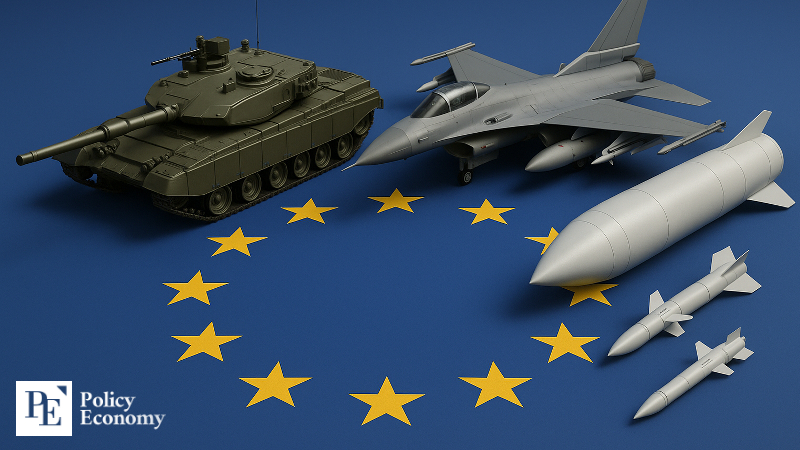
Europe Steps Up Its Re-Armament Drive
European countries are accelerating efforts to strengthen their defense capabilities. On the 27th, French President Emmanuel Macron visited an army base near Grenoble and announced a new voluntary military service program that will begin in mid-2026. Under the plan, French men and women aged 18–19 will be able to serve voluntarily for ten months. The government intends to enroll 3,000 participants in the first year, deploy them only within mainland France, and then gradually expand the size to 10,000 by 2030 and 50,000 annually by 2035. Macron said the program would help France respond to “a world where threats are accelerating.”
Germany has also finalized a new service system that effectively makes conscription possible again. The governing coalition of the CDU/CSU and SPD announced on the 13th that it had agreed to keep the volunteer-based model but introduce a mechanism for mandatory service if recruitment falls short. Beginning next year, the government will send letters to all Germans turning 18, asking about their willingness to serve. Women may decline to respond, but men must answer. Starting in 2027, all 18-year-old men will be required to undergo physical examinations to determine military eligibility. The structure preserves the volunteer model but creates the legal foundation for a return to conscription. If voluntary recruitment proves insufficient, Germany will shift to a draft through legislative approval, with conscripts chosen by lottery.
Defense spending is also rising rapidly. Germany plans to raise its military budget to 3.5% of GDP by 2030—up from €52 billion last year to €62.4 billion this year and €152.9 billion by 2029. The last time Germany spent 3.5% of GDP on defense was in 1975 during the Cold War. Similar trends are emerging across Europe. NATO’s total defense spending is expected to reach $1.5 trillion this year, accounting for roughly 55% of global military expenditures. The European Commission forecasts that EU members’ combined defense spending will rise from €343 billion in 2024 to €381 billion in 2025.
Northern European countries bordering Russia are accelerating plans to acquire weapons capable of striking Russian territory. According to Reuters, the Swedish Army recently told its government that it needs 2,000-km-range missiles capable of hitting enemy military and critical infrastructure deep behind the front lines. With the distance between Stockholm and Moscow roughly 1,000 km, the request is widely seen as preparation for potential strikes into Russian territory. Denmark likewise announced plans in September to procure long-range precision-strike weapons—the first such initiative in its history.
As one of the youngest members of the team, Tyler Hansbrough is a rising star in financial journalism. His fresh perspective and analytical approach bring a modern edge to business reporting. Whether he’s covering stock market trends or dissecting corporate earnings, his sharp insights resonate with the new generation of investors.
Similar Post