Smart Glasses Emerge as Tech’s Next Big Bet — Alibaba Joins the Race

Aoife Brennan is a contributing writer for The Economy, with a focus on education, youth, and societal change. Based in Limerick, she holds a degree in political communication from Queen’s University Belfast. Aoife’s work draws connections between cultural narratives and public discourse in Europe and Asia.
Authored On
Modified
Alibaba launches ‘Quark’ AI smart glasses in China
With the smart-glasses market surging, could mobile’s dominant form factor be about to change?
The technology is also driving meaningful innovation in medical settings
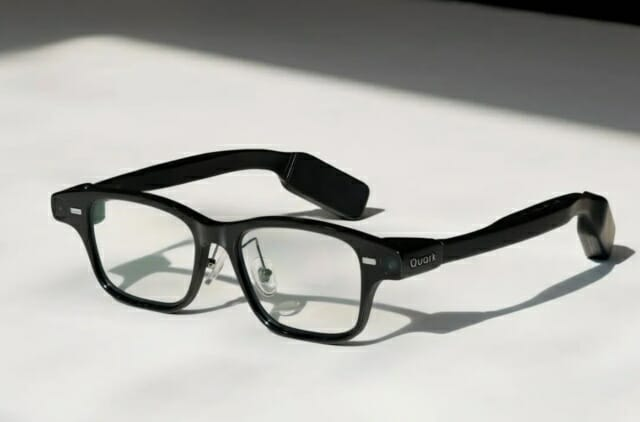
Alibaba in China has unveiled an AI-powered smart glass. As global smartphone demand has slowed and the market has stagnated, major tech companies are increasingly turning to smart glasses as their next growth driver, accelerating the early-stage expansion of this new category. Industry watchers expect this rapid growth momentum to continue for some time.
Alibaba Enters the Smart-Glasses Race
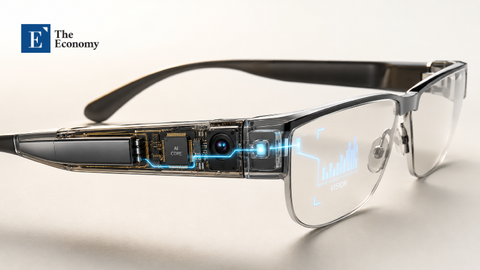
According to CNBC and The Verge on the 27th (local time), Alibaba has begun selling its AI smart glasses, “Quark.” First unveiled in July, Quark comes in two models: S1 and G1. The flagship S1 is priced at 3,799 yuan (about USD 530), while the lifestyle-focused G1 costs 1,899 yuan (about USD 265). Both models feature bone-conduction microphones, built-in cameras, and a swappable dual-battery system offering up to 24 hours of use.
Quark is powered by Alibaba’s in-house AI chatbot “Qwen.” By pairing the newly released Qwen app with the smart glasses, users can complete a range of tasks through voice commands. Alibaba said Quark will later integrate with its own apps such as Alipay and Taobao, as well as music-streaming services like QQ Music and NetEase Cloud Music. The device supports features such as on-the-go translation, AI-generated meeting notes, and virtual-assistant functions.
Li Chengdong, a Beijing-based tech analyst, said Quark’s strength lies in shopping, payments, and navigation, making it a “lifestyle-driven AI device” rather than an entertainment gadget. He added that the launch reflects Alibaba’s bid to secure the next major traffic gateway through AI and to gain new momentum in e-commerce competition. Quark smart glasses are currently available only through major Chinese e-commerce platforms such as Tmall, JD.com, and Douyin, with an international rollout planned for next year, though specific markets and timing have not been disclosed.
Why the Tech Industry Is Turning to Smart Glasses
Industry observers are watching closely to see whether Alibaba’s Quark AI Glass can stand out in the fast-growing smart-glasses market. Global shipments reached 2 million units last year, a new milestone and a 210% jump from the previous year. Market researcher Counterpoint predicts further expansion as more companies enter the race, forecasting that the global smart-glasses market will grow more than 60% by 2029.
The surge reflects the arrival of the “post-smartphone” era. With global smartphone demand slowing and innovation tapering off, major tech companies are betting on extended-reality (XR) and augmented-reality (AR) devices as the next growth drivers. As an XR device designed for everyday wear, smart glasses have emerged as a core battleground for the next generation of mobile computing.
Unlike XR headsets that are limited to specific environments, smart glasses are expected to meaningfully improve daily life. Users can view real-time maps directly through the lenses or take photos and videos with the built-in camera. The onboard speakers support music playback and real-time translation. Smart glasses also make everyday use of generative AI more natural — allowing users to share what they see with an AI assistant in real time. One can ask what a building is, request information during a meeting, or receive instant guidance as tasks unfold.
Potential Proven — but Major Hurdles Remain
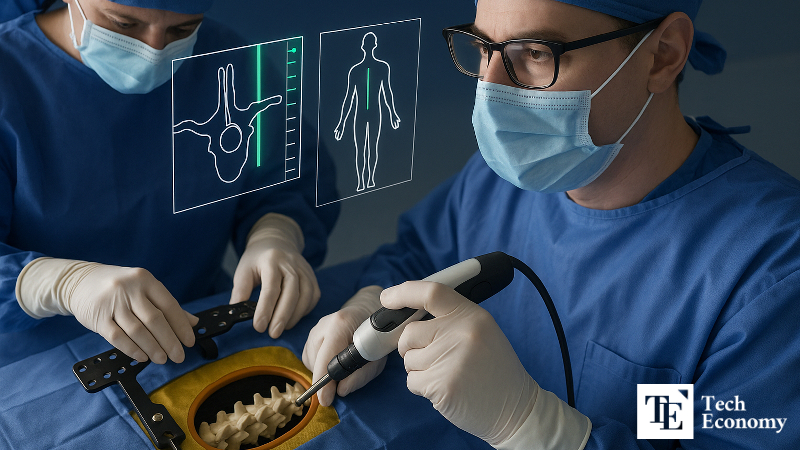
Examples of smart glasses driving real “innovation” in industrial settings are steadily emerging. The medical field is a prime case. In operating rooms—where sterility and hands-free workflows are essential—smart glasses have become a powerful tool. Earlier head-mounted displays were heavy and obstructive, making them impractical for surgeons. Newer smart glasses, however, use waveguide optics to remain transparent and lightweight while projecting key information directly in the user’s line of sight. Gesture-control systems using EMG sensors allow surgeons to operate the interface with minimal wrist movement, enabling a truly hands-free environment in settings where touching equipment is restricted due to infection risks.
In advanced healthcare markets such as the United States, surgical solutions using smart glasses are already being adopted. Augmedics has commercialized a guidance system that projects a patient’s spinal anatomy onto the surgeon’s field of view, enabling screw placement as if the surgeon could “see through” the skin. Proprio is developing a navigation platform that combines optical sensors with LiDAR to visualize surgical sites in 3D.
But as the market is still in its early stages, significant hurdles remain. Limitations in AI performance, battery life, device weight, and privacy concerns are among the biggest challenges. During Meta’s AR glasses demo at its Connect conference in September, viewers witnessed a user’s eyes glaze over and fingers tremble mid-interaction—an incident that triggered concerns about usability. One industry observer noted, “With smartphones, you can look away while talking. But glasses sit directly on your face, so people immediately notice if you’re checking your display, which can make conversations awkward.”
Aoife Brennan is a contributing writer for The Economy, with a focus on education, youth, and societal change. Based in Limerick, she holds a degree in political communication from Queen’s University Belfast. Aoife’s work draws connections between cultural narratives and public discourse in Europe and Asia.
Similar Post