Weak adoption of Windows 11 and the triple burden of performance demands, security concerns, and industry pushback have slowed Microsoft’s experiment with an “agentic OS.”

Stefan Schneider brings a dynamic energy to The Economy’s tech desk. With a background in data science, he covers AI, blockchain, and emerging technologies with a skeptical yet open mind. His investigative pieces expose the reality behind tech hype, making him a must-read for business leaders navigating the digital landscape.
Authored On
Modified
Despite repeated notices, many users refuse to switch
AI-feature integration aimed at expanding the user base
Developer backlash grows amid security-risk controversy
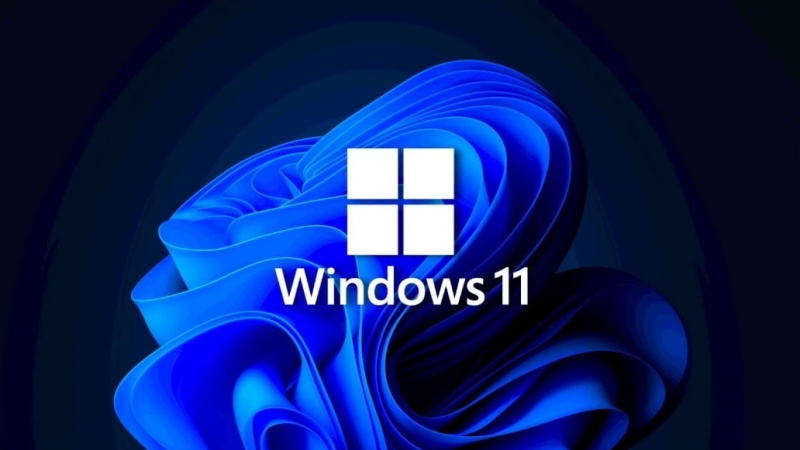
Microsoft’s ambitious new operating system, Windows 11, is facing much slower adoption than expected, drawing frustration across the industry. Many users say Windows 10 still functions without issues, leaving them unconvinced of any need to upgrade. Even Microsoft’s repeated reminders about the upcoming end of security updates have failed to push users toward migration. This stagnation is now putting brakes on Microsoft’s efforts to accelerate its AI-centric platform strategy.
Avoidance of updates due to performance burdens
Jeffrey Clarke, COO of Dell, said at a recent earnings call that “about 500 million PCs capable of upgrading to Windows 11 are still running Windows 10,” adding that “the transition pace lags Windows 10’s by as much as 12 percentage points over the same timeline.” He also noted that “more than 500 million devices are now too outdated—due to insufficient hardware specifications—to run Windows 11 at all,” despite its release more than four years ago.
His remarks were interpreted as internal frustration among manufacturers over adoption speeds far slower than expected. Data bears this out: according to Statcounter, Windows 11’s market share exceeded 55.18% at the end of October, crossing the majority mark, yet the ten-year-old Windows 10 still held an abnormally high 41.71%. Despite the “natural growth effect” of Windows 11 being preinstalled on new PCs, the persistence of such a large proportion of older versions indicates that users are deliberately delaying—or outright refusing—updates.
Regular security updates and technical support for Windows 10 officially ended on the 14th of last month. Microsoft emphasized that Windows 11, with security built in at the design level, protects systems immediately without additional configuration, offers up to 2.3 times better performance than prior versions, and delivers more efficient feature updates. For users unable to migrate immediately, Microsoft introduced the Extended Security Updates (ESU) program for Windows 10, offering critical patches for up to one year. However, the company simultaneously sent escalating pressure signals—activating a support command center and developing dedicated antivirus tools—to reinforce the message that “staying on an old OS is no longer viable.”
The fundamental reason for the stalled transition, however, is attributed to user conservatism. In many personal and enterprise environments, Windows 10 still performs well in both stability and compatibility, leaving users with little incentive to switch to a new OS that requires more advanced hardware. Mandatory requirements such as TPM 2.0 and Intel 8th-generation or newer CPUs have significantly raised the upgrade threshold compared with previous cycles. Many devices remain on older OS versions not due to preference but because they are classified as “spec-ineligible” despite otherwise functioning adequately.
Resistance to changes in user experience (UX) is another tangible barrier. Windows 11 introduced significant shifts to the user interface, such as relocating the Start button—fixed at the bottom-left for 25 years—to the center, and redesigning the taskbar. Many users, wary of disruptions to familiar workflows and potential productivity loss, have opted to remain on Windows 10. For them, the prevailing perception is that their current OS “works perfectly fine,” forming a powerful psychological barrier against switching.
Agentic AI and Copilot integration
Microsoft’s push for upgrades—despite user inconvenience—stems from its plan to transform Windows 11 into an “agentic OS,” where agentic users and AI agents like Copilot are integrated as foundational elements of the operating system. At its Ignite 2025 conference in San Francisco earlier this month, Microsoft announced its goal of reshaping Windows into an environment where multiple AI agents understand user context in real time and autonomously perform necessary tasks, stressing that these agents “will collaborate with one another.”
At the center of this strategy is “Agent 365,” a vision that goes beyond PC-level tools toward enterprise-wide integration and management of multiple agents. Microsoft said that “more than 230,000 organizations already use Copilot Studio, including 90% of the Fortune 500,” and projected that agents will soon be able to “attend meetings, edit documents, and exchange emails and chats.” To support this vision, Microsoft cited IDC’s forecast that about 1.3 billion AI agents will be deployed across global enterprise workflows by 2028.
The introduction of agentic users makes clear that Microsoft’s vision is tied directly to new revenue models. Describing agentic users as “enterprise-grade virtual colleagues,” Microsoft stated that these entities would be registered as unique user objects in Entra ID directories, complete with their own email addresses, Teams accounts, and positions in organizational charts. Some critics noted insufficient explanation of how these new agents would differentiate from or integrate with existing agent tools, but Microsoft said each agent would require its own A365 license—effectively acknowledging that the proliferation of digital-colleague accounts would scale license revenue.
Still, it remains uncertain whether users will see this vision as actual innovation. When Pavan Davuluri, Microsoft’s head of Windows, wrote on X that Windows is “evolving into an agentic OS,” most replies expressed irritation: “Stop forcing AI features no one asked for,” “Just bring back a simple, fast OS like Windows 7.” The backlash intensified after a Windows 11 Copilot promotional video showed the AI failing to perform basic actions like adjusting text size—fueling criticism that Microsoft is “layering AI on top of broken fundamentals.”

Growing security concerns deepen user hesitation
Recently, serious security concerns around upgrading to Windows 11 have surfaced. As AI assistants and agent-type functions become deeply integrated into the OS, experts warn of new forms of malware attacks targeting these capabilities. Microsoft expanded features that allow AI to understand system-wide context and execute commands automatically—raising the risk that malicious actors could intercept user commands or exploit AI’s system privileges. One industry insider noted that “as AI features grow, attacks may evolve beyond traditional file-based or phishing methods, with the AI’s behavior-learning process itself becoming a target.”
Separately, “fake Windows update” scams that trick users into executing malicious commands are spreading. Security firm Huntress announced the discovery of a new ClickFix variant, explaining that the scam displays a full-screen browser page prompting users to install a critical update, deceiving them into believing they are performing a legitimate system update. Once triggered, a complex exploit chain installs malware capable of stealing sensitive data.
Inside the industry, developers are pushing back strongly against the shift toward an “AI coworker OS.” With Microsoft introducing A365 as an autonomous entity within corporate environments, developers fear their role in the OS ecosystem may diminish. These agents are perceived as far more powerful than traditional low-code or no-code automation tools, given that they can independently attend meetings, edit documents, and collaborate on tasks. In the end, the “slow transition” to Windows 11 reflects a convergence of developer concerns over feature stability, expanding security risks, and user reluctance—all colliding at once.
Stefan Schneider brings a dynamic energy to The Economy’s tech desk. With a background in data science, he covers AI, blockchain, and emerging technologies with a skeptical yet open mind. His investigative pieces expose the reality behind tech hype, making him a must-read for business leaders navigating the digital landscape.
Similar Post