From Rare Earth Export Delays to Tariff Retaliation and Fighter Jet Targeting: Sino-Japanese Rift Shows No Sign of Resolution

Siobhán Delaney is a Dublin-based writer for The Economy, focusing on culture, education, and international affairs. With a background in media and communication from University College Dublin, she contributes to cross-regional coverage and translation-based commentary. Her work emphasizes clarity and balance, especially in contexts shaped by cultural difference and policy translation.
Authored On
Modified
Backlash From Takaiichi’s ‘Taiwan Contingency’ Remark
Month-long Sino-Japanese Clashes Across Economic and Security Fronts
Bilateral Tensions Hit Critical Threshold, Prolonged Confrontation Seen as Unavoidable
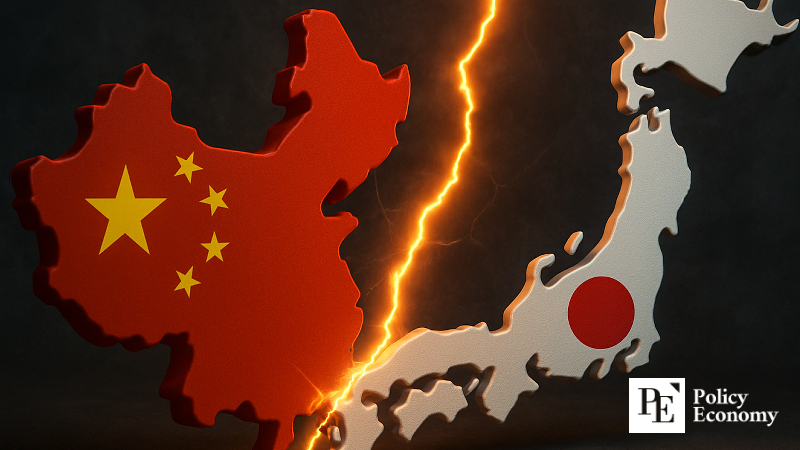
A month after Japanese Prime Minister Sanae Takaiichi’s controversial comment describing a “Taiwan contingency” as a potential threat to Japan’s survival, tensions between China and Japan have expanded into the military sphere. What began as an economic standoff—China’s delayed rare earth export approvals and Japan’s plan to impose anti-dumping duties on re-exported Chinese goods—has now intensified following reports that Chinese carrier-based fighters locked radar onto Japan’s Air Self-Defense Force jets. With both governments entrenched in domestic political imperatives and unwilling to back down, the confrontation shows signs of becoming a prolonged standoff.
Japan Targets Re-exports in Anti-dumping Drive
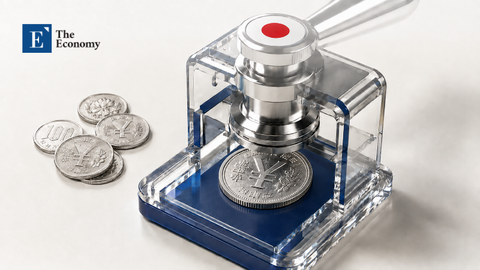
According to the Yomiuri Shimbun on December 8, Tokyo plans to include a new clause in its 2026 tax reform proposal enabling the government to levy anti-dumping duties on products that are effectively Chinese in origin but re-exported through third countries. The rule would likely apply when over 60% of a product’s value originates from a nation already subject to such duties. Japan also intends to shorten the investigation period for determining circumvention, allowing faster response to unfair trade practices. The measure effectively singles out Chinese exports.
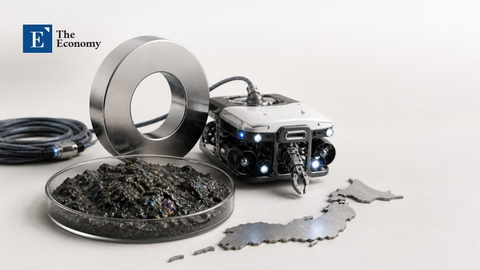
This policy push coincides with Beijing’s reported delay of export permits for rare earth elements to Japan, suggesting a retaliatory economic-security linkage. Multiple Japanese government sources confirmed that Chinese authorities have been slowing export approval procedures for rare earths to Japanese firms since early November—shortly after Takaiichi’s statement before parliament on November 7.
One official noted, “The export process for critical minerals, including rare earths, has been unusually slow,” adding that it remains unclear whether the move constitutes deliberate coercion. Another said, “China appears to be using rare earths to unsettle Japan.”
China has previously wielded its rare earth dominance as a geopolitical weapon. In April, it tightened export restrictions in response to the U.S.-China tariff dispute, and in 2010, it effectively suspended rare earth shipments to Japan following a collision incident near the Senkaku Islands (known in China as the Diaoyu Islands).
Economic and Cultural Fallout
The tensions are spilling into tourism and cultural exchanges as well. According to Kyodo News, major Chinese airlines have extended their fee-free flight cancellation and change policy for Japan-bound routes from the end of 2024 to March 2025. Air China, China Eastern Airlines, and China Southern Airlines announced that Japan-related flights departing before March 28 could be freely canceled or rescheduled. This effectively prolongs China’s November travel advisory against Japan by more than three months, covering the Lunar New Year period—a major travel season that could significantly curb Chinese tourism to Japan.
An analysis by Nikkei, citing data from aviation analytics firm Cirium, revealed that Chinese carriers canceled 904 of 5,548 Japan-bound flights scheduled for December—around 16% of total routes—equivalent to 156,000 seats across 72 routes. The most affected airport was Osaka Kansai International (626 cancellations), followed by Narita and Chubu (Nagoya) airports with 68 each, and New Chitose with 61.
The cultural sector is also feeling the chill. Japanese pop icon Ayumi Hamasaki’s Shanghai concert was abruptly canceled a day before its scheduled date, and a Sailor Moon stage performance in China was also called off. In mid-November, Beijing had already urged citizens to avoid travel to Japan and began tightening restrictions on Japanese films and performances, effectively imposing a han-nichirei (anti-Japan entertainment ban).
China’s core demand remains Takaiichi’s retraction of her Taiwan-related remarks—a demand she has refused to meet, given her reliance on domestic conservative support. Meanwhile, Japan’s tourism sector is already suffering measurable losses. Hotel reservations from China fell 57% between November 21–27 compared to the prior week, and about 70% of December bookings at major tourist destinations have been canceled. Industry analysts estimate that if the trend continues into next year, the tourism sector could lose approximately $11.6 billion. Some observers warn that if Takaiichi maintains her stance, Beijing could escalate to a full rare earth export ban reminiscent of 2010—a scenario Tokyo fears most.
A Military Flashpoint and the Erosion of East Asia’s “Safety Valve”
The crisis took a sharper turn when Japan’s Ministry of Defense held an emergency press conference on December 7, reporting that a Chinese J-15 fighter jet had “illuminated” a Japanese F-15 with radar over international waters southeast of Okinawa. The incident occurred twice—first around 4:32 p.m. for three minutes, and again at 6:37 p.m. for roughly half an hour.
This marks the first time Tokyo has publicly accused Beijing of radar-locking a Japanese aircraft. Although China’s motive remains unclear, Japan’s defense ministry assessed that the radar activity likely served fire-control purposes—an operational step just short of an actual attack. Radar targeting is typically treated as a grave provocation, since even a defensive reaction could trigger accidental confrontation. Given the timing, Tokyo views the act as a deliberate signal amid escalating tensions.
In response, Japan has sought explicit public backing from Washington. According to the Financial Times, Japanese Ambassador to the U.S. Shigeo Yamada recently asked the Trump administration to issue a stronger public show of support. Although U.S. Ambassador to Japan George Glass declared on November 20 that “the President, I, and the Embassy stand firmly behind the Prime Minister,” Washington has since refrained from formal high-level statements. Even after Japan’s request, the only U.S. comment came via a post on social media by a Deputy Spokesperson at the State Department—prompting frustration in Tokyo.
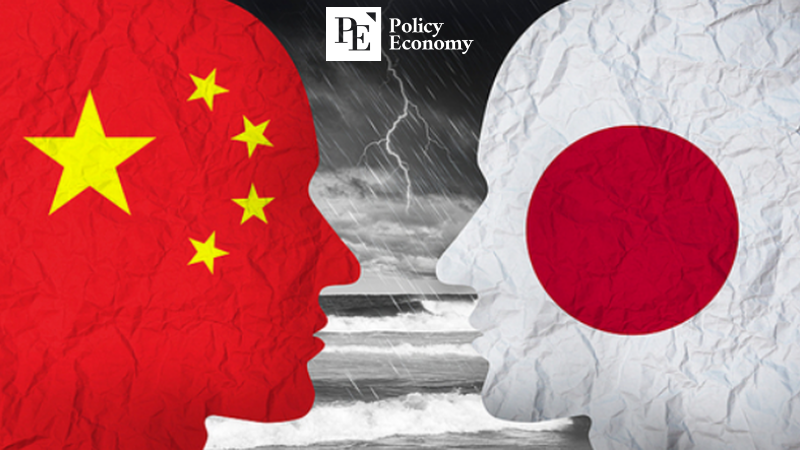
Diplomatic observers warn that the confrontation could undermine East Asia’s fragile balance. Japan had aimed to use a year-end summit in Tokyo to reengage China through trilateral talks with South Korea, easing regional instability exacerbated by the North Korea–Russia military partnership and the prolonged war in Ukraine. But Beijing’s sharp reaction—branding Takaiichi’s statement a “red line violation” and signaling a diplomatic reset—has thrown Japan’s regional strategy into disarray.
Compounding matters, Chinese President Xi Jinping has launched an intensive diplomatic outreach to bypass Japan altogether—holding calls with President Trump, deepening ties with European leaders, and sustaining high-level coordination with Russia. Analysts view this as an effort to construct a new regional network that sidelines Tokyo and reshapes East Asia’s strategic order on China’s terms.
Siobhán Delaney is a Dublin-based writer for The Economy, focusing on culture, education, and international affairs. With a background in media and communication from University College Dublin, she contributes to cross-regional coverage and translation-based commentary. Her work emphasizes clarity and balance, especially in contexts shaped by cultural difference and policy translation.
Similar Post