Bold divergence between U.S. economic indicators and household sentiment, Trump’s economic agenda under strain amid persistent inflation

Authored On
Modified
White House Pressure for Message Revision
Concern Over Voter Backlash in Midterms if Cost-of-Living Issues Ignored
Will Trump Adjust His Economic Narrative as Inflation Erodes Public Sentiment?
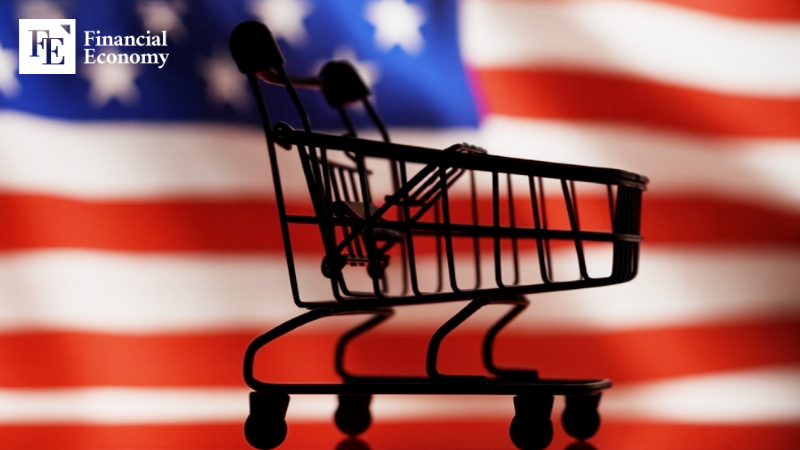
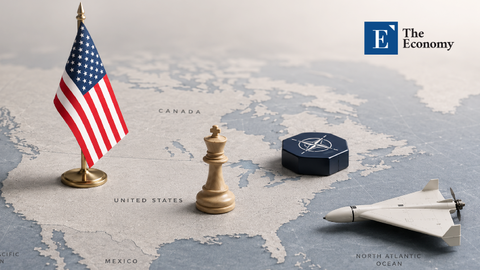
Growing voices inside the White House are urging President Donald Trump to overhaul his economic messaging, arguing that it is increasingly misaligned with voter sentiment, which is dominated by frustration over the cost of living and elevated inflation. Political analysts say the president has fallen into the same dilemma that once plagued former President Joe Biden. Biden repeatedly insisted that inflation was “transitory” or blamed it on “Putin’s price hike” in defense of “Bidenomics,” only to be rejected by voters. Trump, they argue, is now struggling to reconcile the widening gap between official economic indicators and how Americans actually feel about the economy.
“Please address prices”—White House aides intensify pressure on Trump
On the 7th (local time), The Washington Post (WP) reported that senior aides have been pushing President Trump to recalibrate his economic message to focus squarely on high prices and the affordability crisis—voters’ top concerns. According to WP, aides have spent several weeks privately urging the president to emphasize what the administration is doing to raise wages, reduce housing costs, and alleviate inflation. WP wrote, “In conversations in recent weeks, Trump’s aides have encouraged him to talk more about the administration’s actions to raise wages, lower housing costs, and ease inflation.”
Aides have also presented the president with polling data from his dedicated polling unit showing deepening voter anxiety over household costs. A Gallup poll of 1,321 U.S. adults conducted from the 3rd to the 25th and released on the 28th showed Trump’s job approval at 36%, with disapproval reaching 60% (margin of error ±4 percentage points).
The 36% approval rating marks the lowest monthly figure since the start of Trump’s second term. Approval peaked at 47% in January, and aside from July’s 37%, had consistently stayed in the 40% range. With midterm elections approaching next year, the White House fears Republicans could suffer major losses if public perceptions of the economy do not improve. Trump’s economic adviser Stephen Moore said, “Everyone is talking about the A-word—affordability. The cost-of-living issue is a major problem for the White House,” adding, “The president’s economic approval is not where it should be. I see this as a messaging problem.”
Inflation Shock Amplified by High Tariffs
President Trump has largely avoided empathetic messaging such as “I feel your pain,” insisting instead that the economy is strong. Last month in Washington, he dismissed the focus on affordability as a Democratic “trap” designed to obscure his administration’s economic achievements. In a recent cabinet meeting, he said, “There is a fake narrative about ‘affordability’ that Democrats keep repeating. The word means nothing to anyone,” calling the concept of affordability a Democratic “con job.” He has also consistently argued that inflation is not his responsibility but an inheritance from former President Biden.
But contrary to Trump’s assertions, inflation has not eased since he took office. On paper, the U.S. economy is booming: projected GDP growth for this year stands at 2%, double that of South Korea, which is expected to grow around 1%. The problem is inflation. Tariff-driven cost pressures have pushed consumer price index (CPI) inflation back into the 3% range. The administration reversed tariffs last month on more than 200 imported food items—coffee, beef, bananas, and others—precisely for this reason. Yet household-level inflation is rising even faster, including grocery prices and dining costs. Gasoline and egg prices have stabilized somewhat, but decades of accumulated increases in housing, healthcare, and education continue to weigh heavily on American households.
The outlook is also discouraging. With inventories stockpiled before tariff implementation now depleted, upward pressure on prices is expected to intensify further. Companies have begun passing tariff-related costs on to consumers. As a result, Washington insiders warn that Trump’s “tariff shock” could ricochet by late this year or early next year, sending a “price shock” through the U.S. economy. Such a development would accelerate erosion in Trump’s base, amplify calls for accountability, and sharply weaken his political momentum.

Inflation as a “Legacy” or Tariff-Driven Rebound?
Even so, the Trump administration remains optimistic about the U.S. economy next year. Treasury Secretary Scott Bessent said in an interview with CBS on the 7th, “The economy has been more resilient than expected,” projecting real GDP growth of 3% for the year. On inflation and affordability pressures, he added, “We are focused on bringing inflation down,” and emphasized that price growth “will decline significantly next year.”
However, economists warn of deflationary risks associated with falling prices. Francesco Bianchi, economics professor at Johns Hopkins University, said, “Imagine what would happen if all prices returned to pre-pandemic levels.” He noted, “Inflation in recent years has pushed wages higher. If wages stay elevated while prices fall, firms won’t generate enough profit to pay workers,” explaining that this dynamic “raises labor costs dramatically and can trigger a recession.” He added that such a downturn would reinforce expectations of further price declines.
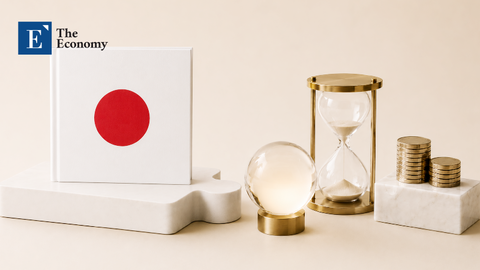
Laura Veldkamp, professor at Columbia Business School, said, “If people believe prices will be lower tomorrow, why buy today?” She warned that the moment consumers expect declining prices, demand collapses and the economy risks an immediate recession. “Price declines are typically associated with very severe negative outcomes,” she added. Japan offers the clearest example: after its asset bubble burst in the early 1990s, persistent deflation stalled economic growth for more than two decades.
Some analysts say the success or failure of the administration’s economic policies will become clearer next year. If, as the Trump team argues, current inflation is simply a Biden-era legacy, inflation should ease next year. But if today’s cost-of-living pressures prove to be tariff-driven, responsibility will fall squarely on current policy, complicating any attempt to shift blame. This dynamic could disrupt coordination across fiscal, trade, and monetary policy. Regardless of which outcome prevails, experts say U.S. financial policy will inevitably face pressure to recalibrate the pace and magnitude of rate adjustments as well as liquidity management and market-stabilization measures.
Similar Post