Inflation Stays in Line, Jobs Take Priority — Markets Rally Around a Fed Rate Cut in December

Aoife Brennan is a contributing writer for The Economy, with a focus on education, youth, and societal change. Based in Limerick, she holds a degree in political communication from Queen’s University Belfast. Aoife’s work draws connections between cultural narratives and public discourse in Europe and Asia.
Authored On
Modified
Experts and Markets Align on a December Rate Cut
Private-Sector Employment Data Deteriorates Sharply as Inflation Stays Relatively Steady
If the Russia–Ukraine War Winds Down, Inflation Could Ease Further
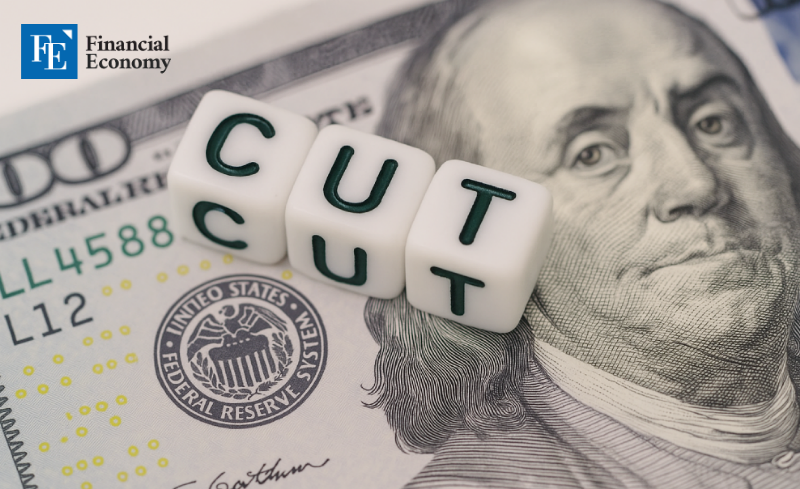
The Federal Reserve is increasingly expected to cut interest rates at its December FOMC meeting. With clear signs of weakening in the U.S. labor market and inflation prints staying within an expected range, the case for a cut is gaining traction. Some analysts also argue that if the Russia–Ukraine war moves toward an end, inflation pressures on the U.S. could ease further.
Could a Third Straight Rate Cut Happen?
On Dec. 7 (local time), the Financial Times reported that the Fed is expected to cut rates at the Dec. 9–10 FOMC meeting. In a recent FT-commissioned survey run by the University of Chicago’s Booth School of Business, 85% of economists said they expect the Fed to deliver a 25-basis-point cut in December. If that happens, it would mark a third consecutive rate reduction following October.
Even so, divisions inside the Fed are reported to be lingering. In the survey, 60% of respondents predicted that two of the 12 voting members would oppose a cut, while 30% expected three or more dissenters. Officials seen as more likely to vote against a cut included Kansas City Fed President Jeff Schmid—who also opposed a cut in October—as well as Boston Fed President Susan Collins and Chicago Fed President Austan Goolsbee. By contrast, Fed Governor Stephen Miran, who is viewed as close to President Donald Trump, is expected to argue again for a larger 50-basis-point cut.
Markets are also leaning toward a cut. CME Group’s FedWatch tool shows the implied probability of a 25-basis-point reduction at the December FOMC rising from 30% on Nov. 19 to 87.2% as of Dec. 7. FedWatch is widely used as a reference because it reflects market-implied expectations for the policy rate based on interest-rate futures pricing.
U.S. Labor Market Slump Deepens
Expectations for a December rate cut have become increasingly entrenched as the U.S. labor market has cooled noticeably. Automatic Data Processing (ADP) said on Dec. 3 that U.S. employment fell by 32,000 in November from the previous month—far below the Dow Jones forecast for a 40,000 increase and the biggest decline in two years and eight months since March 2023, when payrolls dropped by 53,000. The ADP report is based on data collected by a private payroll firm and has drawn heightened attention as a real-time gauge since the U.S. federal government entered a shutdown in October, leaving markets without the Labor Department’s official jobs report.
Meanwhile, inflation pressures have largely held steady for months. The Commerce Department’s Bureau of Economic Analysis said the personal consumption expenditures (PCE) inflation rate came in at 2.8% in September. While that was the highest level since March last year (2.9%), the pace of increases has been modest compared with June (2.6%), July (2.6%), and August (2.8%). The September print also matched market expectations.
PCE measures the prices U.S. residents pay for goods and services. The Fed uses PCE—rather than the better-known consumer price index (CPI)—as its primary gauge for assessing progress toward its 2% inflation target. A market expert said that because PCE is moving within a predictable range, the December FOMC is likely to prioritize labor-market stability over inflation, reinforcing the view that a rate cut in December is effectively the base case.
International Oil Prices May Stabilize
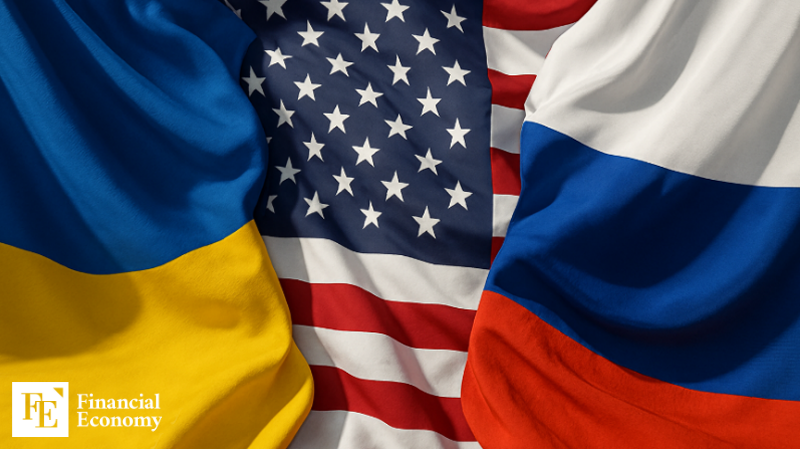
There may be further room for inflation pressures to ease, as discussions over ending the Russia–Ukraine war continue. On Dec. 2, Russian President Vladimir Putin met for hours in Moscow with Steve Witkoff, the Trump administration’s Middle East envoy, along with other members of a U.S. delegation. Separately, delegations led by Witkoff and Ukraine’s Rustem Umerov, secretary of the National Security and Defense Council, held three days of talks in Florida starting Dec. 4. However, the United States is said to have made little headway toward a concrete agreement in its discussions with the two sides.
On Dec. 7, at the Kennedy Center Honors ceremony in Washington, D.C., President Donald Trump was asked by reporters what the next step would be in negotiations between Russia and Ukraine. “We’ve been talking with Vladimir Putin, the president of Russia, and we’ve been talking with Ukraine’s leaders, including President Zelensky,” he said, adding that he was “a little disappointed” Zelensky had not read a proposal “until a few hours ago.” The “proposal” appears to refer to a revised U.S. draft prepared after talks with Ukraine, though details have not been made public.
If negotiations gain momentum and the war is brought to an end, global energy markets could stabilize, potentially pushing down inflation across countries. International oil prices have recently shown clear volatility tied to developments in the conflict. For example, on Dec. 2—when expectations grew that peace talks were advancing—West Texas Intermediate (WTI) crude settled at $58.64 a barrel, down $0.68 from the previous session. By contrast, on Dec. 5, after reports that negotiations were stalling, WTI climbed back into the $60 range. If the war ends and oil prices enter a sustained decline, gasoline and heating costs could fall as well, pulling headline inflation measures, including CPI, lower more quickly.
Aoife Brennan is a contributing writer for The Economy, with a focus on education, youth, and societal change. Based in Limerick, she holds a degree in political communication from Queen’s University Belfast. Aoife’s work draws connections between cultural narratives and public discourse in Europe and Asia.
Similar Post