LG Energy Solution’s Mercedes-Benz Contract: A Potential Turning Point for Korea’s Battery Sector Amid China’s Low-Cost Offensive

Anne-Marie Nicholson is a fearless reporter covering international markets and global economic shifts. With a background in international relations, she provides a nuanced perspective on trade policies, foreign investments, and macroeconomic developments. Quick-witted and always on the move, she delivers hard-hitting stories that connect the dots in an ever-changing global economy.
Authored On
Modified
LG Energy Solution to Supply Batteries for Mercedes’ Entry-Level EVs
European Automakers Move to Reduce Dependence on China
China’s CATL Expands in Europe, Intensifying Local Competition
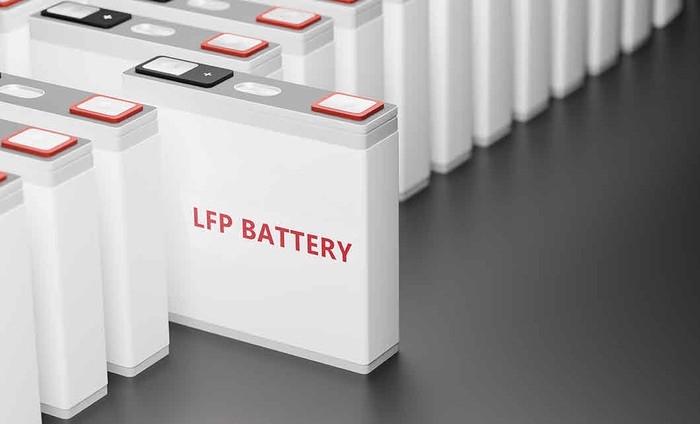
LG Energy Solution has secured a contract to supply electric-vehicle batteries to Germany’s Mercedes-Benz for seven years, worth approximately $1.50 billion (converted from 2 trillion KRW). The deal, finalized just one month after Mercedes’ CEO visited Korea to discuss future mobility supply-chain partnerships, is being viewed as a milestone that strengthens LG Energy Solution’s status as a key supplier. Within Korea’s battery industry, where Chinese manufacturers’ low-price offensive has eroded market standing, major supply agreements with European automakers are raising expectations for a much-needed counteroffensive.
Strengthening LG Energy Solution–Mercedes Cooperation in Future Mobility
On the 9th, LG Energy Solution announced it would supply Mercedes with EV batteries worth $1.55 billion (converted from 2.06 trillion KRW) over seven years beginning in 2028. This marks the fourth large-scale supply deal won from Mercedes in the past two years. In October last year, LG Energy Solution signed an agreement to supply 50.5 GWh of batteries for EVs to be sold in North America and other regions. In September, it also agreed to deliver 75 GWh and 32 GWh for EVs bound for the U.S. and Europe, respectively. Most of these quantities consist of cylindrical 46-series cells. Assuming 75 kWh per vehicle, the volumes correspond to production for approximately 2.1 million EVs.
Regarding the latest contract, LG Energy Solution stated, “Details cannot be disclosed under discussions with the client,” adding that contract size and duration may change based on further negotiations. Industry observers widely expect the new volume to be allocated to Mercedes’ next-generation entry-level EVs currently under development. An industry official noted, “As the EV market expands from high-end large models to mid-priced compact segments, this fourth contract aligns with Mercedes’ strategy to scale up its EV market share.”
Mercedes recently unveiled an aggressive electrification roadmap targeting more than 40 new models by 2027. To support this, the automaker must expand battery adoption across premium to entry segments. LG Energy Solution’s broad portfolio—from cylindrical 46-series to pouch-type high-voltage mid-nickel and LFP products suited for mid-to-low-priced models—closely aligns with these needs. The visit to Korea on November 13 by Ola Källenius, chairman of Mercedes-Benz, for discussions with LG Group on future business cooperation further underscores the deepening partnership.
Declining Market Share of Korean Batteries Under China’s Low-Price Offensive
While LG Energy Solution’s series of large-scale wins is a meaningful achievement for Korea’s battery sector, the broader landscape remains challenging. Chinese manufacturers continue expanding their market share by leveraging aggressive price cuts, eroding the competitive position of Korean suppliers. Backed by substantial government subsidies and a vast domestic market, Chinese firms have strengthened cost competitiveness and consistently pressured global price levels, making it difficult for Korean companies to protect profitability—even with strong technological capabilities.
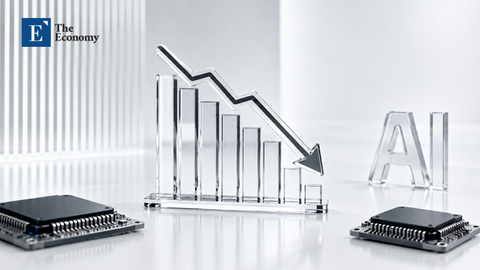
According to analysis by the Korea Institute of Finance using data from China’s General Administration of Customs, export prices from Chinese companies have declined for over two years—from Q2 2023 through Q3 this year. The downward trend persisted even after post-pandemic supply-chain distortions eased, signaling an entrenched low-price strategy. Export prices fell across key categories including automobiles, batteries, solar components, and steel, with consumer goods experiencing the steepest drops as manufacturers resorted to price cuts amid worsening industrial overcapacity.
The impact is particularly pronounced in batteries. Market-research firm SNE Research reports that from January to September this year, Korea’s top three battery makers (Samsung SDI, LG Energy Solution, SK On) held a combined global EV battery market share of 16.9%, down 3.3 percentage points from last year. In contrast, Chinese companies’ share rose to 79%, up 3.4 percentage points. CATL maintained its dominant 36.8% share, with BYD at 18.0%. Six Chinese companies—including CALB (4th), Gotion (7th), EVE (9th), and SVOLT (10th)—ranked within the global top ten.
Opportunities and Risks in Europe, a Market Korea Once Dominated
Shifts emerging in the European market may offer new opportunities for Korean companies. European automakers are restructuring supply chains to adapt to geopolitical risks and regulatory changes such as the EU’s Carbon Border Adjustment Mechanism (CBAM), accelerating efforts to reduce dependence on China for LFP batteries. Korea’s three battery makers have been operating European gigafactories since 2018: LG Energy Solution in Wrocław, Poland; Samsung SDI in Göd, Hungary; and SK On in Komárom and Iváncsa, Hungary. These facilities collectively account for 75% of the EU’s battery cell production capacity.
However, China’s advance is intensifying. On October 26, CATL’s joint venture with Stellantis held a groundbreaking ceremony for a battery plant in Aragón, Spain. CATL plans to produce 50 GWh of LFP EV batteries annually at the facility—enough for 700,000 to 1 million vehicles—with partial operations beginning late next year and full completion targeted for 2028. CATL already operates one European plant and is constructing another: a 14 GWh facility in Germany that began EV battery production in late 2022, and a 100 GWh plant in Debrecen, Hungary, set to begin production early next year.
Once CATL’s European factories reach full operation, the geographical advantage long enjoyed by Korean suppliers may diminish. Moreover, some European demand currently served by Korea’s top three could shift to CATL. When announcing its Hungary plant in 2022, CATL emphasized proximity to major customers such as Mercedes, BMW, Stellantis, and Volkswagen—clients overlapping significantly with those of Korea’s manufacturers. LG Energy Solution’s Poland factory supplies Volkswagen, Ford, Renault, and Volvo; Samsung SDI’s Hungary plant serves BMW, Volkswagen, and Stellantis; and SK On’s Hungary operations supply Ford and Volkswagen.
Anne-Marie Nicholson is a fearless reporter covering international markets and global economic shifts. With a background in international relations, she provides a nuanced perspective on trade policies, foreign investments, and macroeconomic developments. Quick-witted and always on the move, she delivers hard-hitting stories that connect the dots in an ever-changing global economy.
Similar Post