“Even Completed Data Centers Hit Power Ceiling” — U.S. Aging Infrastructure Emerges as Bottleneck to AI Dominance

Siobhán Delaney is a Dublin-based writer for The Economy, focusing on culture, education, and international affairs. With a background in media and communication from University College Dublin, she contributes to cross-regional coverage and translation-based commentary. Her work emphasizes clarity and balance, especially in contexts shaped by cultural difference and policy translation.
Authored On
Modified
BloombergNEF “106 GW Needed by 2035”
‘AI Data-Center-Driven Power Crunch’ Already Materializing
Aging, Inadequate Power Grid Under Increasing Strain
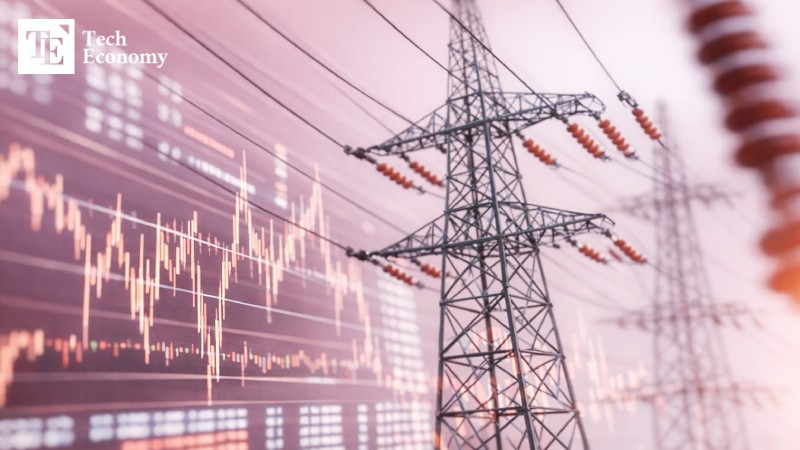
The explosive growth of artificial intelligence (AI) technologies has triggered an unprecedented surge in electricity demand. Amid global stock markets increasingly viewing nuclear power as the only viable alternative, warnings are growing that aging and overburdened power grids may become the greatest obstacle to the AI revolution. The U.S. power grid, already plagued by antiquated infrastructure, faces elevated risk of outages. Meanwhile, a data-center boom driven by AI expansion is piling additional stress onto electricity demand that had remained stagnant for two decades.
Nuclear Renaissance, Key to AI Supremacy?
On the 9th (local time), the global investment-specialist media outlet GuruFocus reported that although the United States is pouring massive funds into nuclear power as a solution for powering AI data centers, a severe bottleneck has emerged: insufficient transmission infrastructure to deliver the generated electricity. According to GuruFocus’s analysis, the Bloomberg Nuclear Index has risen 38 percent this year, and the market capitalization of related companies has swelled by $566 billion. A consensus has formed in the market that nuclear power is indispensable to meet the enormous energy demands imposed by AI computing under a backdrop of deregulation easing.
Moves to restart nuclear plants are also accelerating. Last month, the U.S. Department of Energy (DOE) approved a federal loan of $1 billion to Constellation Energy, the country’s leading nuclear energy company. Constellation plans to restart the Three Mile Island nuclear facility and sell electricity to Microsoft for 20 years. Earlier in October, a plan was announced to recommission the Duane Arnold nuclear plant in Iowa — shut down in 2020 after 45 years of operation — to supply power to a Google data center. Similarly, the Palisades nuclear plant in Michigan, which was shuttered in 2022, is being prepared for reactivation early next year through corporate efforts including by Holtec International.
Reactivating existing nuclear plants is far more advantageous in terms of construction or restoration time and investment costs compared with building new ones. While building a new nuclear power plant typically takes 10–15 years, reactivating an old plant requires only 2–5 years. The investment cost amounts to only about one-tenth as much, making it vastly more economical.
40% of AI Data Centers to Confront Power Crunch by 2027
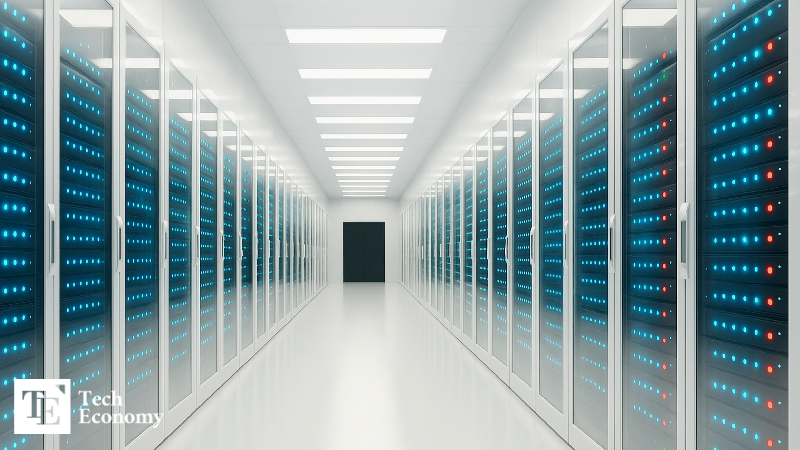
The United States currently accounts for 44% of global data-center capacity (over 50 gigawatts), leading the world in AI infrastructure. This already rivals the combined capacities of South Korea, China, the European Union, Japan, and India. Given the recent sharp rise in power demand, that proportion is expected to climb annually. According to BloombergNEF, power demand from U.S. data centers is projected to surge from the current 40 GW to 106 GW by 2035 — a roughly 300% increase, and a significant upward revision compared to forecasts made just in April. The surge in early-stage data-center projects announced this year pushed up the power-demand outlook.
Currently, only 10% of U.S. data centers consume 50 megawatts (MW) or more, but future centers are anticipated to average well over 100 MW. In particular, the share of ultra-large data centers consuming 500 MW or more could reach 25%, with some facilities estimated to exceed 1 GW. As AI training and inference come to account for about 40% of overall data-center computing, average utilization rates per center are expected to rise from 59% to 69%.
Yet the explosive demand growth clashes with power shortfalls already emerging nationwide. The effective reserve margin — a key measure of energy-system flexibility — has fallen from 26% five years ago to 19% today, approaching the critical 15% threshold typically regarded as dangerously low. Already, eight of 13 U.S. regional power markets have reached or fallen below that level. Market research firm Gartner predicts that by 2027 — just two years from now — 40% of AI data centers will face power constraints.
Existing Grid Simply Can’t Handle It
The problem doesn’t end there. The load variability introduced by AI data centers presents a far more serious threat to existing power grids. Tens of thousands of GPUs engaged in AI computations can cause rapid, simultaneous spikes and drops in electricity usage at specific moments, translating into millisecond-scale fluctuations in power consumption. Such abrupt changes threaten the frequency stability of the national grid and, in worst-case scenarios, could trigger wide-area blackouts.
Moreover, the already strained grid infrastructure is effectively incapable of absorbing the incoming demand surge. According to the U.S. Energy Information Administration (EIA), the total new power supply expected to come online across the United States this year is 63 GW. Against this backdrop, the massive data-center projects being pursued by AI industry giants — including jointly planned developments by NVIDIA and OpenAI — would require at least 10 GW, a figure equivalent to the annual electricity consumption of some 8 million U.S. households.
Viewed from the perspective of a single city, the scale becomes even clearer. For instance, the 10 GW requirement is nearly equivalent to peak summer power demand for an entire metropolis such as New York City managed by the New York Independent System Operator (NYISO). A single corporate venture would thus demand energy at a scale comparable to powering a major global city. Moreover, 10 GW represents roughly 16% of the total new electricity capacity projected to be added nationwide in 2025. This implies that a plan by a single corporate consortium could significantly disrupt the entire national power-supply strategy.
Yet there is still no clear answer as to where this massive electricity will come from. The traditional energy source most frequently proposed — fossil fuels — has already reached its limits. The administration of Donald Trump has exerted pressure to increase natural-gas usage for data centers, but reality is far less accommodating. Major gas-turbine manufacturers like GE Vernova have already booked out their production capacity through 2028, meaning new orders face indefinite waiting periods. The EIA predicts that this year’s additional natural-gas–power output added in the U.S. will total only 4.4 GW.
Even nuclear power — widely viewed by the tech industry and the Trump administration as the next-generation energy source — cannot solve the problem in the short term. Although major efforts are underway to build new reactors, connecting a reactor to the national grid typically takes several to dozens of years. For instance, a major reactor-expansion project at the Vogtle Electric Generating Plant in Georgia took over a decade to complete. Even small modular reactors (SMRs), enthusiastically backed by big tech, are unlikely to be commercially viable before 2030 at the earliest.
Even more pressing, however, is the aged transmission infrastructure. This bottleneck hampers efficient delivery of electricity from generation sites to demand centers, exacerbating regional imbalances in power distribution and undermining the stability of the grid. According to the DOE, about 70% of U.S. transmission lines were installed at least 25 years ago, and the average age of major transformers exceeds 40 years. Such obsolete infrastructure not only increases the risk of failures, but dramatically amplifies the time and cost required for permitting, site acquisition, and community opposition for any expansion projects — raising serious concerns about the long-term reliability of the power grid.
Siobhán Delaney is a Dublin-based writer for The Economy, focusing on culture, education, and international affairs. With a background in media and communication from University College Dublin, she contributes to cross-regional coverage and translation-based commentary. Her work emphasizes clarity and balance, especially in contexts shaped by cultural difference and policy translation.
Similar Post