EU’s ‘Russian Frozen Assets Loan’ Plan Stalled by Neighbours’ Backlash and Russian Threats

Siobhán Delaney is a Dublin-based writer for The Economy, focusing on culture, education, and international affairs. With a background in media and communication from University College Dublin, she contributes to cross-regional coverage and translation-based commentary. Her work emphasizes clarity and balance, especially in contexts shaped by cultural difference and policy translation.
Authored On
Modified
EU pushes ‘Russian frozen assets loan for Ukraine’
Belgium protests: “We didn’t confiscate German assets even in World War II”
Japan also refuses use of frozen assets, raises legal concerns at G7
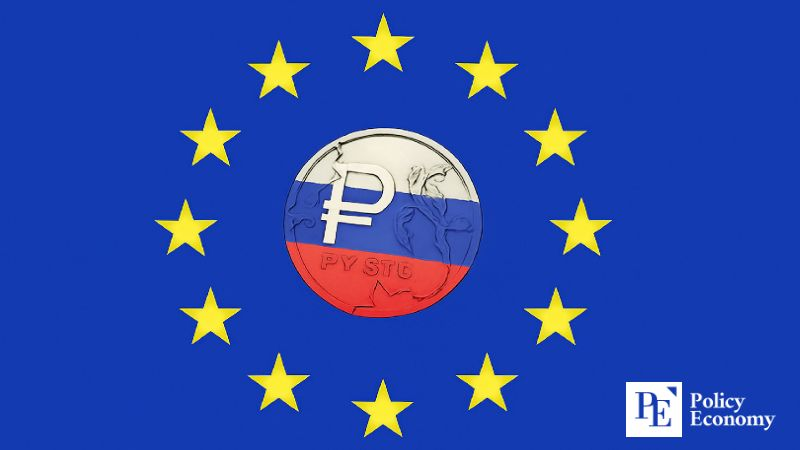
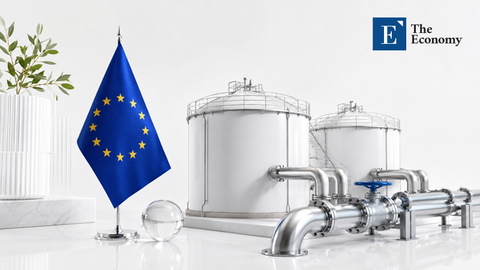
The European Union’s plan to extend a reparation loan to Ukraine using frozen Russian assets has been deadlocked for months. Major EU member states including Germany, France, the Netherlands and Denmark support the reparation loan initiative, but Belgium, which holds most of the frozen Russian assets, and Japan, which is watching the stance of the United States, are opposed, preventing the scheme from reaching a final decision. On top of this, Russia is issuing stark threats of retaliation, while even the European Central Bank (ECB) has refused to provide a final guarantee on the grounds that it could breach the treaty ban on monetary financing, further complicating efforts to move the plan forward.
Call by seven EU states for rapid frozen-asset loan push
According to Bloomberg on the 10th (local time), seven EU member states — Estonia, Finland, Ireland, Latvia, Lithuania, Poland and Sweden — have recently urged that the EU’s reparation loan scheme, which would provide large-scale funding to Ukraine backed by frozen Russian assets, be moved ahead quickly. Arguing that Russia’s imperial ambitions threaten European security beyond Ukraine, they declared their strong support for the European Commission’s proposal to finance a reparation loan using the cash balances of frozen Russian assets within the EU.
Earlier on the 3rd, European Commission President Ursula von der Leyen proposed a scheme under which around $105 billion of Russian assets frozen within the EU would be used to extend a reparation loan to Ukraine. Under the reparation loan mechanism, Ukraine would incur a repayment obligation only once it receives war reparations from Russia after the conflict; the EU would raise funds against frozen Russian assets and lend them to Ukraine interest-free.
It is estimated that Russian assets frozen worldwide amount to around $319 billion. In Europe, around $245 billion of Russian assets are frozen, of which approximately $215 billion are held at Euroclear, the Belgian central securities depository (CSD). The remainder is spread across other member states such as France. Europe has placed these frozen assets in ultra-low-risk instruments and has been using the interest income to support Ukraine. Between January and July 2025 alone, transfers to Ukraine reached about $13 billion. Outside the EU, around $30 billion is frozen in Japan, and further Russian assets are believed to be frozen in the United States, the United Kingdom, Canada and other countries.
Belgian backlash over fear of Russian retaliation, Japan also refuses while watching Washington
However, Belgium — where most of the frozen Russian assets are located — is vehemently opposed to the loan scheme. Its concern is that if the EU moves to use the Russian assets, Belgium could ultimately be left to shoulder the legal liability. Belgian Prime Minister Bart De Wever said, “Stealing from bad people to give to good people sounds like a great idea. But historically, we have never confiscated another country’s frozen assets,” adding, “Even in the Second World War, we did not confiscate German money.” He went on, “In wartime you can freeze assets, and in the end the defeated country must compensate the victor for some or all of the damage,” before pointedly adding, “But imagining that Russia will lose is a fairy tale, a complete fantasy.”
During negotiations, Belgium has nevertheless demanded that the Group of Seven (G7) countries that are not EU members should also use Russian assets frozen in their jurisdictions to extend loans to Ukraine. The calculation is that if G7 countries share the burden, the risk of Russia singling out Belgium for retaliation will be reduced. But Japan, one of the G7 members, has said it will not join the reparation loan scheme. At the G7 finance ministers’ meeting on the 8th, Japan rejected the EU’s request that it follow suit on the reparation loan plan.
Japan’s refusal is tied to the position of the administration of U.S. President Donald Trump. A 28-point draft ceasefire proposal for the Russia–Ukraine war, disclosed last month, includes a clause stating that $100 billion from frozen Russian assets would be used for Ukraine’s reconstruction and investment projects, with 50% of the returns going to the United States. This proposal conflicts with the European scheme, and Japan is reluctant to go against its key ally, the United States. President Trump has repeatedly signalled his intention to use seized Russian assets as leverage to bring President Vladimir Putin to the negotiating table.
Russian warnings of ‘theft’ and risk of delayed war termination
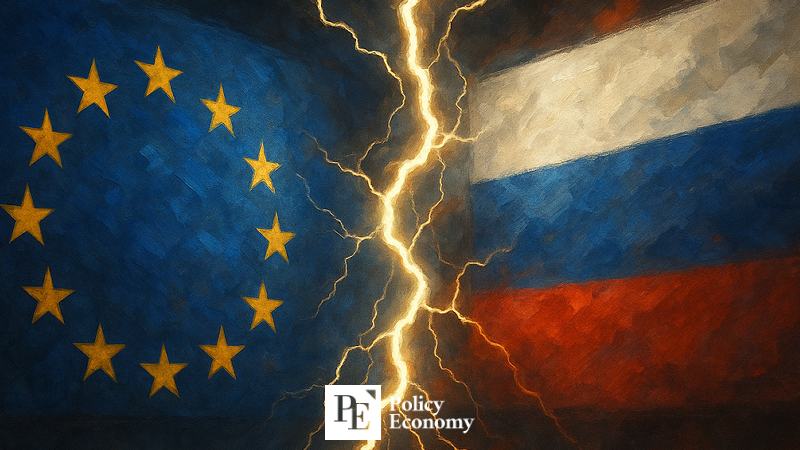
Russia, for its part, is fiercely denouncing the EU plan as asset confiscation and “theft.” Dmitry Medvedev, deputy chairman of Russia’s Security Council, warned sternly in a recent Telegram post that “the EU’s hasty attempt to steal Russian assets frozen in Belgium is a violation of international law and constitutes a casus belli.” Sergei Nechayev, Russia’s ambassador to Germany, also said on the 5th that “any activity that uses Russian state assets without Russia’s consent amounts to theft,” adding that “the theft of Russian state assets will trigger far-reaching consequences.”
In a statement sent to AFP, Ambassador Nechayev described the idea of tapping Russia’s frozen assets as an “unprecedented step,” arguing that it would “damage the EU’s business reputation and push European governments into endless litigation.” He added that it would lead to a “legal free-for-all” and “the destruction of the foundations of the global financial system, with the EU bearing the brunt,” and said he was “certain that Belgium and Germany understand this.” He also mocked Europe’s plan to provide Russia’s frozen assets to Ukraine as proof that Europe “does not have the substantial resources needed” to continue supporting Ukraine.
The European Central Bank (ECB) has likewise expressed reluctance over the use of frozen assets. According to several EU officials earlier this month, when the European Commission inquired whether the ECB could act as the final guarantor for the reparation loan to Ukraine, the ECB carried out an internal review and then informed Brussels that such a role would not be possible. The ECB is reported to have concluded that the Commission’s proposal would in effect amount to direct fiscal support to governments, because the central bank could end up assuming member states’ fiscal obligations.
The ECB’s position is that the reparation loan proposal cannot be considered because it may violate the EU treaties’ prohibition of monetary financing, namely the creation of money to fund government spending. The EU bans such forms of support on the grounds that using central-bank assets to directly finance government expenditures would fuel inflation and undermine confidence in the central bank. Diplomatic and security experts also warn that if Europe touches the principal of Russia’s frozen assets, it could face retaliatory measures from Moscow and become embroiled in legal disputes — and that the move could, paradoxically, delay the end of the war.
Siobhán Delaney is a Dublin-based writer for The Economy, focusing on culture, education, and international affairs. With a background in media and communication from University College Dublin, she contributes to cross-regional coverage and translation-based commentary. Her work emphasizes clarity and balance, especially in contexts shaped by cultural difference and policy translation.
Similar Post