Domestic growth and cost advantages are shifting global steelmakers toward India

Authored On
Modified
From basic production to leadership in global value chains
A strategic escape route for a cost-pressured, slowing industry
Growing advantages in labor, logistics, and overall cost competitiveness
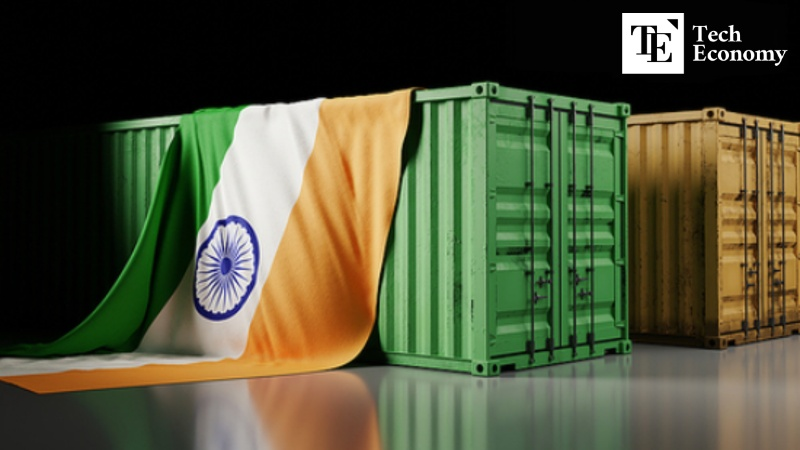
The global steel industry is rapidly redirecting large-scale investments toward India, accelerating the transition of global production bases. Companies such as Japan’s JFE Steel and Korea’s POSCO are pursuing strategies that go beyond simple market entry to securing long-term operational footholds. With India’s crude steel output surpassing 100 million tons in a short period, the government’s expansion targets are being closely matched by simultaneous growth in raw material supply chains and process efficiency. Even amid a global economic slowdown, India’s steel market continues its steady expansion, leading major producers to view the country as a “core growth axis” capable of delivering stable earnings for decades.
Economies of scale push India toward becoming a long-term production hub
According to Fortune India on the 10th (local time), Japan’s JFE Steel recently agreed to form a 50:50 joint venture with its Indian partner JSW Steel to jointly operate the assets of Bhushan Power & Steel (BPSL) in Odisha. The project will receive phased investment totaling about 17.5 billion USD, with plans to increase crude steel capacity from the current 4.5 million tons to 10 million tons by 2030. By combining Japan’s advanced technologies with JSW’s extensive domestic distribution network, the companies aim to strengthen their market dominance.
ArcelorMittal–Nippon Steel (AMNS) made its entry earlier by acquiring the insolvent Essar Steel’s Hazira plant in 2019 for roughly 46.7 billion USD. The company plans to expand the plant’s capacity from 9 million tons today to 15 million tons by 2026 and 24 million tons by 2030. AMNS is also considering building a new steel mill in Odisha with an investment of approximately 11.1 billion USD, alongside a 16.6 billion USD steel complex project in Andhra Pradesh.
This wave of mega-investments signals that India’s steel sector has moved far beyond the stage of being a simple emerging market. With the Indian government targeting crude steel capacity of 300 million tons by fiscal year 2030–31 (up from the current 205 million tons), domestic demand from infrastructure, housing, and automobiles has expanded at an overwhelming pace. For global steelmakers, this increases the likelihood of recouping upfront investments and reinforces India’s status as a market where economies of scale directly translate into expanded production capacity.
Raw material access also strengthens India’s investment appeal. The country’s iron ore production reached 290 million tons as of late last year, and coal output exceeded 1 billion tons, ensuring a stable supply chain. Additionally, direct reduced iron (DRI) production has risen to around 55 million tons, lowering initial capital expenditure requirements. With a surging domestic market, government-led manufacturing initiatives, and stable raw material pipelines all converging, India is becoming not only an export destination but also a long-term global production hub and future demand center for the world’s steelmakers.
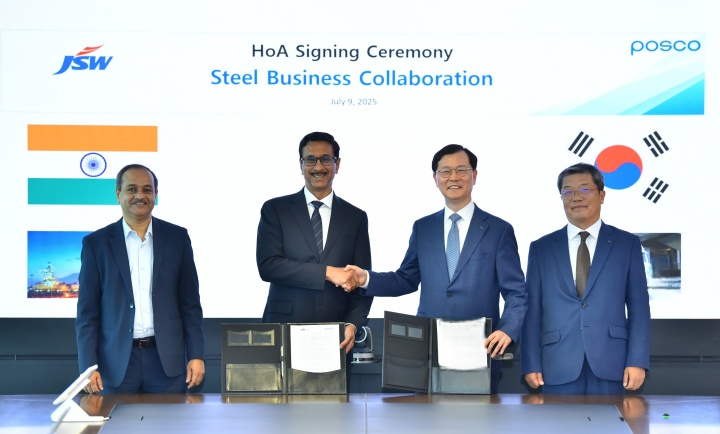
Global steelmakers converge with India’s domestic industrial ambitions
Facing mounting cost pressure and weakening results, Korean steelmakers have begun accelerating their expansion into India as a strategic breakthrough. POSCO in August signed a Heads of Agreement (HOA) with JSW Steel to advance long-term business cooperation. This follows a memorandum of understanding (MOU) signed last October covering steel and battery-material collaboration, and includes specific plans for constructing an integrated steel mill with annual capacity of 5 million tons. The two companies, having finalized production scale and equity structure, are currently proceeding with site selection in Odisha.
POSCO already produces high-grade automotive steel through its POSCO Maharashtra cold-rolling plant, giving it operational experience in the region. The new joint venture is expected to significantly increase its influence. POSCO earlier announced a long-term goal of restructuring its global crude steel capacity into a 60 million-ton system, with expansion in India forming a core pillar of that strategy. With India’s steel-consuming sectors—automotive, appliances, and construction—growing rapidly, POSCO’s move to build large-scale facilities locally is seen as a proactive response to a shifting global steel-demand landscape.
Hyundai Steel is also strengthening its Indian presence. To secure stable volumes of high-grade steel for Hyundai Motor’s India plants, it is establishing a steel service center (SSC) in Pune, targeting commercial operations within the year. This represents an integrated approach that situates automotive production bases and steel supply chains in the same region. Dongkuk Steel Group, through its subsidiary Dongkuk CM’s coil center operations, is likewise expanding its supply of cold-rolled products, reflecting wider industry recognition of India’s strong growth potential.
Korean steelmakers note that India has already overtaken Japan to become the world’s second-largest steel producer and consumer after China. According to the World Steel Association, India produced 140.8 million tons of steel in 2023, up 12 percent year-on-year, while domestic demand is on course to exceed 400 million tons. Meanwhile, India has been progressively tightening market-entry rules—mandatory registration with the steel import monitoring system, stricter shipment-reporting requirements, and expanded certification procedures—making local production the most effective strategy for long-term market access.
Cost advantages and stronger policy incentives
Relatively low labor and logistics costs, combined with the rise of global protectionism, further enhance India’s appeal. According to Trading Economics, India’s manufacturing labor cost averaged around 400 USD per month last year, significantly below China’s 1,157 USD and far below wage levels in Korea, Japan, and Europe. Indian steelmakers are also lowering per-process production costs by optimizing internal workforce structures and integrating local supply chains, enabling cost reductions to flow directly into improved profitability.
Logistics economics also favor building plants in India rather than sustaining overseas production. The Indian government plans to reduce rail freight costs by 14 percent by 2030, and major steelmakers are investing in infrastructure that directly links eastern mining regions with ports. Expanding port capacity, upgrading shipping networks, and building proprietary logistics systems reduce transportation costs from raw material procurement to outbound shipments. For global steelmakers, this offers not merely relocation of facilities but a reconfiguration of the entire cost structure by clustering raw materials, production, and shipping in one geography.
On the policy side, tightening global protectionism is nudging steelmakers toward India. Earlier this year, the United States expanded its 25 percent tariffs on steel, aluminum, and related products, and from August began imposing 50 percent tariffs on more than 400 derivative items. India, meanwhile, has consistently raised entry barriers to protect its domestic industry through mandatory import monitoring, stricter shipment reporting, and broader certification requirements. Local production allows companies to bypass tariffs, certification hurdles, and customs bottlenecks, ensuring supply-chain stability. In a domestic-demand-driven market like India, the ability to handle both production and distribution internally is considered a major strategic advantage in an increasingly uncertain global trade environment.
Stricter regulations on Chinese steel are also creating a more favorable environment for foreign producers. According to Reuters, the Indian government has recently begun considering safeguard duties of up to 25 percent on Chinese steel products. Given that Chinese steel accounts for roughly 30 percent of India’s steel imports, imposing such tariffs on flat products over the next two years could significantly reshape market dynamics. India already imposed five-year anti-dumping duties on Chinese steel in September 2023, and further tightening is likely depending on the outcome of additional investigations by the Directorate General of Trade Remedies (DGTR).
Similar Post