‘All-In on Technology’ Samsung Nears HBM4 Supply Deal With Nvidia: Can It Reclaim Its Memory Crown?

Authored On
Modified
Prospects of Nvidia Supply Agreement
Internal PRA Initiated, Mass Production Ready
Only Player to Expand HBM Output Next Year
Samsung Electronics has received encouraging signals in its ongoing qualification process for sixth-generation High Bandwidth Memory (HBM4) supplied to Nvidia, according to industry sources. Expectations are rising that Samsung and Nvidia could soon proceed to finalize an HBM4 supply agreement. As global big-tech companies accelerate the rollout of application-specific integrated circuits (ASICs), demand for HBM is climbing rapidly. If Samsung begins full-scale HBM4 supply to Nvidia, the pace of the company’s semiconductor earnings recovery next year is expected to strengthen materially. Having lost HBM leadership to SK Hynix after delays in Nvidia’s quality validation of HBM3E (fifth generation), Samsung is now drawing attention as it positions to reclaim the mantle of market leader.
Positive Assessment in Nvidia’s Qualification Test
According to the semiconductor industry on the 10th, Samsung is currently conducting HBM4 qualification tests (qual tests) for Nvidia, and Nvidia is said to have recently indicated there would be “good news” regarding Samsung’s HBM4 performance. The remark is widely interpreted as a positive assessment of the qual test outcome, reinforcing expectations that a supply contract is imminent.
Nvidia typically does not convey detailed pass/fail results by metric or evaluation item during qual tests. Instead, once a certain performance threshold is secured, the company delivers a broadly positive signal before moving naturally into contract discussions. This reference to “good news” is therefore seen as a sign that the process is transitioning toward a formal agreement.
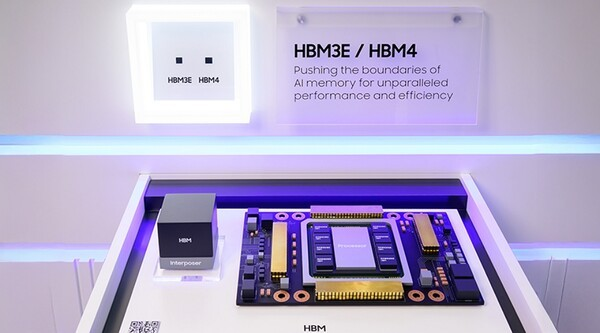
Samsung recently initiated its internal Production Readiness Approval (PRA), effectively completing preparations for mass production. Given that PRA initiation generally corresponds to the final step before actual volume manufacturing, industry observers view Samsung’s HBM4 as having only the supply contract left to finalize. Samsung was widely considered to have lost ground last year after trailing SK Hynix in the HBM3E race. Yet it has reportedly achieved substantial improvements in sixth-generation (1c) DRAM yields and leveraged a 4-nanometer foundry process to enhance logic-die performance, raising operating speeds beyond 11 gigabits per second.
HBM4 and SOCAM2: Dual Validation of Technological Competitiveness
The market expects HBM4 competition—led by Samsung—to intensify in earnest next year. Nvidia plans to equip its next-generation ‘Rubin’ GPU, slated for release next year, with HBM4, while Google is preparing to introduce HBM4 into its eighth-generation Tensor Processing Unit (TPU). Samsung has already passed Google’s qualification tests and secured next year’s supply contract.
For Google TPUs, Samsung primarily supplies HBM3E—mostly eight-high stacks—according to industry sources. Offering lower pricing than SK Hynix and ample volume availability, Samsung has passed Google’s quality evaluations without difficulty and is expanding its share of supply. This has led to projections that HBM4 will surpass HBM3E in market share beginning in the second half of next year.
Samsung is also viewed as having demonstrated competitiveness in SOCAMM (SOCAM), Nvidia’s AI server memory module. Samsung is reported to have secured roughly 10 billion Gb of SOCAM2—about half of Nvidia’s estimated 20 billion Gb purchase volume for next year. This exceeds the projected allocations for SK Hynix (roughly 6–7 billion Gb) and Micron (roughly 3–4 billion Gb).
SOCAM is a server-memory module that integrates low-power DRAM (LPDDR) into a single package on a substrate, unlike traditional designs in which discrete low-power DRAM chips are placed around the CPU. The integrated configuration boosts bandwidth and reduces power consumption. Samsung began preparing SOCAM2 even before first-generation SOCAM reached full commercialization, aiming to pre-empt the yet-nascent SOCAM market. With SOCAM2 increasingly viewed as a potential pillar of memory architecture in AI data centers, Samsung has effectively laid the groundwork to strengthen its market position.
Pyeongtaek P4 Phase 2 Dedicated to HBM4, Maximizing Production Capacity
Shifts in market share are beginning to surface. According to Counterpoint Research, Samsung held 40% of the HBM market in the fourth quarter of last year, ranking second, but its share fell to 15% in the second quarter of this year, dropping behind SK Hynix (64%) and Micron (21%). However, as global investment banks have continued to report a rising allocation of Samsung’s HBM supply since the first half of the year, some recently project that Samsung could overtake SK Hynix.
This outlook is gaining traction ahead of next year, when Google’s TPU demand is expected to expand materially. Industry assessments suggest that this year, Google’s HBM supply split is either roughly even or slightly tilted toward Samsung, but that a more decisive shift in Samsung’s favor is likely next year. This reverses previous expectations. As recently as early last month, SK Hynix—having completed the world’s first HBM4 development and delivered the earliest samples to Nvidia—was projected to maintain dominant HBM market share through 2026. Yet Samsung’s unexpectedly smooth advance into HBM4 mass production readiness has altered the landscape.
Samsung is also seen as having a structural advantage in supply capability, backed by scale. SK Hynix, constrained by limited DRAM production capacity, already serves as the primary HBM supplier to Nvidia and other major big-tech firms, leaving little room to secure additional volume. Samsung, by contrast, has greater expansion flexibility through new Pyeongtaek campus lines, positioning it to absorb substantially more demand.
Samsung has already decided to dedicate up to Phase 2 (Ph2) of the latest Pyeongtaek campus line (P4) to HBM4 production using 1c DRAM. Construction of Ph2 is scheduled to begin in the second quarter of 2026, with operational readiness targeted for the first half of 2027. This aligns with Samsung’s recent decision to advance the completion of its P5 facility by one year, to May 2027. “HBM demand is increasing extremely rapidly, making production capacity a critical factor,” said one semiconductor-industry source, adding, “With demand pressure intensifying, Samsung appears intent on maximizing its response capability.”
Similar Post