“China doesn’t need Korean Chips like before”: Beijing’s chip self-reliance signals it’s time for Seoul to reset its trade strategy

Aoife Brennan is a contributing writer for The Economy, with a focus on education, youth, and societal change. Based in Limerick, she holds a degree in political communication from Queen’s University Belfast. Aoife’s work draws connections between cultural narratives and public discourse in Europe and Asia.
Authored On
Modified
Korea’s chip exports to China have shrunk dramatically over the past few years
China’s fast-growing semiconductor ecosystem keeps pushing for self-reliance, even as the U.S. eases export controls
“Compete with culture and services”: momentum builds for a reset of Korea’s China trade strategy
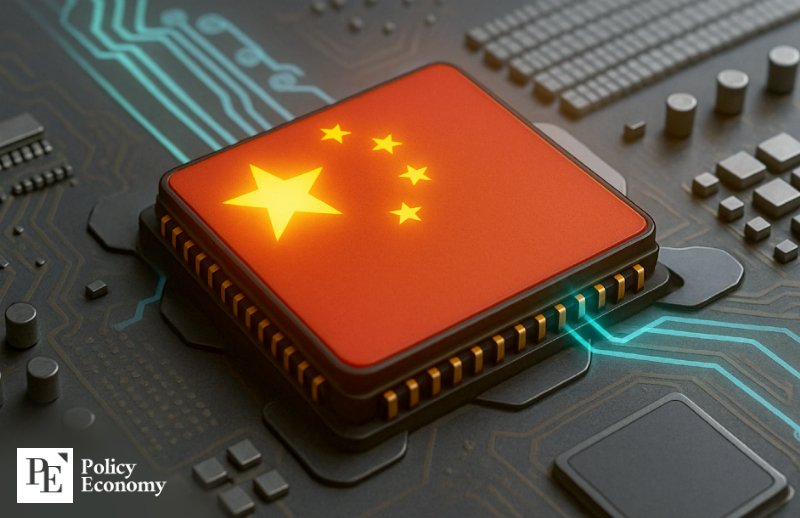
The share of Korea’s semiconductor exports going to China has been shrinking rapidly. As Beijing’s push for chip self-sufficiency starts to bear fruit, Korean companies are visibly losing ground in the Chinese market. Against this backdrop, experts argue that Korea should reduce its reliance on exporting semiconductors and other tech products to China and instead pivot its China strategy toward culture- and services-led trade.
China’s homegrown semiconductor ecosystem
According to the chip industry on the 11th, Korea’s dependence on semiconductor exports to China has been steadily declining over the past few years. Data from the Ministry of Trade, Industry and Energy and the Korea International Trade Association show that the share of China and Hong Kong in Korea’s total semiconductor exports fell from 61.1% in 2020 to 51.7% last year (January–November), a drop of more than 9 percentage points. Looking at China and Hong Kong separately over the same period, China’s share slipped from 40.2% to 33.3%, while Hong Kong’s went from 20.9% to 18.4%. In short, China’s influence as a key export market for Korean chips has clearly diminished.
Behind this shift is China’s drive for “semiconductor self-reliance.” Beijing has been pouring massive financial support into nurturing its domestic chip industry. A prime example is the launch of the third phase of the National Integrated Circuit Industry Investment Fund (the “Big Fund”) last year, which is channeling about $50 billion into semiconductors. On top of that, the government has been urging state-owned enterprises and big private tech companies to use more domestically made chips, and has begun requiring state-funded AI data centers to deploy homegrown AI processors—moves that are steadily eroding Nvidia’s dominance in the market.
This government firepower has translated into unprecedented growth for Chinese chipmakers. In the first half of this year, Hygon posted revenue of roughly $790 million, up 45.21% from a year earlier, with net profit climbing 40.78% to about $174 million. Cambricon, which had been mired in losses for years, saw first-half revenue surge to about $418 million, a 4,347.82% jump from a year earlier, and swung to the black with net profit of around $151 million.
Their technological capabilities are also improving quickly. Several specialist outlets estimate that the inference performance of Huawei’s Ascend 910C, released in May, reaches about 60% of Nvidia’s H100, which came out in November 2023. Its price-performance trade-off is considered strong as well: compared with Nvidia’s previous-generation A100, the 910C is priced at roughly 30% of the A100 while delivering about 80% of its performance. Huawei is now developing the next-generation Ascend 910D, a step up from the 910C, and industry watchers say it could potentially match or even surpass the H100.
U.S. leans on Nvidia chips to slow China’s rise
As Chinese-made semiconductors begin to gain real traction in the market, Washington has moved quickly to blunt Beijing’s push for self-reliance by easing export controls. On Dec. 8 (local time), President Donald Trump wrote on Truth Social that he had informed China’s President Xi that the U.S. would allow Nvidia to ship its H200 chip to approved customers in China and other countries “under conditions that ensure America continues to maintain strong national security,” adding that Xi “reacted positively.”
The Nvidia H200 is an upgraded version of the H100. Its memory capacity, bandwidth, and AI inference performance are roughly six times those of the H20—the China-specific downgraded model. Although the H200’s high-end inference capability falls short of Blackwell, Nvidia’s most advanced AI chip, analysts say it is well suited for large language models and scientific computing. Citing analysts, the South China Morning Post reported that the Trump administration’s decision to allow H200 exports reflects a dual objective: preserving U.S. market share while slowing China’s technological self-sufficiency. Chim Lee, senior analyst at the Economist Intelligence Unit, likewise said the move shows the U.S. intends to export older-generation technology “to maintain market dominance while dampening innovation incentives in China.”
Despite Washington’s latest maneuver, China’s commitment to chip self-reliance remains unshaken. The Financial Times reported on the 10th that China’s Ministry of Industry and Information Technology recently added Huawei, Cambricon, and other Chinese AI-processor makers to its list of government-approved suppliers. The list guides procurement for government agencies, public institutions, and state-owned enterprises that collectively spend billions of dollars a year on IT products. Adding core domestic chipmakers signals a clear intent to further reduce reliance on foreign semiconductors.
Shifting the center of Korea’s China-bound exports
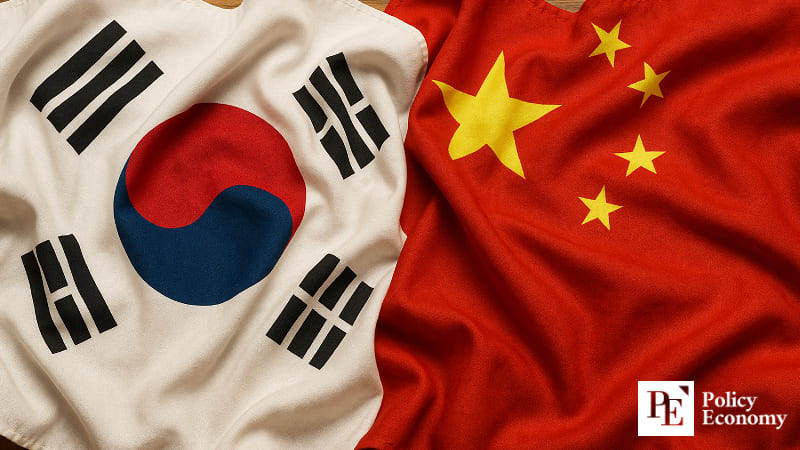
As China’s homegrown semiconductor ecosystem becomes more firmly established, Korean experts are increasingly calling for a broad rethink of Seoul’s trade strategy toward China. The view is that Korea should reduce its dependence on exporting semiconductors and other tech products, and shift more weight toward cultural exports. After the THAAD dispute in 2016, China imposed an informal ban on Korean cultural content—a move that effectively shut out Korean music, dramas, and films from the market and dealt a heavy blow to Korea’s entertainment industry.
The ban appeared to ease gradually in recent years. In November 2022, Korean films began streaming again on Chinese platforms for the first time in six years, and a month later seven Korean games were approved for release. But since 2023, the list of foreign game licenses has fluctuated wildly month by month, and approvals for theme parks, films, and music have swung sharply depending on the state of bilateral relations. More recently, K-pop concerts in China have been repeatedly canceled or postponed indefinitely for “local reasons,” underscoring that Korea’s cultural exports to China have not fully recovered.
The ongoing talks between Seoul and Beijing to update the Korea–China Free Trade Agreement on its 10th anniversary aim squarely at overcoming these constraints. The two sides are negotiating the second stage of the FTA, covering services and investment. Industry observers point to travel and entertainment as promising areas for renewed access to the Chinese market. One market expert noted that “Korean travel agencies still can’t actively market to Chinese tourists who want to visit Korea, and Korean artists face clear limits on earning concert revenue in China,” adding that Phase Two talks should focus on lowering entry barriers if Korea hopes to expand its cultural and content exports.
Aoife Brennan is a contributing writer for The Economy, with a focus on education, youth, and societal change. Based in Limerick, she holds a degree in political communication from Queen’s University Belfast. Aoife’s work draws connections between cultural narratives and public discourse in Europe and Asia.
Similar Post