China’s 1 trillion USD trade surplus shakes Europe’s industrial base, pushing the EU into “defensive trade mode”

Stefan Schneider brings a dynamic energy to The Economy’s tech desk. With a background in data science, he covers AI, blockchain, and emerging technologies with a skeptical yet open mind. His investigative pieces expose the reality behind tech hype, making him a must-read for business leaders navigating the digital landscape.
Authored On
Modified
China posts largest trade surplus in its history
Rare-earth export controls widen the scope of friction
Limits of country-by-country responses exposed
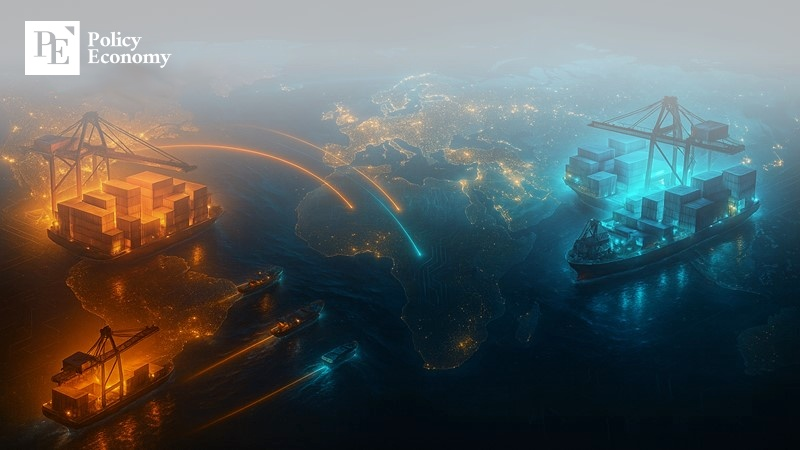
With China’s annual trade surplus surpassing 1 trillion USD for the first time, Europe has launched a sweeping overhaul of its China trade strategy. The shift reflects growing alarm that China’s excess capacity, undervalued currency, and subsidy-driven price competition are undermining Europe’s industrial foundations. Adding to these concerns, China’s tightening of rare-earth export controls and mounting pressure over technology transfers have expanded the range of trade disputes. The recent case of the Netherlands withdrawing its supervisory powers over Nexperia, highlighting the limits of unilateral national responses, has further strengthened calls for coordinated action among EU member states.
Europe’s industrial sectors under threat from China’s low-price onslaught
According to China’s General Administration of Customs on the 11th, China’s exports in November reached 330.35 billion USD, up 5.9 percent year-on-year. Its monthly trade surplus during the same period surged to 111.68 billion USD from 90.07 billion USD in the previous month. As a result, China’s total trade surplus from January to November climbed to 1.07585 trillion USD. This marks the first year China’s trade surplus has exceeded 1 trillion USD, driven by diversification of export destinations toward the EU and Africa. China’s exports to the EU alone grew 15 percent in November, the largest increase since July 2022.
The EU has openly criticized China’s currency and trade practices. In a report issued earlier this month, the EU Chamber of Commerce in China noted that the yuan had fallen to its weakest level against the euro in a decade (a decline of 7.5 percent), effectively acting as an export subsidy. The chamber stressed the need for Europe to address the impact of China’s real effective exchange rate (REER) — a measure of a currency’s purchasing power against trading partners — arguing that Europe must respond to growing pricing pressure from China.
This sentiment was reinforced by French President Emmanuel Macron. Speaking to domestic media on the 7th after returning from a state visit to China, he warned that unless Beijing takes “meaningful action” to address its massive surplus with Europe, the EU would be forced within months to consider “strong measures,” including tariffs on Chinese goods. Macron argued that China’s diversion of exports away from the U.S. and into Europe was pushing European industries toward a survival crisis.
While the EU cannot immediately implement bloc-wide tariffs due to required European Commission investigations and member-state consensus, discussions have begun on imposing targeted high duties on specific sectors such as electric vehicles and batteries. Some argue that Europe’s political and economic fragmentation will hinder decisive action. However, given recent public statements by key EU figures and the launch of formal investigations, diplomatic circles widely agree that countering China has now become a central EU agenda item.
Europe’s core industrial supply chains exposed to China’s tightening controls
China has further widened the scope of friction by expanding export restrictions on strategic materials, including rare earths. In October, Beijing added key elements such as samarium and dysprosium to its controlled-export list and imposed a rule requiring export permits even for products manufactured outside China if they contain as little as 0.1 percent Chinese rare earths or use Chinese refining or processing technologies. Because this extends China’s regulatory reach beyond its borders, global industries see the move as an attempt to exert broader pressure over production strategies worldwide.
For the EU — heavily dependent on Chinese rare earths for electric-vehicle motors, wind-turbine generators, and advanced electronic components — tighter controls raise the risks of supply disruption and price spikes. Compounding these concerns, China has signaled that it may consider export restrictions on lithium-ion batteries and synthetic diamonds, heightening European sensitivity in sectors ranging from green energy to semiconductors and telecom equipment.
In response, the European Commission and member states have begun exploring ways to tighten investment rules for Chinese companies rather than merely absorbing the pressure. Maroš Šefčovič, Vice President of the European Commission, said at a recent trade ministers’ conference that Europe “remains open to Chinese investment, but only under appropriate conditions,” announcing plans to propose a rule requiring foreign investors to transfer certain levels of technology and intellectual property to local partners. The signal was clear: Chinese M&A activity and new factory construction in Europe could face stricter scrutiny and additional requirements.
Tensions are also spreading in the security and telecom sectors. The European Commission is seeking to convert its nonbinding, five-year-old recommendation to phase out “high-risk vendors” into a legally binding regulation, urging member states to remove Huawei and ZTE equipment from their telecom networks and critical infrastructure. Germany likewise declared it would ban all Chinese components from its ongoing 6G network deployment. For the roughly 3,000 Chinese companies operating in Europe, these developments underscore the unpredictability that political and regulatory decisions can bring to their business environment.
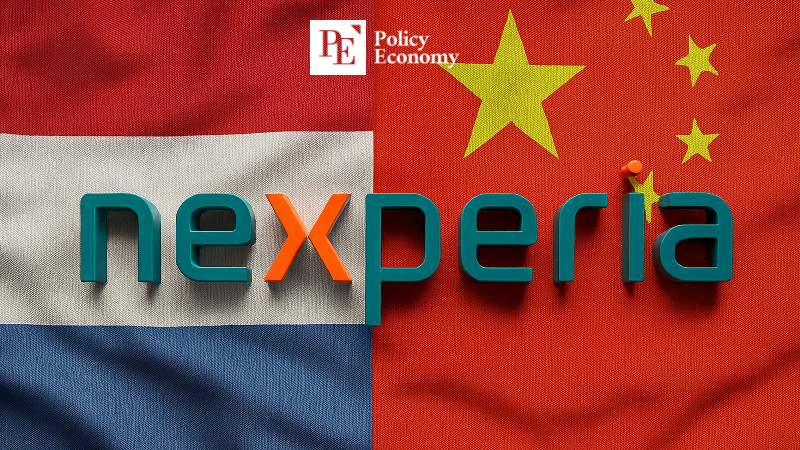
Nexperia case exposes Europe’s vulnerabilities
The Nexperia case — which ended after the Dutch government announced it would withdraw its supervisory powers — is widely seen as revealing the limits of unilateral national responses to China’s expanding industrial footprint. On November 19 (local time), Dutch Minister for Economic Affairs Vincent Karremans said the government had “withdrawn its authority over Nexperia as a gesture of goodwill” and would continue discussions with China. This reversal came only two months after the government imposed a one-year oversight regime amid fears that Nexperia’s Chinese owner, Wingtech, could leak the company’s core technologies.
Initially, the Dutch government viewed Nexperia as the last remaining European manufacturer capable of producing essential legacy chips for automotive and appliance sectors, leading to its decision to exercise supervisory authority. However, the situation escalated when China responded by restricting exports from Nexperia’s Guangdong plant — a facility responsible for nearly half of the company’s total output. The shutdown threatened to halt production at European automakers including Volkswagen. Across Europe, the incident demonstrated the scale of economic risk any individual nation faces when challenging China alone.
Having confirmed the inadequacy of unilateral tools, EU countries are now moving toward coordinated defense. The EU already employs anti-dumping duties, countervailing measures, and investment-screening frameworks to limit imports of subsidized Chinese goods and curb Chinese capital flows into strategic industries. One option not yet used — the anti-coercion instrument (ACI) — allows for stronger countermeasures than standard retaliatory tariffs. Some leaders, including Macron, have even openly discussed activating the ACI.
Europe has simultaneously accelerated efforts to diversify supply chains through alternative suppliers and strategic stockpiling. The memory of China’s rare-earth export halt during diplomatic tensions with Japan in 2010, as well as Germany’s scramble for alternative energy sources following Russia’s 2022 invasion of Ukraine, has informed these discussions. While some voices in Spain and parts of Eastern Europe argue that concerns are exaggerated as long as Chinese investment continues to flow in, the prevailing view across Europe is that proactive defensive measures are now unavoidable to safeguard core industrial capabilities.
Stefan Schneider brings a dynamic energy to The Economy’s tech desk. With a background in data science, he covers AI, blockchain, and emerging technologies with a skeptical yet open mind. His investigative pieces expose the reality behind tech hype, making him a must-read for business leaders navigating the digital landscape.
Similar Post