High rates and a slowing economy squeeze Korea’s smaller VCs, leaving early startups crying out

As one of the youngest members of the team, Tyler Hansbrough is a rising star in financial journalism. His fresh perspective and analytical approach bring a modern edge to business reporting. Whether he’s covering stock market trends or dissecting corporate earnings, his sharp insights resonate with the new generation of investors.
Authored On
Modified
LP capital piles into big-name VCs in Korea, squeezing smaller firms
Sanctions mount as access to the fund of funds tightens, feeding a vicious cycle
Cash-starved Korean startups fall into “death valley,” one after another
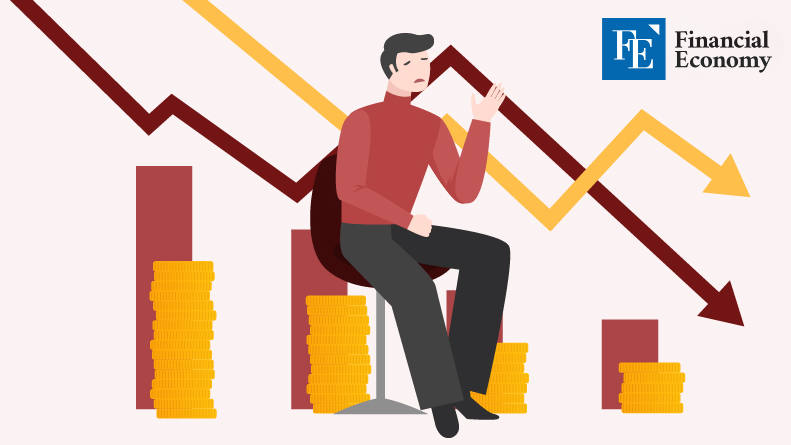
Korea’s venture capital industry is coming under mounting pressure on financial soundness. With persistently high interest rates and a slowing economy freezing LP sentiment, smaller VCs are increasingly failing to clear the higher bar for raising new funds and are being hit with a string of regulatory sanctions. The downturn has also made VCs more conservative, pushing early-stage startups that can’t secure VC backing closer to the edge.
Smaller VCs in Korea are struggling even to raise funds
According to Korea’s venture investment disclosure system (DIVA) on the 12th, there were 27 cases this year in which VC firms were hit with administrative sanctions by the Ministry of SMEs and Startups for violating the Venture Investment Promotion Act during regular and ad-hoc inspections. The violations ranged from acquiring shares in financial institutions to breaches of cross-investment restrictions, but the most common case involved capital impairment that triggered orders to improve management (eight cases). Under Article 41(3) of the Act and Article 29 of its Enforcement Decree, a capital impairment ratio below 50% is set as the baseline for financial soundness. Firms that fail to meet the standard must take corrective steps—such as boosting capital or restricting dividend payouts—by a deadline, or face tougher penalties.
The soundness crunch has become more visible as fundraising has grown harder amid prolonged high rates and persistent economic uncertainty, which have dampened LP appetite. Ministry data show Korea’s annual venture-fund formation has fallen each year—from about $13.2 billion in 2021 to $13.1 billion in 2022, $9.7 billion in 2023, and $7.8 billion in 2024. Over the same period, the number of VC firms rose from 197 in 2021 to 249 last year, and to 253 as of February this year, intensifying competition.
Compounding the problem, LP money has increasingly concentrated in larger VCs that look more reliable on returns, pushing the fundraising bar higher for smaller firms with weaker track records. DIVA data show 61 VCs reported zero investment performance in the first half of this year—well above 32 in 2022, 41 in 2023, and 43 last year. That means about 17% of Korea’s 355 registered venture investment firms failed to post meaningful results.
A chain of setbacks tightens the noose on smaller VCs
This industry turmoil has been unfolding for years. Last year, nearly 36 VC firms were subject to administrative sanctions by Korea’s Ministry of SMEs and Startups for violations of the Venture Investment Promotion Act. The number of violations rose from four in 2021 to 16 in 2022, 17 in 2023, and 55 last year—about a fourteenfold increase in three years. Capital impairment was the most common violation, with 10 cases, followed by nine cases involving breaches by related parties. Article 36 of the Act’s Enforcement Decree bans practices such as selling VC-held assets to executives, employees, or related parties, or using VC assets to buy shares in affiliated individuals or companies. There were also eight cases involving failure to comply with management-improvement orders, along with sanctions tied to excessive lending to executives or employees, or going more than a year without making an investment after three years of registration.
Smaller VCs accounted for most of last year’s surge in sanctions. New and mid-sized firms often build track records through project investments in companies nearing an IPO before seeking capital commitments. But as the IPO market stalled, more startups abandoned listing plans, while those that did go public increasingly underperformed. As a result, smaller VCs have effectively lost the “track records” they relied on when bidding for capital. This has compounded their chronic funding shortages and stagnant investment performance.
The problem is that VCs hit with sanctions face growing barriers to participating in government-backed fund-of-funds programs. According to Korea Venture Investment Corp.’s guidelines, firms can be excluded from GP selection if they fail to comply with corrective orders, remain under business suspension, or accumulate three or more combined actions—warnings, corrective orders, or suspensions—within the three years prior to the application deadline. For smaller VCs already struggling to attract LP commitments, being shut out of these programs often makes fund formation itself difficult. Once sanctions are imposed, negative pressures tend to compound, revealing how fragile growth foundations have become amid the downturn.

Funding drought hits Korea’s early-stage startups
The VC downturn has left a heavy aftershock across Korea’s startup scene, as investors grow more reluctant to take early-stage risk. According to the Ministry of SMEs and Startups and other related organizations, total venture investment in Korea reached about $8.5 billion last year, up from about $7.8 billion the year before, but more than half—about $4.5 billion—went to late-stage startups that were at least seven years old. Investment in startups within three years of founding totaled about $1.6 billion, or 18.6% of the total, the lowest share in five years.
As the squeeze on early-stage funding deepens, more startups are failing to cross “death valley”—the period when young companies can struggle to commercialize even after successful R&D due to cash shortages. A report by venture investment platform THEVC said 88 startups filed for closure between January and July this year; 61 of them, or 69%, shut down within three years of a seed round.
Even TIPS-selected startups have been shutting their doors, with 23 closing in the first half of this year. TIPS is Korea’s flagship tech-startup support program that links private investment with government R&D funding, and the closures suggest that even state-backed certification has not functioned as a survival guarantee. Autonomous driving startup SpringCloud, for instance, secured about $6.8 million in government R&D funding after being selected for TIPS but filed for closure this year. AI-based edtech firm Luida Global also shut down in April after raising a cumulative $8.2 million, and Decode—known for acquiring cross-border shopping platform NowinParis—closed in March after taking in about $16.0 million.
As one of the youngest members of the team, Tyler Hansbrough is a rising star in financial journalism. His fresh perspective and analytical approach bring a modern edge to business reporting. Whether he’s covering stock market trends or dissecting corporate earnings, his sharp insights resonate with the new generation of investors.
Similar Post