“U.S. AI Is a Bubble, Chinese AI Is Undervalued”: Capital Floods Into Chinese Firms Amid U.S.–China Rivalry

Authored On
Modified
Funds Continue Channeling Capital Into Chinese AI Companies
Focus on the Innovative Potential of China’s AI Ecosystem
Power Infrastructure Advantage and the Impact of U.S. Tech Bubble Concerns
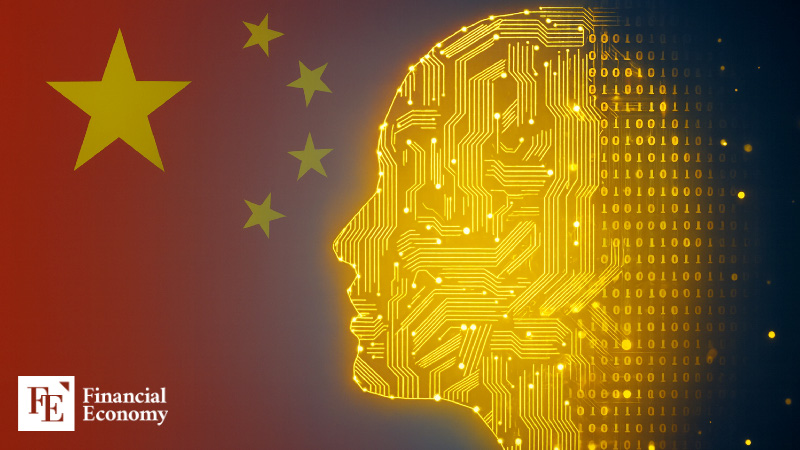
Despite intensifying U.S.–China technological rivalry, American investors are sharply increasing their exposure to Chinese artificial intelligence (AI) equities. As uncertainty grows around richly valued U.S. AI companies whose valuations have already surged to extremes, investors are reassessing China’s AI sector following the so-called “DeepSeek shock,” which highlighted significant progress by Chinese firms toward semiconductor self-sufficiency. The result is a growing clash between political efforts in Washington to curb investment in China’s advanced technology sectors on national security grounds and market expectations determined not to forgo perceived growth opportunities.
Alibaba Surges 80%, ETF Inflows Accelerate
According to The Wall Street Journal, U.S. investors have recently been aggressively driving up the share prices of Chinese technology companies through exchange-traded funds (ETFs) and other vehicles. Venture capital firms headquartered in China are also raising U.S. dollar-denominated funds to finance domestic AI investments. U.S. institutional funds that had largely shunned China for several years have likewise begun reconsidering allocations to Chinese companies. One Wall Street investor noted that while China already exerts substantial influence in AI, its companies remain undervalued relative to U.S. peers, leaving ample room for further upside.
In practice, Alibaba—China’s largest e-commerce company listed in New York and Hong Kong—has surged more than 80% year-to-date through the 10th, marking its strongest performance in four years. Over the same period, Tencent and Baidu have risen by roughly 50%, while Cambricon has jumped nearly 120%. Foreign investment in China had trended downward from 2021 through last year amid weak domestic demand, escalating U.S.–China tensions, and stringent property sector regulations. This year, however, foreign capital inflows into mainland Chinese equities alone totaled $50.6 billion through October, the largest annual inflow in four years.
Data from ETF.com show that more than $3.7 billion flowed into just two major ETFs focused on Chinese technology stocks over the past six months. The KraneShares CSI China Internet ETF attracted $2.0 billion in net inflows, while the Invesco China Technology ETF drew $1.8 billion. BlackRock, the world’s largest asset manager, disclosed in July that its China technology ETFs were attracting more capital than U.S. products.
Large funds managed by Vanguard, BlackRock, and Fidelity have also increased their holdings of Alibaba’s Hong Kong-listed shares this year. London-based investment firm Ruffer has gone further, arguing that the price-to-earnings ratios of major Chinese technology firms are lower than those of U.S. companies such as Google, implying greater upside potential. Alibaba now accounts for 1.5% of Ruffer’s overall portfolio. Hedge fund billionaire David Tepper, founder of Appaloosa Management, has also voiced public optimism toward Chinese equities. According to Appaloosa, Alibaba represents the single largest position, accounting for 16% of its $7.0 billion equity portfolio.
Regulatory and Market Divergence Deepens Amid U.S.–China Tech Competition
These market dynamics stand in stark contrast to political sentiment in Washington. U.S. lawmakers argue that American capital flowing into China could ultimately bolster China’s military and technological capabilities, posing long-term security risks, and are pushing for tighter restrictions. The annual National Defense Authorization Act includes provisions empowering President Donald Trump to further limit investments in advanced Chinese technologies such as AI, quantum computing, and hypersonic weapons, while also requiring greater disclosure of how U.S. investors support Chinese tech firms. House Speaker Mike Johnson stated that investments underpinning “communist China’s aggressive behavior” must be halted.
Even so, U.S. market interest in Chinese AI and technology stocks shows little sign of abating. The influx of capital reflects growing recognition that firms such as DeepSeek, Huawei, Alibaba, and Cambricon have made tangible advances in AI semiconductors. As recently as 2023, China’s large language model (LLM) capabilities lagged significantly behind those of the United States. Since then, startups including DeepSeek, Zhipu AI, Baichuan, Moonshot AI, and MiniMax have expanded rapidly with support from university research institutes and government-linked funding. These newcomers, competing fiercely with established giants such as Baidu, Alibaba, and Tencent, have created an intensely competitive domestic environment that has accelerated iterative improvement and rapid deployment. The result has been a narrowing of the performance gap with U.S. technologies at a pace far faster than many had anticipated.
China’s regulatory stance has also shifted. After imposing sweeping crackdowns on big tech starting in late 2021, authorities have recently adopted a more supportive posture. At the Fourth Plenum of the 20th Central Committee held in October, the Chinese Communist Party referenced “science and technology” 46 times, underscoring renewed commitment to advanced industry development. The government’s broad, decentralized investment strategy has nurtured innovation that private venture capital might have overlooked, while sustained long-term capital deployment into computing infrastructure essential for LLM development has continued. Analysts argue that these characteristics suggest that breakthroughs such as DeepSeek are not one-off anomalies, but rather evidence of an AI ecosystem capable of producing sustained innovation.

“Cheaper Than the U.S.”: Valuation-Driven Capital Inflows
China’s advantage in power infrastructure—an increasingly decisive factor in the AI race—has further enhanced its appeal. Goldman Sachs recently projected that China will maintain sufficient reserve power capacity to support surging electricity demand from data centers and other industries essential to AI expansion, placing it in a favorable position relative to the United States. While the U.S. retains a lead in AI technology, the report warned that electricity constraints, rather than semiconductors, rare earths, or talent, could become the primary bottleneck to future progress. Data centers require enormous amounts of power to operate and cool dense computing equipment.
China has designated AI data centers as strategic infrastructure and mobilized state-level financial, power, and tax support accordingly. Through the “East-Data-West-Computing” initiative—an effort to process data generated in the eastern regions using energy-rich western regions—the government is concentrating data centers across eight hubs, investing more than $51.9 billion annually. Reuters has also reported that China recently mandated the exclusive use of domestically produced chips in newly built, state-funded data centers.
Concerns over a potential bubble in U.S. technology stocks have further fueled enthusiasm for Chinese AI investments. JPMorgan estimates that at least $5.3 trillion will be required over the next five years to fulfill data center construction plans by U.S. AI giants such as Amazon and Google. The uncertainty over whether returns will justify such massive capital outlays has become a key driver of bubble fears. Markets increasingly question whether AI investments can generate sufficient returns on investment, particularly given delayed monetization timelines. Constraints on power and computing resources have also raised concerns that planned investments may not be executed on schedule.
Meanwhile, valuation concerns continue to loom over U.S. equities. Despite recent declines triggered by tariff shocks, price-to-earnings ratios among AI-related stocks remain elevated. Nvidia trades at over 44 times earnings, Microsoft at 34.97 times, and Palantir at more than 500 times. In contrast, many Chinese companies remain significantly undervalued. Goldman Sachs emphasized that, relative to U.S. peers, Chinese firms focused on AI applications continue to trade at far more reasonable valuations, adding that from a valuation perspective, China’s AI stock boom remains far removed from bubble territory.
Similar Post