“China’s tech lead still immature”: did Japan’s perfectionism delay its humanoid push?

As one of the youngest members of the team, Tyler Hansbrough is a rising star in financial journalism. His fresh perspective and analytical approach bring a modern edge to business reporting. Whether he’s covering stock market trends or dissecting corporate earnings, his sharp insights resonate with the new generation of investors.
Authored On
Modified
Japan joins the humanoid race late after ceding early ground to China
China leads the humanoid market on volume, but questions linger over performance
Shunning EV hype, Japan again bets on perfectionism in humanoids
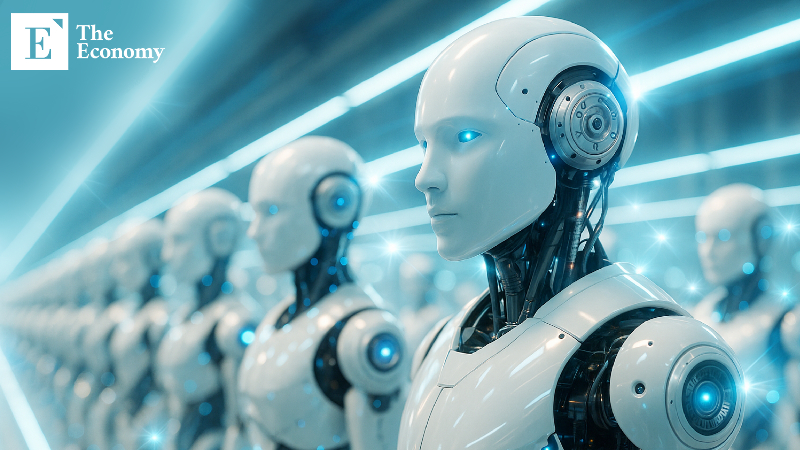
Japan, long a leader in robotics, is making a late push into AI-powered humanoids. With the market already taking shape around China, Japan’s decision to jump in now is seen as an unusual move. Some in the market say Japan’s perfectionist industrial culture kept it on the sidelines, betting that the humanoid space was still too immature to commit early.
Japan, a robotics powerhouse, plays catch-up in humanoids
On the 14th, the South China Morning Post ran an analysis titled “Robots trapped in factories: why Japan, a leader in robotics, missed the boom in AI-powered humanoid robots,” taking a close look at where Japan stands in the humanoid market. The article said Japanese industrial-robot giants such as Kawasaki, Fanuc, Yaskawa, and Nachi took the largest booths at the International Robot Exhibition (IREX) at Tokyo Big Sight, showcasing their strengths in factory-automation robots for welding, assembly, and logistics.
But the biggest buzz at the show centered on humanoids unveiled by Chinese startups. Many young companies founded in 2023—including Galbot, Agibot, and Robotera—took part, and Unitree’s humanoid drew crowds with boxing and dance demonstrations. Japanese startups also displayed humanoids, but many of the showcased products were built on Chinese platforms. In effect, Japan’s homegrown humanoids have struggled to make themselves felt on the international stage.
As the examples suggest, Japan’s robotics edge has long been rooted in machinery and manufacturing. That orientation has shaped its university system as well, with talent and capital concentrated in engineering research tied to manufacturing. Catching up in today’s humanoid market—where AI-driven autonomy, perception, and data processing matter as much as mechanical refinement—would require a major shift. For years, Japan’s robotics industry largely stayed the course, only recently moving to enter the humanoid space. Earlier this month, Nikkei reported that the Kyoto Humanoid Association (KyoHA), an industry–academia–research consortium in the field, has expanded its membership to 13 companies and finalized a concrete mass-production roadmap.
KyoHA is an organization formally established on June 30 this year by companies and institutions including Waseda University, tmsuk, Murata Manufacturing, and SRE Holdings. Nikkei said Renesas Electronics and Sumitomo Heavy Industries joined this month, completing a core value chain needed to develop and manufacture humanoid robots. Under the structure, Waseda—widely seen as a pioneer in humanoid research—oversees the overall design, while leading Japanese robotics companies supply key components based on their respective strengths. Under the roadmap, participating companies aim to complete a humanoid prototype by the end of 2026, begin full-scale mass production from 2027, and significantly expand rollout from 2029 to reach the commercialization phase.
Humanoids’ technical limits
The market’s focus is less on the fact that Japan has finally entered the humanoid race, and more on why it chose not to jump in earlier. For now, China is clearly in the lead. Treating humanoids as a strategic industry, Beijing is rapidly expanding deployment beyond manufacturing into logistics and services. Chinese robot makers have drawn investment from domestic manufacturers and platform companies, lowered upfront cost burdens, integrated supply chains, and moved quickly into mass production—driving the market with a volume-first approach.
The catch is that performance remains an open question for many of the Chinese humanoids now leading the market. Unitree’s humanoid robot G1, for example, faced harsh reviews earlier this year, with buyers saying real-world performance fell short of expectations. Chinese media outlets such as Xiaoxiang Morning News reported that a man in Hunan posted a video online and wrote that he was “somewhat disappointed” after buying the G1 for $44,000. While the company promoted the robot as capable of advanced moves—spin kicks, dancing, jumping, and running—he said the unit he received could do little more than basic motions such as reaching out, shaking hands, waving, and turning its head, and that it sometimes fell while walking.
In May, there was also an incident in which a China-made humanoid robot reportedly went out of control and behaved aggressively, raising fears of harm. The Epoch Times and U.S.-based Chinese-language shortwave broadcaster Sound of Hope reported that a humanoid robot being manufactured at a Chinese robotics lab became uncontrollable. CCTV footage from the scene showed two researchers operating a robot suspended from a small crane. Once activated, the robot began flailing its arms wildly as if trying to strike the researchers, knocking items such as computer monitors to the floor while the crane lurched around. One researcher recoiled and pulled the crane backward, after which the robot finally stopped moving.

Japan Inc.’s perfectionism
Experts say the humanoid market’s immaturity is a key reason Japan has been slow to commit, arguing that Japan’s perfectionist industrial culture never fully shook its doubts about the space. The same instinct is often cited in the EV industry. At a motor show in Tokyo in 2023, Toyota Motor chairman Akio Toyoda said people were finally confronting the “reality” of EVs, adding that falling EV demand was a sign that consumers were realizing EVs are not an effective solution for cutting carbon emissions—an unusually blunt critique from the world’s top-selling automaker.
He doubled down in 2024, saying EVs would ultimately lose out to internal-combustion vehicles and that consumers should not be pushed into buying them. The shift to EVs, he argued, should be left to consumer choice, without politics shaping market outcomes. He also pointed to the roughly one billion people worldwide who live without access to electricity, saying that reality shows EVs cannot be a universal means of transportation. Toyoda further predicted that even with technological progress, EVs would never exceed 30% market share and that internal-combustion vehicles would continue to dominate.
Toyota has since held a relatively stable position even as pressure from China’s EV shift intensified. While China-made EVs have surged since 2020 and many combustion-engine-focused brands have been pushed out of the local market, Toyota has been a notable exception. Toyota’s shipments in China last year fell 14% from their 2022 peak—far less severe than Ford’s drop of more than 80% or Volkswagen’s loss of roughly a third of its sales.
A core reason Toyota has stayed resilient is its hybrid strategy, which began in 1997. Starting with the Prius and expanding to models such as the Corolla, Camry, and Highlander, Toyota’s hybrid lineup captured demand tied to carbon-neutrality and energy-saving goals in China. Analysts also note that despite ongoing China–Japan tensions, a broad consumer boycott of Japanese products has not materially taken hold in China—unlike during the 2012 territorial dispute—suggesting authorities have taken a cautious approach to avoid market instability.
More recently, Toyota has been recalibrating its China strategy, moving toward deeper localization and adopting Chinese technologies while cutting prices. Its fully electric SUV bZ3x, launched in March, was priced in the low $14,000 range and had sold more than 50,000 units by October, making it Toyota’s fastest EV to gain traction. Market researchers expect Toyota’s China business profit to rise 14% this year.
As one of the youngest members of the team, Tyler Hansbrough is a rising star in financial journalism. His fresh perspective and analytical approach bring a modern edge to business reporting. Whether he’s covering stock market trends or dissecting corporate earnings, his sharp insights resonate with the new generation of investors.
Similar Post