Japan Rate Hike to 0.75% Seen as Near-Certain, Limited Yen-Carry Shock May Ease Pressure on Korean Exports

Oliver Griffin is a policy and tech reporter at The Economy, focusing on the intersection of artificial intelligence, government regulation, and macroeconomic strategy. Based in Dublin, Oliver has reported extensively on European Union policy shifts and their ripple effects across global markets. Prior to joining The Economy, he covered technology policy for an international think tank, producing research cited by major institutions, including the OECD and IMF. Oliver studied political economy at Trinity College Dublin and later completed a master’s in data journalism at Columbia University. His reporting blends field interviews with rigorous statistical analysis, offering readers a nuanced understanding of how policy decisions shape industries and everyday lives. Beyond his newsroom work, Oliver contributes op-eds on ethics in AI and has been a guest commentator on BBC World and CNBC Europe.
Authored On
Modified
Unanimous Economist Call for a Hike, Political Green Light and Recovery Cement Move to 0.75%
With 10-Year JGB Yields Pre-Pricing at 1.97%, Yen-Carry Unwind Shock Likely Contained; Crypto Markets Brace for Higher Volatility
As “Super-Weak Yen” Fades, Korea’s Autos and Shipbuilding Eye Competitiveness Rebound, but Won-Yen Co-Movement and Technology Gap Remain Constraints
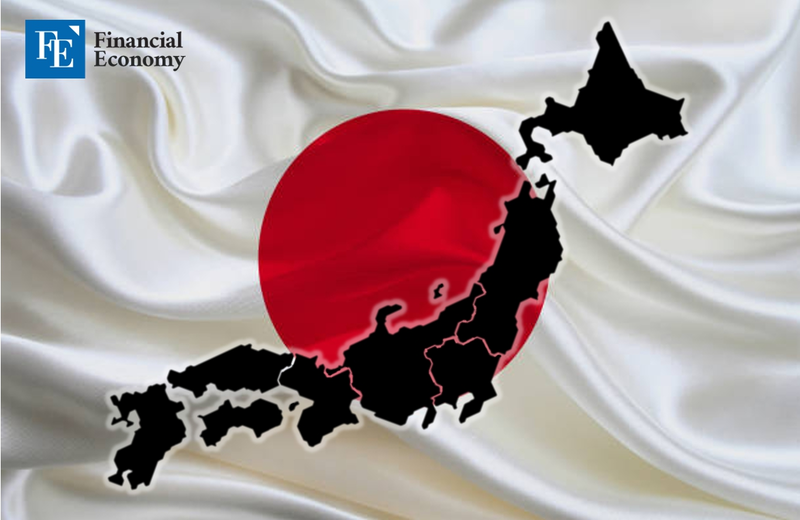
The Bank of Japan (BOJ) is expected to raise its policy rate to 0.75% at its monetary policy meeting on the 19th, effectively drawing a line under the ultra-low-rate era. With Prime Minister Sanae Takaichi’s tacit approval converging with a recovery in domestic activity, the tightening cycle is accelerating, while markets are watching crypto volatility more closely than a yen-carry shock. Korea’s industrial sector, meanwhile, is eyeing potential spillover gains from an unwinding of the “super-weak yen,” even as it flags won-yen co-movement and Japan’s strengthening technological base as key variables to monitor.
A 25bp Policy-Rate Hike, Breaching the 0.5% Threshold for the First Time in Three Decades
On the 14th (local time; hereafter the same), Bloomberg reported that expectations have effectively solidified that the BOJ will raise its policy rate by 25bp (1bp=0.01 percentage point) from the current 0.5% to 0.75% on the 19th. According to Bloomberg, a survey of 50 economists who closely track BOJ policy showed unanimous expectations for a rate hike. This marks the first time since Governor Kazuo Ueda took office that expert views have converged unanimously. If implemented, Japan’s policy rate would cross the “0.5% wall” for the first time since 1995—roughly three decades.
A confluence of factors is driving the decision: urgency to stem record yen weakness, Prime Minister Takaichi’s political acquiescence, and a clearly improving real-economy backdrop corroborated by hard data. In Bloomberg’s survey, 81% of economists said the yen’s slide to its weakest level in 10 months helped push Governor Ueda toward action.
The largest political obstacle also appears to have been cleared. In the survey, 98% said Governor Ueda’s messaging was reinforced by signs that Prime Minister Takaichi—widely viewed as favoring low rates—has implicitly permitted a hike. Even so, markets are wary that a full-fledged tightening cycle could fall out of sync with “Sanaenomics,” Takaichi’s agenda centered on tax cuts and large-scale investment. Daishin Securities said in a report on the 15th that if expectations for further hikes intensify, Sanaenomics’ stimulus impact could be dampened and yen appreciation could emerge as a headwind for Japanese equities.
The BOJ’s own quarterly Tankan survey also provided decisive ammunition for the hike narrative. The Tankan is a key gauge of corporate sentiment in Japan; readings above the 0 baseline indicate more firms are optimistic than pessimistic. In the latest survey, the large manufacturers’ diffusion index (DI) came in at +15 for December, up 1 point from September’s +14 and in line with market expectations. The index has improved for three consecutive quarters, reaching its highest level since December 2021. Notably, major firms said they plan to increase capital expenditure by 12.6% year over year, reinforcing—through the data—that the real economy has sufficient underlying resilience to withstand higher rates.
JGB Yield Surge Already Priced In, Limiting Yen-Carry Shock; Crypto Markets on Alert
As confidence builds around political cover and real-economy momentum, the rate-hike path has been reflected first in bond markets. According to Investing.com, Japan’s 10-year government bond yield surged to as high as 1.94% on the 5th, marking an 18-year high. The 30-year yield also hit a record 3.44% before easing to around 3.38%. Analysts interpret this not merely as a rate-hike repricing, but also as a function of longer-dated yields being pushed up by the Takaichi administration’s expansionary fiscal stance.
Against these concerns, Governor Ueda said, “If the economy and prices move in line with our forecasts, we will continue to raise rates,” while signaling caution by weighing the distance to the neutral rate. This, in turn, underpins the view that the probability of a large-scale repatriation of yen-carry capital back into Japan is limited. With the move expected to be a modest 25bp adjustment and normalization likely to proceed primarily through short-term rates for the time being, markets judge the odds of a sudden “shock” that rapidly absorbs global liquidity to be low. With the 10-year yield already having climbed into the 1.9% range and as long as the yen does not spike sharply, carry-position unwinds are more likely to take the form of gradual trimming or heavier hedging.
Unlike traditional assets such as bonds and equities, however, crypto markets—highly sensitive to liquidity—are not easing their guard. Assets such as bitcoin, which benefited from ample yen liquidity, have tended to trade more on liquidity conditions than fundamentals, leaving them vulnerable when rates rise. During last year’s August 5 “Black Monday” rout, fears of a yen-carry unwind spread and bitcoin plunged more than 15% in a single day.
On the 14th, crypto outlet Cointelegraph reported that a BOJ rate hike could trigger broad yen-carry liquidations and push bitcoin down to $70,000. Still, a growing chorus argues that market “immunity” is stronger this time, potentially capping downside. Within the crypto industry, some say that if yen appreciation proceeds gradually, bitcoin’s correction may remain limited, while maintaining a cautious stance that if it becomes a signal flare for broader global liquidity tightening, 20% to 30% volatility should be considered within the realm of possibility.
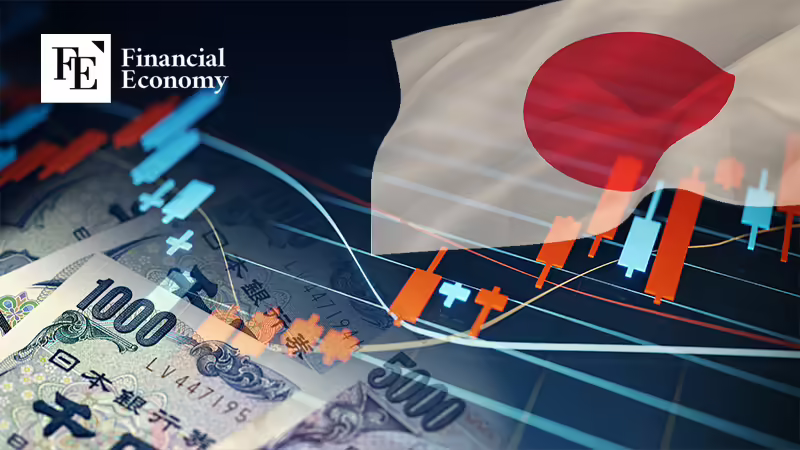
Korean Exports Unshackled by Yen Weakness, but Won-Yen Co-Movement and Technology Gap Are the Variables
Japan’s rate hike is expected to be a favorable factor for Korea’s real economy—particularly exporters. Over the past several years, the super-weak yen boosted the price competitiveness of Japanese products and squeezed Korean firms. According to an analysis by the Korea Economic Research Institute, every 1% decline in the yen’s value reduces Korea’s export growth rate by 0.61 percentage point.
If the yen turns into an appreciation trend, the picture flips. The Korea International Trade Association said Korea-Japan export competition overlap stood at 0.458 in 2023, with fierce rivalry concentrated in core categories such as petroleum products (0.827), automobiles and parts (0.658), and ships (0.653). The metric indicates more intense competition as it approaches 1; conventionally, readings above 0.5 are assessed as highly competitive. Yen strength tends to push up Japanese rivals’ export unit prices, improving the price competitiveness of Korean products.
Even so, some argue it is premature to assume yen strength will translate directly into better Korean export performance. The Bank of Korea and other major institutions point to strong co-movement driven by the view in international financial markets that the won functions as a “proxy hedge” for the yen. Proxy hedging refers to using a more liquid, correlated currency (the yen) to hedge the risk of a less liquid currency. If the won rises alongside the yen when the yen strengthens, the anticipated boost to price competitiveness may be diluted.
Japan’s forceful industrial policy is another swing factor. Japan is reviewing aggressive tax incentives—including tax credits and accelerated depreciation—to spur corporate capital investment. If Sanaenomics ultimately strengthens Japanese firms’ underlying capacity, analysts warn that over the longer term, a widening technology gap could pose a greater threat to Korean exports than any temporary FX-driven effect.
Oliver Griffin is a policy and tech reporter at The Economy, focusing on the intersection of artificial intelligence, government regulation, and macroeconomic strategy. Based in Dublin, Oliver has reported extensively on European Union policy shifts and their ripple effects across global markets. Prior to joining The Economy, he covered technology policy for an international think tank, producing research cited by major institutions, including the OECD and IMF. Oliver studied political economy at Trinity College Dublin and later completed a master’s in data journalism at Columbia University. His reporting blends field interviews with rigorous statistical analysis, offering readers a nuanced understanding of how policy decisions shape industries and everyday lives. Beyond his newsroom work, Oliver contributes op-eds on ethics in AI and has been a guest commentator on BBC World and CNBC Europe.
Similar Post