“Default fears spread to Vanke”: China’s property slump deepens as Beijing vows to shore up domestic demand

Authored On
Modified
China’s Vanke faces a default scare after creditors reject a debt-extension plan
China’s property market stays in a deep chill—transactions freeze, prices slide, listings pile up
Beijing vows to build a “strong domestic market,” doubling down on stimulus
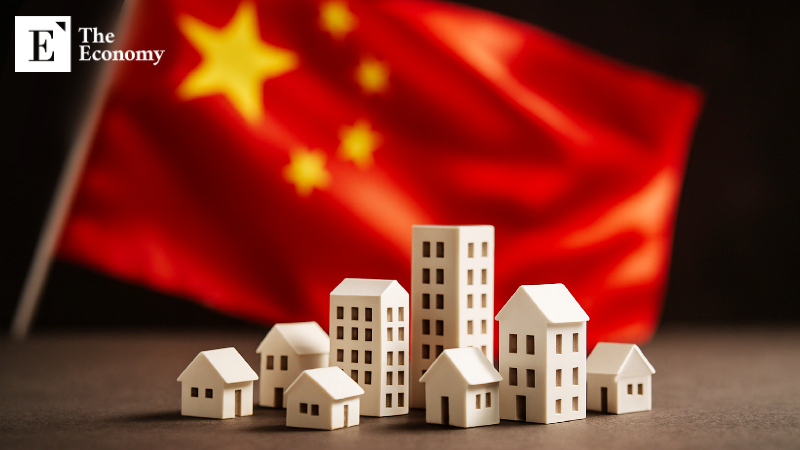
China’s major property developer Vanke has been pushed to the brink of a potential default as financial strains deepen. After years of a prolonged property slump that has brought down private-sector giants such as Evergrande, even Vanke—often viewed as effectively state-backed—now appears under severe pressure. With property-driven risks weighing heavily on the broader economy, Beijing is moving to make domestic-demand support a central pillar of its economic policy next year.
Vanke groans under liquidity pressure
According to Reuters and Bloomberg on the 15th, Vanke put a maturity-extension plan to a creditor vote for a bond worth about $280 million that was set to mature on the 15th, but failed to secure the required 90% approval and the proposal was rejected. Vanke’s first proposal was to postpone principal and interest repayment for 12 months with no upfront payment or installments, but it won support from none of the creditors. The company then submitted two revised proposals, adding credit-enhancement measures and maintaining normal interest payments, but those drew approval rates of 83.4% and 18.95%, respectively. The result has pushed Vanke abruptly to the brink of a potential default.
Vanke plans to revise the extension terms and hold further talks with creditors before conducting a revote. The vote is scheduled to close at 2:00 a.m. GMT on the 22nd. During a five-business-day grace period, Vanke must either repay the debt or reach a separate agreement to extend the repayment deadline. If creditors approve an extension through the vote, Vanke can buy time, but if the grace period expires without a deal, creditors can declare a default. Separately, Vanke has also requested a one-year extension for another maturity of about $520 million due on the 28th, with a creditor meeting set for the 22nd.
The central reason Vanke has been cornered is a cash crunch stemming from the property downturn. China’s property market—once seen as underpinning roughly 30% of GDP—has struggled since the bubble burst during the COVID-19 period. Over the past few years, major developers including Evergrande and Country Garden have collapsed under heavy debt, and Vanke is now seen as running critically low on funds. As of September, Vanke’s cash holdings stood at about $8.4 billion, while its short-term debt is estimated at about $21.3 billion.
If Vanke fails to weather the liquidity squeeze and defaults, the shock to China’s economy could be far larger than the fallout from private developers’ bankruptcies. Vanke has long been viewed as effectively state-backed, and markets have expected central and local governments to ultimately act as a backstop. If Vanke were to fall, it could shake not only the property market but also confidence in the government itself.
China’s property market sinks deeper into a slump
The problem is that the property downturn pushing countless developers to the brink in China shows little sign of easing. According to the National Bureau of Statistics, prices of existing homes in top-tier cities such as Beijing, Shanghai, Guangzhou, and Shenzhen fell an average of 0.9% month on month in October. Transaction volumes for existing homes in first-tier cities, which had briefly rebounded in September, also turned back down. Beijing saw transactions fall 23.7% from the previous month to 12,087 units, Shanghai dropped 9.3% to 18,483 units including commercial properties, and Shenzhen posted a 7.7% decline. Commenting on the data, Chinese economic outlet Caixin said the resale market is a more accurate gauge of demand than the new-home market, where prices are regulated, adding that simultaneous declines in prices and transactions show buyer confidence has yet to recover despite multiple stimulus measures.
The trend continued last month. Data from China Real Estate Information Corp. (CRIC) show home sales by the top 100 developers plunged 36% year on year in November. Research firm China Index Academy said prices of existing homes across 100 Chinese cities fell 7.95% in November, citing oversupply and weakening buyer sentiment as key drivers of the deeper price slide. S&P Global estimates that as of the end of August, China’s inventory of completed but unsold homes totaled about 762 million square meters.
Outlooks from experts are increasingly grim. Lou Jiwei, former Chinese finance minister, said at the recent Caixin Summit in Beijing that the property downturn is likely to persist for some time, adding it would take at least five more years to transition China’s real estate sector to a more sustainable model. Such a long-term warning from a heavyweight who oversaw China’s fiscal policy from 2013 to 2016 is unusual. Lou argued that China needs to gradually scrap its pre-sale system and move toward selling homes only after completion, but cautioned that the shift would require massive capital and time, making it no quick fix.
Property-driven shock rocks the economy
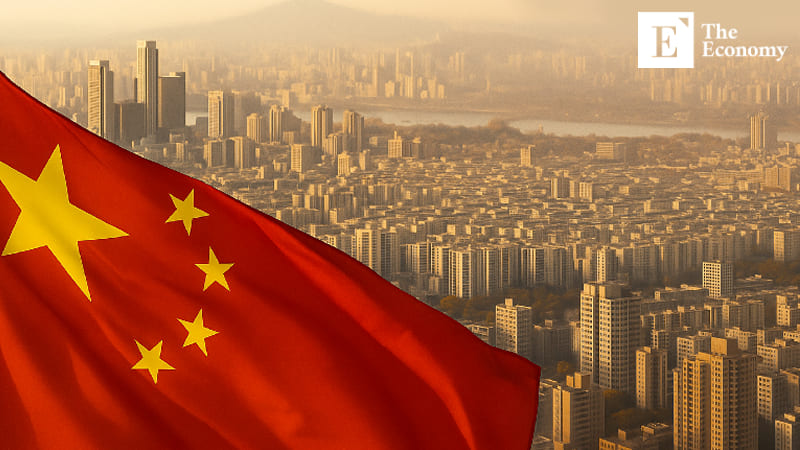
The collapse of the property market has delivered a severe blow to China’s economy. Joint research by Harvard professor Kenneth Rogoff and IMF economist Yuanchen Yang shows that property and related supply chains account for roughly one-quarter to one-third of China’s GDP. When property falters, linked industries—from steel and cement to home appliances—topple in a domino effect, asset values slide, and domestic demand weakens broadly. The strain is already visible in the data: China’s retail sales rose just 1.3% year on year last month, well below market expectations of 2.9% and the previous month’s 2.9% gain. The disappointment came despite the inclusion of Singles’ Day, typically the country’s biggest shopping season.
As the risk of a domestic-demand slump intensifies, China’s top leadership moved to respond. At the Central Economic Work Conference held in Beijing on the 10th–11th—with President Xi Jinping and the full senior leadership in attendance—the government formally declared the building of a “strong domestic market” as next year’s core economic priority. While officials have stressed consumption and investment before, the sharper language marks a shift. The policy package unveiled at the meeting includes consumer subsidies, measures to raise incomes for rural and urban residents, expanded central-government investment, support for advanced industries, and liquidity provision via policy finance.
While these steps could offer short-term support, skepticism remains among global markets and experts. Investment banks such as Nomura and Citi broadly agree that although policy backing has been strengthened, measures that address structural problems are still lacking. Concerns over debt have limited Beijing’s willingness to pursue aggressive rate cuts or large-scale fiscal expansion. Structural constraints on a consumer rebound are also significant. High household saving remains a hurdle, reflecting persistent anxieties over healthcare, education, and retirement. Wages and income distribution pose another challenge: sharply lifting wages to spur consumption would raise costs for manufacturers, risking weaker investment and exports—an option Beijing finds hard to embrace in an economy still anchored by manufacturing.
Similar Post