Rare Earth Bonanza Discovered in Utah Desert, Can It Shake China’s Grip on the Supply Chain

Matthew Reuter is a senior economic correspondent at The Economy, where he covers global financial markets, emerging technologies, and cross-border trade dynamics. With over a decade of experience reporting from major financial hubs—including London, New York, and Hong Kong—Matthew has developed a reputation for breaking complex economic stories into sharp, accessible narratives. Before joining The Economy, he worked at a leading European financial daily, where his investigative reporting on post-crisis banking reforms earned him recognition from the European Press Association. A graduate of the London School of Economics, Matthew holds dual degrees in economics and international relations. He is particularly interested in how data science and AI are reshaping market analysis and policymaking, often blending quantitative insights into his articles. Outside journalism, Matthew frequently moderates panels at global finance summits and guest lectures on financial journalism at top universities.
Authored On
Modified
Ionic MT Confirms North America’s Largest Estimated Rare Earth Deposit
China Controls the Entire Global Value Chain, Making a Rapid Reset Unlikely
Trump Administration Expands Private-Sector Investment to Pursue “Rare Earth Self-Sufficiency”
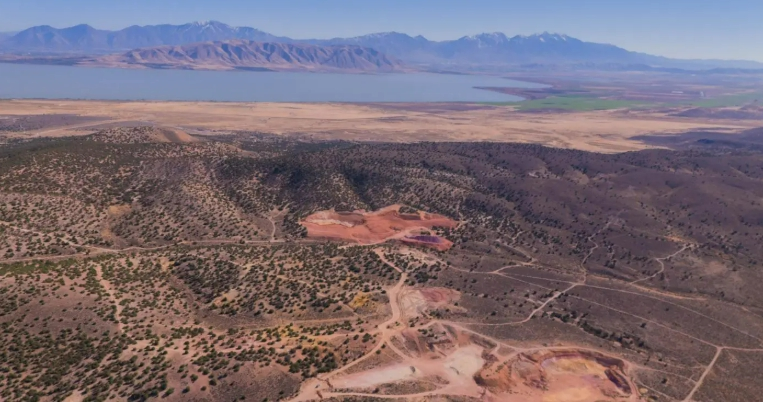
A rare earth deposit believed to be the largest in North America has been identified in the Utah desert, introducing a new variable into the global rare earth supply chain. With China having long dominated the entire process—from mining to refining, processing, and exports—assessments suggest U.S.-China competition over rare earths has entered a new phase. Still, some observers argue that given China’s overwhelming command of the value chain, this discovery alone is unlikely to reshape the market landscape overnight.
Rare Earth Grade at New Deposit Exceeds China’s Average
On the 14th (local time), the science and technology outlet Interesting Engineering reported that a large-scale rare earth deposit had been discovered beneath the Utah desert. According to the report, battery materials company Ionic Mineral Technologies (Ionic MT), headquartered in Provo, California, recently confirmed what is estimated to be North America’s largest critical-minerals deposit within an ion-adsorption clay layer in its Silicon Ridge project area in Utah.
What has drawn particular attention is the quality and composition of the minerals in the deposit. The average rare earth content is said to be about 2,700 ppm, significantly higher than the average grade of major Chinese deposits. The site is also reported to contain 16 high-quality minerals—among them lithium, gallium, germanium, rubidium, cesium, and vanadium—alongside a broad mix of light and heavy rare earth elements. With only 11% of the overall project area surveyed so far, there is also a meaningful possibility that additional exploration could expand the resource estimate.
Ionic MT also adopted an environmentally oriented extraction process based on low-temperature ion exchange, distinct from conventional mining methods, securing a recovery rate of up to 95%. The company has begun an economic assessment, with detailed results scheduled for release in the first half of next year. Andre Zeitoun, CEO of Ionic MT, said, “With mining permits and processing facilities already secured, we can move quickly into production,” adding, “This will help reduce the United States’ strategic vulnerability stemming from dependence on overseas supply.”
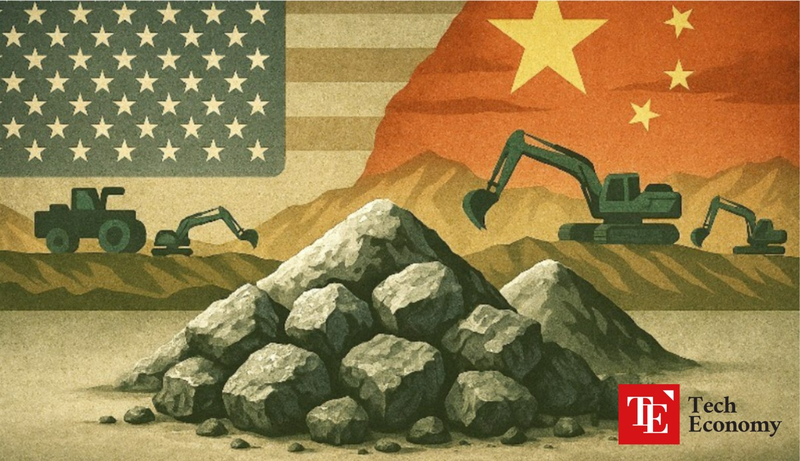
China Uses Rare Earths Whenever Trade and Diplomatic Frictions Erupt
However, the mere discovery of a deposit does not immediately translate into stronger U.S. dominance in rare earths. Bringing newly found resources to market through low-cost mining and refining and supplying them reliably is an entirely different challenge. The rare earth industry entails massive costs and environmental burdens in both extraction and refining. The United States already has a rare earth deposit in California, yet has struggled in the global market due to high mining and refining costs and environmental regulations. Critics note that the Utah desert deposit, too, will face limited economic payoff unless it can establish commercial viability.
A larger issue is that China is not merely a resource holder. Beyond reserves, China has seized control of the entire global value chain—mining, refining, processing, and exports—while sustaining market share through price competitiveness. Moreover, China has pursued a strategy of leveraging its overwhelming dominance in rare earth resources as a tool during trade and diplomatic disputes. In 2010, during the Senkaku Islands (China: Diaoyu Dao) dispute with Japan, China’s export halt reportedly paralyzed parts of Japanese manufacturing. Since 2023, China has pressured U.S. semiconductor and defense supply chains by introducing export licensing regimes for gallium, germanium, and heavy rare earths.
More recently, China has moved to further entrench supply-chain leadership by expanding rare earth cooperation networks with developing countries—building a supply-chain coalition underpinned by rare earths, its most potent external weapon. Earlier, Chinese Premier Li Qiang formally announced the “Green Minerals Global Economy and Trade Cooperation Initiative” at the G20 summit held on the 24th of last month in Johannesburg, South Africa. Nineteen countries—including Cambodia, Nigeria, Myanmar, and Zimbabwe—along with the United Nations Industrial Development Organization (UNIDO) joined the initiative.
China’s Ministry of Commerce framed the initiative’s objective as “stabilizing mineral supplies,” calling for open, mutually beneficial, and fair trade cooperation. It presented seven areas of cooperation, including fostering a stable policy environment, liberalizing green trade, fulfilling social responsibilities, expanding technology exchanges, and strengthening investment cooperation. While specific investment 규모 and implementation timelines were not disclosed, analysts say that because rare earths functioned as one of China’s most powerful levers during the U.S.-China tariff war, the move reflects Beijing’s effort to build a bloc to counter U.S.-led supply-chain restructuring.
U.S. Defines “Critical Minerals Development” as a National Security Issue and Backs It
In response to China’s supply-chain lock, the United States is also pursuing an all-front response aimed at rare earth self-sufficiency. In March, President Donald Trump invoked the Defense Production Act (DPA), defining critical minerals development as a national security matter and directing permitting streamlining and regulatory easing. At the same time, Washington is accelerating supply diversification by expanding cooperation with Japan, Australia, and Southeast Asian countries. Examples include joint construction of refining facilities with Australia’s Lynas, a neodymium supply agreement with Japan’s Sumitomo, and support for mine development in Vietnam and Brazil.
A so-called “big government” approach is also being pursued in parallel. In July, the U.S. federal government acquired a 15% stake in rare earth producer MP Materials for $400 million and agreed to guarantee a minimum price for the rare earth magnet feedstock it produces. Then, on the 3rd of this month, the government signed a partnership providing a total of $1.4 billion in support to domestic rare earth startups Vulcan Elements and ReElement Technologies. The two companies—emerging players specializing in rare earth magnet manufacturing, recycling, and refining—have drawn attention as orders surged after China’s rare earth export restrictions last year.
According to the U.S. Department of Commerce, Vulcan will receive $1.22 billion from government and private capital to build a rare earth magnet manufacturing facility with annual capacity of 10,000 tons (t). ReElement will focus on refining and recycling used rare earth magnets to reproduce feedstock, receiving total investment of $160 million from government and private sources. Commerce Secretary Howard Lutnick said, “This investment is a decision to accelerate domestic self-sufficiency in rare earth magnets, a core component of U.S. manufacturing,” adding, “We will bring production of critical minerals and advanced materials back to the United States.”
Matthew Reuter is a senior economic correspondent at The Economy, where he covers global financial markets, emerging technologies, and cross-border trade dynamics. With over a decade of experience reporting from major financial hubs—including London, New York, and Hong Kong—Matthew has developed a reputation for breaking complex economic stories into sharp, accessible narratives. Before joining The Economy, he worked at a leading European financial daily, where his investigative reporting on post-crisis banking reforms earned him recognition from the European Press Association. A graduate of the London School of Economics, Matthew holds dual degrees in economics and international relations. He is particularly interested in how data science and AI are reshaping market analysis and policymaking, often blending quantitative insights into his articles. Outside journalism, Matthew frequently moderates panels at global finance summits and guest lectures on financial journalism at top universities.
Similar Post