Ukraine Drops NATO Bid as Endgame Talks Shift Toward Security Guarantees and Funding

Niamh O’Sullivan is an Irish editor at The Economy, covering global policy and institutional reform. She studied sociology and European studies at Trinity College Dublin, and brings experience in translating academic and policy content for wider audiences. Her editorial work supports multilingual accessibility and contextual reporting.
Authored On
Modified
Shrinking international support and fiscal constraints
Talks enter phase of fine-tuning terms with Russia
Disputes emerge over handling of frozen Russian assets
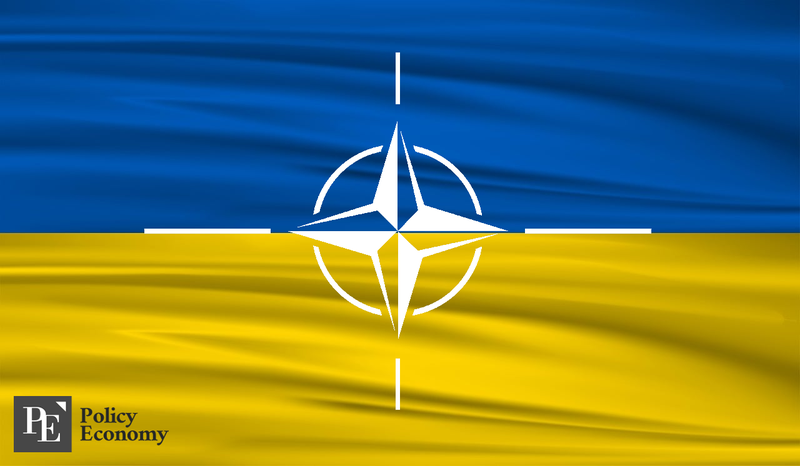
Ukraine has signaled that it may abandon its bid to join NATO, widening the negotiating space for ending the war with Russia. The move is widely seen as a pragmatic attempt to establish a politically viable rationale for a ceasefire amid accumulated military disadvantages and growing fiscal dependence on external aid. Security guarantee proposals currently under discussion by the United States and Europe draw on collective defense principles similar to those in the NATO charter, but focus on customized protection mechanisms rather than formal membership.
U.S. peace proposal reshaped into a “negotiable format”
According to Reuters on the 15th (local time), Ukrainian President Volodymyr Zelensky entered negotiations with a U.S. delegation in Berlin a day earlier to discuss an end to the war with Russia. In a press conference ahead of the talks, Zelensky indicated that Ukraine could forgo NATO membership, stating that Kyiv is considering bilateral security guarantees with the United States, protections comparable to U.S. collective defense treaties, and additional guarantees from European countries, Canada, and Japan. He said such arrangements would serve as safeguards against renewed Russian aggression.
Zelensky’s remarks were interpreted as a signal that Ukraine is openly outlining the range of options it may consider to conclude a peace deal. Ukraine enshrined NATO membership in its constitution in 2019 and, since Russia’s invasion, has treated accession as its primary security guarantee. Revisiting the issue now reflects a judgment that the military and diplomatic environment surrounding Ukraine has fundamentally changed.
The shift is closely tied to changing support conditions in the United States and Europe. Political fatigue in Washington has mounted over continued large-scale military and financial aid, while European governments face increasing difficulty sustaining the fiscal burden of a prolonged conflict. As a result, Ukraine’s leverage at the negotiating table has steadily eroded. Steve Witkoff, a special envoy linked to former U.S. President Donald Trump, said on the first day of the Berlin talks that “substantial progress” had been made on a 20-point peace and economic framework. Zelensky adviser Dmytro Lytvyn added that draft documents are currently under review.
These developments suggest that the U.S.-proposed peace framework is being reshaped into a form Ukraine can realistically accept. According to the BBC, a 19-point proposal presented by Washington late last month has undergone sweeping revisions, with little remaining from the original draft. While the provision automatically rejecting Ukraine’s NATO application reportedly remains, clauses limiting Ukraine’s military size or mandating unilateral territorial concessions have been removed. This leaves room for Ukraine to secure at least a degree of effective security protection.
Ultimately, negotiations are narrowing to the question of what level of security guarantees and international backing Ukraine can obtain in exchange for formally remaining outside NATO. Some European leaders, including UK Prime Minister Keir Starmer, have openly referenced the possibility of protections modeled on NATO’s Article 5, which treats an attack on one member as an attack on all. This points to a shift toward securing substantive guarantees without formal alliance membership.
Urgent need to coordinate U.S.–Europe burden sharing
As the framework for security guarantees begins to take shape, ceasefire talks between Ukraine and Russia have moved into a phase of fine-tuning specific terms within the U.S.-backed proposal. The Berlin discussions involved Zelensky, Witkoff, and Jared Kushner, Trump’s son-in-law, with Trump himself participating by phone. The multilayered diplomatic engagement suggests talks have progressed beyond exploratory discussions toward drafting concrete agreement language.
European countries are also seeking to expand their role as implementers of any eventual deal. Leaders from ten countries including the UK, France, and Germany, along with the European Council and the European Commission, issued a joint statement proposing the creation of a European-led multinational force backed by U.S. support. The statement said Ukraine would continue receiving broad assistance in peacetime and that its military size would be maintained at around 800,000 troops. Despite these broad commitments, negotiations over how much responsibility and cost the U.S. and Europe will each bear remain unavoidable.
Fighting has not fully stopped even as diplomacy intensifies. On the 15th, Ukraine’s Security Service (SBU) announced it had attacked a Russian submarine using underwater drones. The strike, which occurred at Russia’s Novorossiysk port, reportedly caused severe damage to a 3,000-ton submarine and disabled cruise missile launch capabilities that could strike across Ukraine. Still, analysts say such actions are unlikely to derail the broader diplomatic trajectory, with the wording of guarantees and enforcement mechanisms now seen as decisive.

Frozen Russian assets emerge as final sticking point
As fighting and diplomacy unfold in parallel, the final core issue in endgame negotiations appears to be the handling of frozen Russian state assets held in Europe. The EU recently agreed to freeze these assets indefinitely, effectively preempting decisions on postwar order and reconstruction funding. The total value of frozen Russian assets is estimated at up to 210 billion euros, equivalent to about 247 billion dollars under the applied exchange rate. Of that, roughly 185 billion euros, or about 218 billion dollars, are held at Belgium-based financial institution Euroclear.
The EU’s hard-line stance reflects mounting funding shortages for Ukraine. As the war approaches its fourth year, Ukraine faces acute fiscal strain, with funding needs over the next two years estimated at 135.7 billion euros, or roughly 160 billion dollars. The EU has said it will cover about two-thirds of that amount, but the burden has increased after the United States effectively decided to halt further economic assistance. In response, the EU and Ukraine are pursuing a “reparations loan” scheme that would use frozen Russian assets to support Ukraine’s military and economy, arguing that Russia should pay for the destruction it caused.
Russia has reacted forcefully. The Russian central bank has filed a lawsuit against Euroclear in a Moscow arbitration court, seeking 18.17 trillion rubles in damages—equivalent to about 228.5 billion dollars based on the stated exchange rate. Russian authorities have denounced the EU’s plan as “borderline theft” and vowed to pursue all available legal avenues. EU Economy Commissioner Valdis Dombrovskis countered that EU financial institutions are fully protected from legal risks, but acknowledged that prolonged litigation could increase political and diplomatic costs.
Belgium, where most of the assets are held, is seen as bearing the greatest exposure. Euroclear CEO Valérie Urbain warned that using Russian assets could destabilize the global financial system, while Belgian Prime Minister Bart De Wever cautioned that Belgium may consider legal action if the plan poses significant national risks. Until differences over the handling of frozen Russian assets are resolved, diplomats say, the agreements painstakingly built over months may struggle to translate into a definitive end to the war.
Niamh O’Sullivan is an Irish editor at The Economy, covering global policy and institutional reform. She studied sociology and European studies at Trinity College Dublin, and brings experience in translating academic and policy content for wider audiences. Her editorial work supports multilingual accessibility and contextual reporting.
Similar Post