U.S.–China Humanoid Robot Rivalry Intensifies, Commercialization Still a Long Road Ahead

Anne-Marie Nicholson is a fearless reporter covering international markets and global economic shifts. With a background in international relations, she provides a nuanced perspective on trade policies, foreign investments, and macroeconomic developments. Quick-witted and always on the move, she delivers hard-hitting stories that connect the dots in an ever-changing global economy.
Authored On
Modified
China mobilizes state-led investment and infrastructure
U.S. moves to strengthen policy and industrial momentum
Technological limits and “bubble” warnings coexist
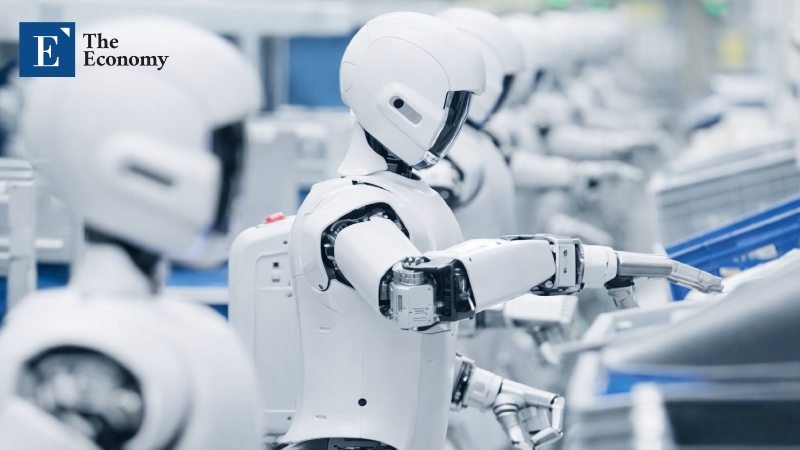
The humanoid robot industry is emerging as a new front line in the U.S.–China technology rivalry. As China expands its ecosystem by mobilizing government capital, talent, data, and large-scale testing infrastructure, the United States is positioning commercially deployable models for manufacturing and logistics, aiming squarely at a real-world productivity contest. Still, high costs, along with unresolved safety and autonomy issues, remain formidable obstacles to large-scale commercialization of humanoid robots.
China Moves to Dominate Robot Infrastructure and Ecosystems
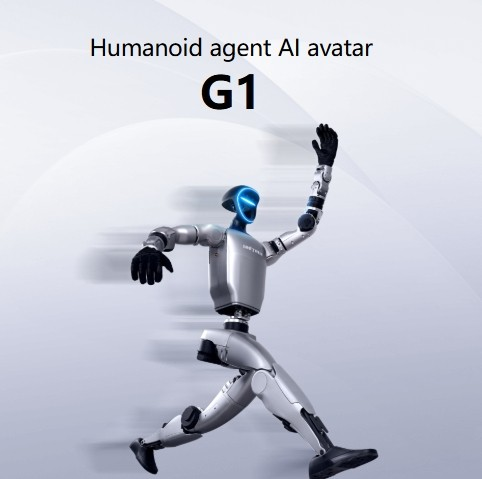
According to U.S. business outlet Forbes, China-based robotics firm Unitree recently unveiled an app store platform that allows owners of its humanoid robot G1 to download and install a variety of motion programs. China is the first country in the world to build an app store specifically for robots. Through the platform, Unitree currently offers three entertainment-focused apps, including Bruce Lee–style martial arts routines, retro twist dance moves, and monkey-like imitation behaviors. While the offerings are limited to entertainment for now, Unitree says it ultimately plans to expand into practical applications such as unloading dishwashers, cleaning, garden weeding, and diaper changing.
At present, China is widely regarded as the most advanced country in the global humanoid robot industry. According to the International Federation of Robotics (IFR), Chinese humanoid robot hardware manufacturers already account for roughly half of the world’s total—about 70 to 100 companies as of 2024. As a result, 2024 is often referred to in China as “The First Year of Humanoid Robots.” While the market size remains relatively modest at roughly $28 billion to $69 billion, rapid expansion into factories, logistics, services, and household use—driven by mass production—is expected to push compound annual growth to an estimated 92.5% by 2030, far outpacing the global average of 60% to 70%.
Behind China’s rapid growth lies sweeping state support. Since 2014, Beijing has elevated “new quality productive forces” to the highest level of national policy, identifying humanoid robots as a key instrument. The policy aims to restructure the Chinese economy around high value-added production systems based on AI, robotics, advanced materials, and biotechnology. Last year, the government announced a national plan to build a world-class humanoid robot industry by 2027, and this year it unveiled plans to establish a $139 billion fund to support AI and robotics startups. In addition, China’s ecosystem—built on 580,000 robotics and AI graduates, daily data generation of 41 zettabytes, and nationwide testing facilities—has become a powerful accelerator for industrial growth.
U.S. Accelerates Efforts to Nurture Its Robot Industry
Facing China in the broader contest for technological primacy, the United States is stepping up its countermeasures. According to political outlet Politico, U.S. Commerce Secretary Howard Lutnick has recently held a series of meetings with chief executives of major robotics companies, signaling Washington’s intent to actively foster the sector. The White House is also reportedly considering issuing an executive order related to the robotics industry as early as next year. A Commerce Department spokesperson said, “Robotics and advanced manufacturing are essential to bringing core production capacity back to the United States, and the government is fully committed to this effort.”
Congress is likewise showing heightened interest. Republicans are pushing to establish a National Robotics Commission as part of revisions to the National Defense Authorization Act, while the Department of Transportation is reportedly moving to set up a robotics working group within the year.
The U.S. robotics industry has framed robots as “physical AI,” urging policymakers to integrate robotics development into broader strategies for strengthening AI competitiveness. Jeff Cardenas, CEO of Apptronik—a robotics startup backed by Google—said, “To remain competitive, the United States needs a national robotics strategy and aggressive support for this rapidly growing industry.” Brendan Shulman, vice president at Boston Dynamics, also warned that “advanced robotics is becoming critically important to the United States in manufacturing, technology, national security, defense, and public safety,” adding that China’s push to secure leadership in robotics is particularly striking. Industry players are calling for tax incentives and federal funding to reinforce supply chains and support widespread adoption, as well as trade policies to counter China’s industrial subsidies and intellectual property practices.
These developments underscore that robotics engineering is rising as the next major battleground after AI in the U.S.–China rivalry. In particular, the United States is developing humanoid robots primarily as tools to boost productivity and efficiency, positioning itself against China’s rapid advance. Tesla, Boston Dynamics, and Agility Robotics are leading players, targeting smart manufacturing, logistics, and industrial sites. Their priorities include long-term operational stability, energy efficiency, and real-time AI inference.
The U.S. is also seen as holding a structural advantage in transferring its expertise in autonomous driving and AI algorithms directly into robotics. Industry players are increasingly pursuing strategies that combine robots with cloud and data center infrastructure, evolving humanoids into “AI-based service platforms” rather than standalone hardware. Market research firm TrendForce has projected that 2026 will be a pivotal year in determining whether U.S. suppliers can develop scalable business humanoid models for manufacturing logistics and consumer services.
Clear Limits to Commercialization, Alongside ‘Bubble’ Warnings
Despite the optimism, significant hurdles remain. Safety is the most immediate concern. Robots capable of autonomous task execution—such as Agility Robotics’ Digit—are still operated in spaces physically separated from humans. While Agility is developing safer human-detection technologies, fully reliable solutions have yet to be achieved. In household environments, humanoid robots face risks of collision, tipping, and entrapment involving children, pets, and furniture, as well as privacy and surveillance concerns stemming from connected cameras and microphones. Once robots enter homes, exposure of daily routines and personal data becomes a real possibility.
Full autonomy also remains elusive. Neo, developed by 1X—a robotics firm backed by OpenAI—can only be used through remote operation by trained specialists. In practice, this means an unfamiliar person may be controlling a robot inside a user’s home. While 1X says users can designate restricted areas, refuse data sharing, and limit remote operation times, whether such measures will earn public trust remains uncertain. Cost is another major barrier. Neo’s initial sale price is $20,000, with a rental option priced at $500 per month, placing mass adoption well out of reach. Ongoing maintenance costs, including heavy electricity consumption, further add to the burden. In particular, bipedal designs require complex control and recovery mechanisms to ensure safety, driving sustained expenses.
Technological limitations are also stark. Rodney Brooks, former director of MIT’s Computer Science and Artificial Intelligence Laboratory (CSAIL) and widely regarded as the “godfather of robotics,” was blunt in a recent interview with The New York Times, saying, “Humanoid robots have lost their way.” He warned that the tech industry has fallen into an implicit assumption that robots shaped like humans will be able to do everything humans can do. “Human-level hand manipulation and balance are among the hardest problems in robotics,” he said. Brooks added that while visual data is abundant, there is no language capable of describing and storing the tactile sensations of human fingertips, stressing that believing human dexterity can be replicated from video data alone is a misconception. He also cautioned that humanoid robots could pose serious risks if they fall, remarking, “I would not go within three feet of a humanoid robot.”
Anne-Marie Nicholson is a fearless reporter covering international markets and global economic shifts. With a background in international relations, she provides a nuanced perspective on trade policies, foreign investments, and macroeconomic developments. Quick-witted and always on the move, she delivers hard-hitting stories that connect the dots in an ever-changing global economy.
Similar Post