Debate Inside the Fed Drags On After December Cut, While Household Prices Remain Elevated

Aoife Brennan is a contributing writer for The Economy, with a focus on education, youth, and societal change. Based in Limerick, she holds a degree in political communication from Queen’s University Belfast. Aoife’s work draws connections between cultural narratives and public discourse in Europe and Asia.
Authored On
Modified
Fed Governor Stephen Miran says the U.S. may need more rate cuts
No. 2 at the Fed calls the stance “appropriate,” while others argue for holding rates
U.S. grocery prices still sting as Trump rolls back parts of his tariff plan
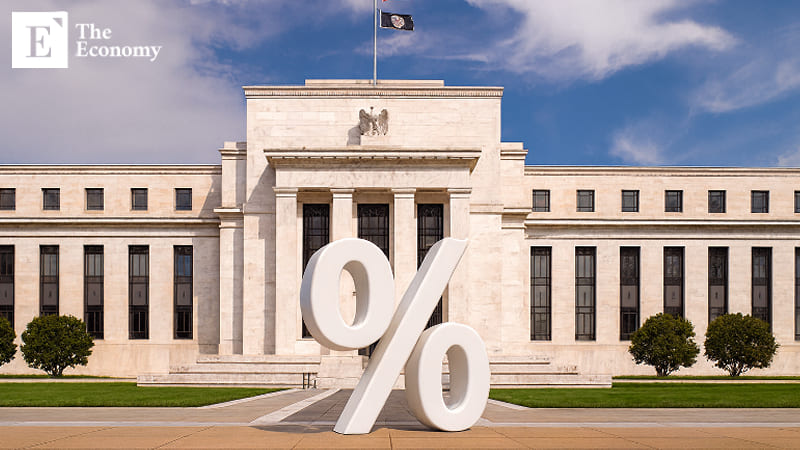
A Federal Reserve governor has argued that the Fed’s rate-setting process is being distorted by “phantom inflation.” The claim is that inflated price signals are skewing policymakers’ judgment and keeping interest rates higher than necessary. Inside the Fed, views remain sharply divided, with some arguing rates should have been held steady and others saying the current level is appropriate.
“Rates should fall further,” Fed governor argues
According to the Financial Times on the 15th (local time), Fed Governor Stephen Miran said in a lecture at Columbia University’s School of International and Public Affairs that the central bank needs to assess underlying inflation pressures with greater precision. He argued that statistical components—such as housing costs and imputed prices—are creating inflation signals that are out of sync with real supply-and-demand conditions. Miran said that “true inflation, with the noise stripped out, is not far from target,” adding that while the personal consumption expenditures (PCE) gauge stands at 2.8%, removing distortions would put it only slightly above 2%. He also said market-based core inflation is below 2.6%, and falls under 2.3% when housing is excluded.
Miran added that housing inflation is likely to ease as rent growth, which surged during the COVID-19 period, continues to normalize. He also said service inflation excluding housing, food, and energy is unlikely to face major upside pressure as the labor market cools. Some drivers of service-price inflation—such as portfolio management fees—reflect statistical features rather than changes consumers directly feel, he noted. “Prices jumped sharply after the pandemic, and it’s natural that U.S. households still feel the strain,” Miran said, “but prices are now stabilizing at a higher level, and monetary policy should reflect that reality.”
His remarks come as debate inside the Fed remains intense even after the central bank cut rates by 25 basis points at three consecutive meetings, bringing the policy rate to a 3.5%–3.75% range. At this month’s meeting on the 9th–10th, three Federal Open Market Committee (FOMC) members voted against the decision, and Miran was the most hawkish among them on cuts—calling for a 50-basis-point move. He warned that keeping policy unnecessarily tight would ultimately lead to job losses.
Fed officials remain split even after the cut
Views inside the Fed remain sharply divided over this month’s rate cut. Chicago Fed President Austan Goolsbee, who voted against the December decision, wrote on the Chicago Fed’s website on the 12th that the central bank should have waited for more data—especially on inflation—before moving to further easing. He argued that inflation has been above target for four and a half years and that progress has stalled in recent months, adding that nearly every business leader and consumer he has met in his district has cited prices as their top concern. In that context, he said, it would have been more reasonable to proceed cautiously and wait for additional information.
Kansas City Fed President Jeff Schmid also explained his opposition in a separate statement the same day. He said inflation remains elevated, the economy is still carrying momentum, and while the labor market is cooling, it is broadly in balance. “At most, the current policy stance is only mildly restrictive,” he said, adding that, based on that assessment, he believed holding the policy rate steady was the appropriate choice at the meeting.
Others, however, say the cut was justified. New York Fed President John Williams, often seen as the Fed’s No. 2 after Chair Jerome Powell, said in a speech in New Jersey on the 15th that rates are “well positioned” as the economy heads toward 2026, and that the U.S. economy is preparing to regain solid growth and price stability. He also said last week’s cut moved monetary policy from a “moderately restrictive” stance toward a more neutral setting, leaving the Fed in a good position to respond going forward.

U.S. household costs remain a heavy burden
As debate within the Fed intensifies over whether inflation is being overstated or whether household price pressures remain acute, everyday living costs in the United States are still running high. A survey conducted in July by the Associated Press and the University of Chicago’s NORC among 1,437 U.S. adults found that 53% cited grocery costs as a major source of stress. Another 33% said food costs were a minor stressor, while only 14% said they were not a source of stress. Actual data back up those perceptions: as of September, spending on food at home was up 2.7% from a year earlier, according to changes in the consumer price index (CPI).
The so-called “Halloween price shock” in October offered another clear example of rising perceived costs. Recent data from the Bureau of Labor Statistics show that prices for candy and chocolate products during the Halloween season rose 9.8% year on year in October—the steepest increase for Halloween-related items in the past two decades. At the time, the National Confectioners Association said that while consumers were still celebrating Halloween, they were clearly cutting back on the amount purchased. Online retail data showed sales of oversized “trick-or-treat” candy sets fell 15% this season, while sales of small and mid-sized candy packages rose 11%.
As pressure from grocery prices mounts, President Donald Trump moved last month to roll back tariffs on more than 200 imported food items. Products granted tariff exemptions include fresh produce such as oranges, bell peppers, and acai berries, as well as cocoa, food additive chemicals, fertilizers, and even communion wafers. The White House said the exemptions were granted because the items are not produced domestically or have weak production bases in the United States. The administration said the move followed bilateral trade agreements with countries including Argentina, Ecuador, Guatemala, and El Salvador, with additional agreements planned by year-end. Alongside the tariff relief, the administration also announced a plan to distribute $2,000 per person in support payments funded by tariff revenue, targeting low- and middle-income Americans, with the proposal currently awaiting congressional approval.
Aoife Brennan is a contributing writer for The Economy, with a focus on education, youth, and societal change. Based in Limerick, she holds a degree in political communication from Queen’s University Belfast. Aoife’s work draws connections between cultural narratives and public discourse in Europe and Asia.
Similar Post