“Security Alliance” vs. “USD 7 Billion Breach of Duty” — Korea Zinc’s Boardroom Battle Enters New Phase as U.S. Department of Defense Steps In

Oliver Griffin is a policy and tech reporter at The Economy, focusing on the intersection of artificial intelligence, government regulation, and macroeconomic strategy. Based in Dublin, Oliver has reported extensively on European Union policy shifts and their ripple effects across global markets. Prior to joining The Economy, he covered technology policy for an international think tank, producing research cited by major institutions, including the OECD and IMF. Oliver studied political economy at Trinity College Dublin and later completed a master’s in data journalism at Columbia University. His reporting blends field interviews with rigorous statistical analysis, offering readers a nuanced understanding of how policy decisions shape industries and everyday lives. Beyond his newsroom work, Oliver contributes op-eds on ethics in AI and has been a guest commentator on BBC World and CNBC Europe.
Authored On
Modified
The U.S.-backed joint venture (JV) will secure a 10% newly issued stake in Korea Zinc, emerging as the pivotal force in next year’s shareholder vote
The Tennessee smelter is positioned as a critical hub for America’s “de-Chinafied” supply chain, producing 13 strategic minerals
Youngpoong and MBK counter with allegations of a “USD 7 billion fraudulent guarantee,” preparing an injunction to halt the share issuance
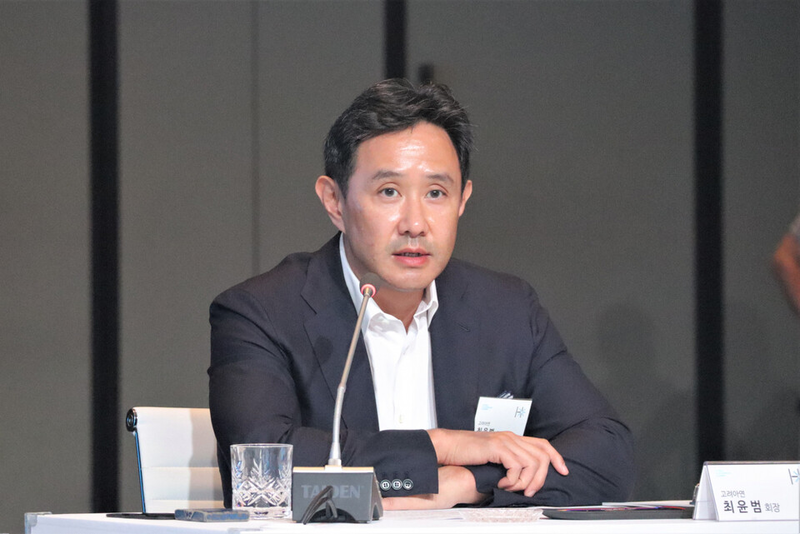
Korea Zinc Chairman Choi Yoon-beom has moved to reshape the balance of next year’s shareholder showdown by committing to a USD 11 billion smelter project in Tennessee and allocating a 10% equity stake to a JV that includes the U.S. Department of Defense (DoD). In response, the Youngpoong group has sharply criticized the decision as “a USD 7 billion joint guarantee constituting a clear breach of fiduciary duty and an unlawful share issuance for entrenching control,” signaling an imminent injunction to block the new shares. As the justification of “elevating supply-chain partnership” collides head-on with allegations of shareholder-rights violations, the governance dispute is escalating into a full-scale legal confrontation.
DoD-Backed Smelter Project Upends Shareholding Dynamics Through 10% New Issue
According to Korea Zinc’s regulatory filing on the 16th, the company is undertaking a massive investment to build an integrated non-ferrous smelting complex in Tennessee as part of its long-term growth strategy. The “U.S. Smelter” project entails USD 6.6 billion in facility investment, with total project costs—including operating capital and financing expenses—reaching USD 7.4 billion.
At the center of the initiative is a Korea–U.S. JV spearheaded by Crucible Metals, LLC, a U.S. subsidiary established on the 11th. Korea Zinc will inject roughly USD 1 billion, while U.S. strategic investors—including the Departments of Commerce and Defense and defense-sector partners—will contribute USD 2.15 billion. The remaining USD 7 billion will be financed through borrowings from the U.S. government and JPMorgan, backed by Korea Zinc’s joint guarantee.
As Washington intensifies the use of combined investment and policy finance to secure critical-mineral supply chains, the transaction represents an expansion of that strategy into direct equity participation in an allied industrial champion. With the DoD becoming the JV’s largest shareholder (40.1%), the U.S. gains strengthened project control through both equity and state-backed financing.
The core flashpoint is the JV’s plan to acquire a 10% stake in Korea Zinc via a third-party private placement on the 26th. Once the new shares are listed on January 13, the JV—backed by U.S. governmental and defense capital—will emerge as a major shareholder with decisive influence over voting outcomes. This 10% block is projected to become the critical swing factor in the March 2026 annual shareholder meeting, where six board seats whose terms expire will be contested, with eight seats required for majority control. With the National Pension Service (approximately 5%) and minority shareholders having held the casting vote, that leverage now shifts effectively to the JV.
The shareholding balance is also expected to tilt sharply. The current 12-percentage-point gap between the Youngpoong–MBK alliance (44.24%) and Chairman Choi’s side (approximately 32%) will tighten to a razor-thin margin once dilution effects and friendly holdings are recalculated post-issuance. The Youngpoong–MBK bloc is projected to fall to the low-40% range, while Choi’s faction could rise to around 39%, narrowing the gap dramatically.
U.S. Calls It a “Transformational Deal,” Producing 13 Strategic Minerals Including Antimony
The transaction is not merely an equity reshuffle but a fully integrated industrial-and-security package. Korea Zinc will begin site preparation and EPC (engineering, procurement, and construction) selection next year, aiming for a 2027 groundbreaking and 2029 completion. On a 650,000-square-meter site, the company will replicate the hybrid hydrometallurgical and pyrometallurgical processes of its Onsan smelter, processing 1.1 million metric tons of feedstock and producing 540,000 tons of finished materials annually.
Output will include zinc, lead, copper, precious metals, and 13 strategic minerals such as antimony, germanium, and gallium. Eleven of these are listed in the U.S. Department of the Interior’s “2025 Final List of Critical Minerals,” crucial for munitions and missile production and heavily dependent on China. Korea Zinc has set annual output targets of 300,000 tons of zinc, 200,000 tons of lead, 35,000 tons of copper, and 5,100 tons of rare metals.
Howard Lutnick, U.S. Secretary of Commerce, described the project as “a transformational deal that reshapes America’s critical-minerals landscape,” adding that it will enable the U.S. to produce key strategic resources essential for aerospace, defense, semiconductors, and AI at scale.
Washington’s unprecedented move to become a shareholder in a foreign private corporation reflects its policy elevation of critical-mineral supply chains to a direct national-security priority. With U.S. dependence on China exceeding 70% for antimony and similar minerals—and domestic capacity crippled by environmental regulation—Korea Zinc is seen as a technologically capable anchor for supply-chain reconstruction. This mirrors the DoD’s July investment in MP Materials and signals the government’s intent to exercise direct control over strategic-resource pipelines.
The execution plan also supports accelerated deployment. Korea Zinc chose a brownfield strategy by acquiring Nyrstar’s Clarksville assets, leveraging existing infrastructure instead of starting from bare land. According to Reuters, the company will demolish existing facilities and build a large-scale modern smelter—the first major U.S. zinc smelting project since the 1970s—retaining skilled labor and infrastructure to reduce ramp-up risks and fast-track commercial operations by 2029. Tennessee expects 740 jobs to be created, with Clarksville offering high-value positions starting at USD 86,000 annual wage levels.

Youngpoong: “USD 7 Billion Guarantee Is a Breach of Duty” — Injunction to Block Share Issuance Imminent
Although completion is slated for 2029, the first decisive battle in the governance struggle will occur at the March 2026 shareholder meeting. With government subsidies, conditional loans, and preferential access rights embedded in the “security package,” national interest has emerged as an unexpected variable in the vote calculus. A key question is whether the National Pension Service and minority shareholders will view the investment not as an entrenchment tactic but as a strategic necessity to enhance both national security and corporate value.
However, if the sweeping security-and-industrial package is interpreted as a tool for winning the internal control fight, the dynamic could shift dramatically as the financial burden morphs into legal exposure. The Youngpoong–MBK alliance has already mounted an aggressive counteroffensive. The central dispute concerns the USD 7 billion joint guarantee and whether the share issuance constitutes an attempt to defend control.
In a statement released on the 16th, the Youngpoong coalition asserted, “This decision damages shareholder value and jeopardizes financial stability, having been rushed through without adequate review by Chairman Choi’s directors.” They argue that ceding a valuable 10% stake to U.S. entities for control purposes—while assuming a USD 7 billion debt guarantee—constitutes “criminal breach of duty.” They further contend that “issuing a massive block of new shares to a third party while excluding existing shareholder subscription rights amid a control dispute is highly unlawful,” signaling the imminent filing of an injunction to prohibit the share issuance. The confrontation is rapidly escalating into a direct clash between the national-security rationale of “elevating a U.S.-led de-China supply-chain partnership” and allegations of “shareholder-rights violations and breach of fiduciary duty.”
Oliver Griffin is a policy and tech reporter at The Economy, focusing on the intersection of artificial intelligence, government regulation, and macroeconomic strategy. Based in Dublin, Oliver has reported extensively on European Union policy shifts and their ripple effects across global markets. Prior to joining The Economy, he covered technology policy for an international think tank, producing research cited by major institutions, including the OECD and IMF. Oliver studied political economy at Trinity College Dublin and later completed a master’s in data journalism at Columbia University. His reporting blends field interviews with rigorous statistical analysis, offering readers a nuanced understanding of how policy decisions shape industries and everyday lives. Beyond his newsroom work, Oliver contributes op-eds on ethics in AI and has been a guest commentator on BBC World and CNBC Europe.
Similar Post