‘Dismantling the Postwar Order’: Japan Moves to Expand Defense Spending to a Record High as Military Buildup Accelerates

Anne-Marie Nicholson is a fearless reporter covering international markets and global economic shifts. With a background in international relations, she provides a nuanced perspective on trade policies, foreign investments, and macroeconomic developments. Quick-witted and always on the move, she delivers hard-hitting stories that connect the dots in an ever-changing global economy.
Authored On
Modified
China–Japan Tensions Spill Into the Military Domain
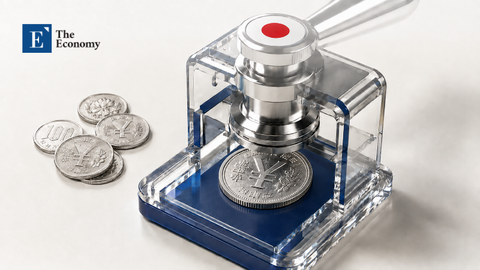
Japan to Set Next-Year Defense Budget at a Record $60 Billion
Missiles, Drones, and Expanded Force Projection Signal Strategic Shift
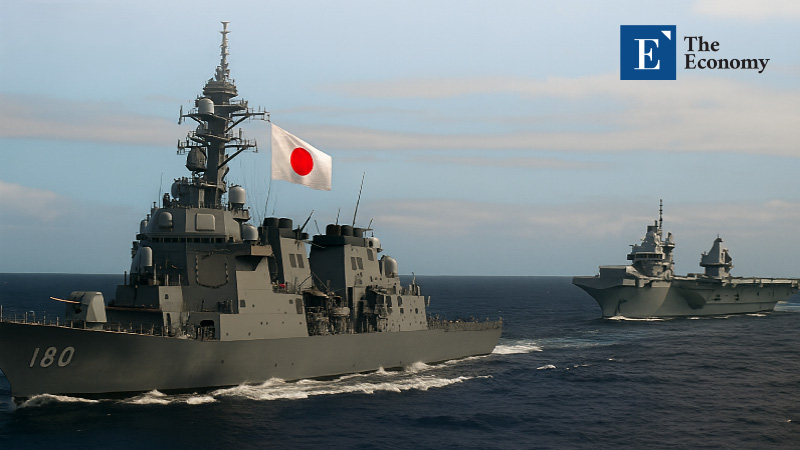
As tensions between China and Japan continue to intensify, the Japanese government is moving to compile a defense budget of unprecedented scale for the next fiscal year. Alongside the spending increase, Tokyo plans to accelerate policies aimed at strengthening military capabilities, including easing restrictions on defense equipment exports. The sweeping expansion—encompassing long-range missiles, hypersonic weapons, and even deliberations over nuclear-powered submarines—underscores Japan’s de facto departure from its postwar security doctrine centered on exclusive self-defense. The shift is widely viewed as the institutional and fiscal realization of a long-cherished objective of Japan’s conservative camp: transforming the country into a nation capable of waging war.
Expanded China Containment, Including New Pacific Defense Structures
According to Kyodo News on the 18th, the Japanese government is coordinating a defense budget of approximately $60 billion for fiscal year 2026 (April 2026 to March 2027). While Tokyo is in the process of revising its three core national security documents, the 2026 defense budget will be drafted based on the framework established in 2022. The final budget proposal is expected to be approved by the Cabinet later this month.
The budget request forms part of the “Defense Buildup Program” formulated under the administration of former Prime Minister Fumio Kishida. Japan has pledged to raise cumulative defense spending to roughly $287 billion over the five-year period from 2023 to 2027. The 2026 budget is expected to represent a critical inflection point within that plan, accounting for its largest single-year allocation. Japan’s defense budget for the current year stands at approximately $58 billion.
Next year’s budget includes funding for long-range missiles intended to provide counterstrike capabilities against enemy bases, as well as armed unmanned aerial vehicles needed to build a “multi-layered coastal defense system” known as SHIELD. The objective is to reduce reliance on fixed installations while enhancing surveillance, reconnaissance, and strike efficiency within Japan’s drone-based coastal defense architecture. The budget also allocates resources for hypersonic guided missiles—capable of traveling at more than five times the speed of sound and difficult to intercept—marking a clear transition from passive defense toward active deterrence and strike-oriented doctrine.
Japan is also strengthening its capabilities in the space domain by establishing a provisional “Space Operations Group” and renaming the Air Self-Defense Force as the Air and Space Self-Defense Force. The Ground Self-Defense Force’s 15th Brigade, based in Naha, Okinawa, will be upgraded to a division to reinforce defenses across the Nansei Islands, where Chinese military activity has intensified. A new “Pacific Defense Planning Office” will be created to review Self-Defense Force structures in response to China’s expanding military presence in the Pacific. Improvements to service members’ compensation and working conditions will proceed in parallel.
From Defeated Power to War-Capable State
Japan’s recent trajectory is widely interpreted as part of a broader effort to fulfill the long-standing ambition of its conservative establishment to become a “war-capable nation.” Former Prime Minister Shinzo Abe consistently championed constitutional revision, placing particular emphasis on amending Japan’s pacifist constitution enacted after World War II. The constitution enshrines Japan’s demilitarization and curtails the political authority of the emperor, with Article 9 explicitly renouncing war, prohibiting the maintenance of armed forces, and denying the right of belligerency.
While the Liberal Democratic Party now advocates retaining the wording of Article 9, it seeks to explicitly codify the existence of the Self-Defense Forces within the constitution. For Japan—restricted to operating self-defense forces rather than a formal military—such a move would elevate its international military standing and facilitate overseas deployments during contingencies. At a more fundamental level, it would amount to acquiring the legal standing to wage war.
Japan’s push to expand military technology follows the same logic. In June, the Ground Self-Defense Force conducted its first-ever missile test on Japanese territory. Approximately 300 troops from the 1st Artillery Brigade fired a training missile at an unmanned vessel about 25 miles off the southern coast of Hokkaido. Observers view the test as evidence of Japan’s pursuit of a more autonomous military posture and enhanced counterstrike capabilities aimed at deterring China’s growing naval presence in surrounding waters. Although Japan historically limited the use of force strictly to self-defense, it designated China as its foremost strategic challenge in 2022 and adopted a five-year security strategy emphasizing deeper integration with the U.S.-Japan alliance—marking a decisive departure from earlier restraint.
Japan is also accelerating a shift in its undersea warfare posture. On the 1st of last month, Chief Cabinet Secretary Minoru Kihara publicly acknowledged the possibility of introducing nuclear-powered submarines, stating that “all options remain on the table” to strengthen deterrence and response capabilities. A Defense Ministry expert panel had earlier recommended examining next-generation propulsion systems capable of supporting long-duration, long-range submerged operations with long-range missile payloads. On the 21st of last month, the ruling LDP and the Japan Innovation Party included the possession of next-generation submarines equipped with vertical launch systems in their coalition agreement.
Defense officials anticipate that nuclear-powered submarines would significantly enhance anti-submarine warfare capabilities and intelligence, surveillance, and reconnaissance capacity, while improving interoperability with U.S. and allied nuclear submarine fleets. Industry analysts project that Japan could complete development of a stealth prototype vessel by 2028 and expand operational deployment of nuclear-powered assets through revised defense guidelines by 2026. Plans to broaden joint exercises with the United States and Australia are also underway.
China Condemns ‘Revival of Japanese Militarism’
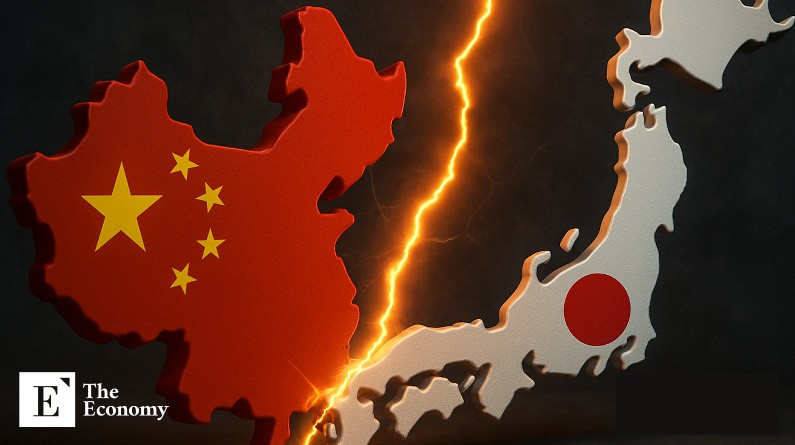
China has responded to Japan’s military buildup with sustained and increasingly sharp criticism. On the 15th, the Communist Party’s official newspaper People’s Daily warned that Japan is “seeking to revive militarism” and exhibiting “dangerous tendencies that undermine the achievements of victory in World War II and the postwar international order.” The paper cautioned that “forgetting history is betrayal, and denying guilt leads to repetition,” urging Japanese right-wing politicians to confront their past and eradicate the remnants of militarism.
Beijing has likewise denounced the defense spending increase. The Global Times, an English-language affiliate of People’s Daily, cited diplomatic and security experts who described Japan’s plans as “a dangerous signal of militarist revival.” Xiang Haoyu, a special invited researcher at the Asia-Pacific Studies Center of the China Institute of International Studies, told the paper that the buildup reflects a core objective of constructing a forward combat network aimed at containing China and demonstrates “a high degree of military expansionism.” He added that Japan is steadily expanding its military power and eroding long-standing taboos, dulling military sensitivities both domestically and internationally.
Military analyst Song Zhongping warned that Japan’s militarization—justified by security anxieties—could trigger cascading effects, including an arms race in East Asia. He cautioned that deploying forces across Japan’s southwestern islands would shrink buffer zones in the East China Sea and the Taiwan Strait, heightening regional tensions. “Japan’s radical policies will provoke its Asian neighbors and revive painful memories of World War II,” he said.
Against this backdrop, South Korean security experts warn that if Japan’s hardline conservative trajectory persists, China–Japan military tensions may become a structural constant rather than a transient episode. Such a shift would amplify uncertainty across Northeast Asia and structurally raise defense costs for neighboring states. Analysts caution that South Korea is unlikely to remain insulated, as the consolidation of a maritime security bloc linking the United States, Japan, the Philippines, and Australia may increasingly translate into overt pressure on Seoul to boost its own defense spending.
Anne-Marie Nicholson is a fearless reporter covering international markets and global economic shifts. With a background in international relations, she provides a nuanced perspective on trade policies, foreign investments, and macroeconomic developments. Quick-witted and always on the move, she delivers hard-hitting stories that connect the dots in an ever-changing global economy.
Similar Post