South Korean government launches all-out currency defense, pressuring banks’ foreign-currency balances in a high-stakes move

Authored On
Modified
A textbook attempt to shore up short-term FX supply and demand
Tension between market stability and financial institutions’ autonomy
Banks left to shoulder the final shock-absorber role
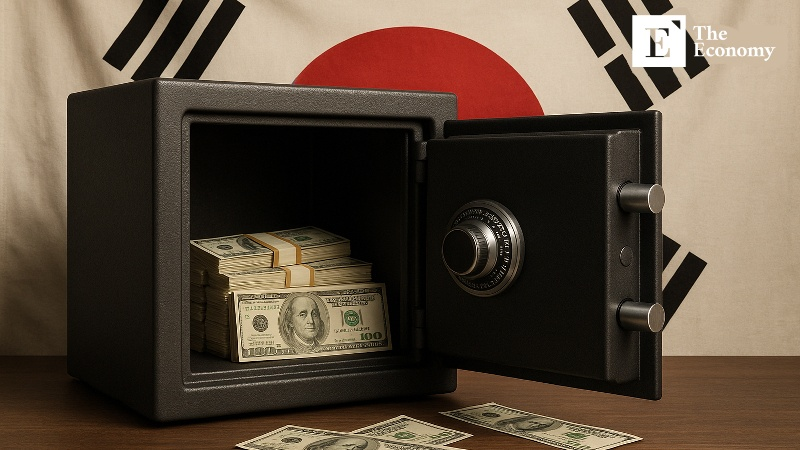
The South Korean government has moved to address mounting currency volatility. By temporarily easing supervisory burdens that had encouraged banks to stockpile more dollars than operationally necessary and by expanding transaction limits for foreign banks, authorities are adjusting how banks can deploy their dollar holdings. As the won–dollar exchange rate has surged sharply, policy focus is shifting from boosting fresh dollar inflows to mobilizing dollars already held within the financial system.
“More will be released” — policy signal clarified
On the 18th (local time), South Korea’s Ministry of Economy and Finance, Financial Services Commission, Bank of Korea, and Financial Supervisory Service jointly announced a “flexible adjustment plan for FX soundness regulations,” stating that penalties tied to foreign-currency liquidity stress tests will be suspended through the end of June 2026. Under the system, banks are regularly assessed on their ability to respond to dollar funding stress, and those failing to meet benchmarks must submit liquidity reinforcement plans to regulators. This framework has long been criticized for incentivizing banks to hold excess foreign currency beyond normal business needs, thereby constraining dollar circulation in the market.
The backdrop to the move is intensifying upward pressure on the won–dollar rate, which breached the 1,480 level intraday the previous day. A finance ministry official said the aim is to encourage financial institutions to release dollars they have been hoarding “just in case” back into the market. In effect, regulators are temporarily withdrawing the supervisory signal to accumulate foreign currency, seeking to expand banks’ room for maneuver in FX management. Notably, the measures simultaneously ease holding burdens for both domestic and foreign banks, as well as corporations, to stimulate market liquidity and trading activity.
A key step is boosting dollar-supply capacity at foreign banks. The government will raise the forward FX position limit for local subsidiaries of foreign banks from 75% to 200% of capital. As the allowable net forward position (foreign-currency assets minus liabilities) increases, so does the volume of dollars banks can supply to the market. For example, a bank with capital of 10 trillion won previously faced a ceiling of 7.5 trillion won in additional selling capacity; under the new limit, it can transact up to 20 trillion won worth of foreign currency.
Rules affecting companies and investors were also revised. Restrictions on “won-purpose foreign-currency loans” for exporters were further relaxed, expanding eligibility beyond domestic facility investment to include working capital such as labor and raw-material costs. Procedures for foreign investors in Korean equities will also be simplified by activating integrated foreign investor accounts. Previously, foreign investors had to open accounts with local brokerages; going forward, they will be able to trade Korean stocks through brokers in their home countries.
Improvements to FX hedging convenience for foreign firms listed overseas were included as well. Despite being classified as professional investors by law, such firms had been treated as retail investors in FX derivatives markets, requiring repeated documentation to prove transaction purposes. The government judged this practice to be a constraint on hedging activity and clarified professional-investor status, allowing over-the-counter derivatives trading without prior verification. This enables foreign firms to more easily use forwards and swaps to mitigate exchange-rate risk.
From deregulation to balance-sheet pressure
South Korean financial authorities also sought stability during last year’s exchange-rate spike, but the approach differed. In December, when the won hovered in the mid-1,450s, regulators focused on widening FX inflow channels by easing rules. Forward-position limits were raised, and FX loan restrictions were loosened: domestic banks’ limits increased from 50% to 75% of capital, and foreign bank branches’ limits from 250% to 375%.
Around the same time, the government expanded the National Pension Service’s FX swap limit from $50 billion to $65 billion and extended maturities. The mechanism—supplying dollars from reserves for overseas asset purchases and later reclaiming them—was designed to ease market supply-demand pressures. FX loans were also partially liberalized, allowing exporters to use them for facility investment. Officials at the time emphasized that policy weight was squarely on boosting dollar inflows.
This year’s adjustment goes a step further, targeting not only inflow channels but also how foreign currency already accumulated within the financial sector is deployed. As a result, the burden felt by banks has increased. Whereas last year’s measures expanded funding and trading opportunities, the latest plan directly affects banks’ judgments in managing foreign-currency assets to meet client demand. It marks a shift toward tapping internal financial-sector resources as part of FX response strategy, heightening tension between institutional autonomy and policy objectives.

After inflow effects fade, FX outlook uncertain
As exchange-rate stability that had been underpinned by overseas capital inflows over the past year begins to wobble, interpretations of won weakness are also shifting. Beyond earlier measures, the government had promoted extended FX trading hours, infrastructure upgrades tied to potential inclusion in the World Government Bond Index, and streamlined procedures for foreign bond investors. However, rising external uncertainty this year has steadily eroded these buffers. In January alone, foreign investors recorded net outflows of $1.61 billion from Korean securities, while domestic individual investors posted net overseas securities outflows of $10.81 billion over January and February.
As the balance between FX inflows and outflows deteriorated and the forces supporting the currency weakened, authorities rolled out additional easing. At a March FX soundness council meeting, the hedge ratio for professional-investor firms using FX derivatives was raised from 100% to 125%, and purchase limits on “kimchi bonds” (foreign-currency-denominated bonds issued domestically) were lifted. Tax incentives to boost domestic asset investment, adjustments to individual savings account schemes, and further simplification of foreign bond investment procedures accompanied the move.
Yet capital-outflow pressure persisted, driven by perceptions of limited attractive domestic investment opportunities. The latest measures suggest that the role of absorbing exchange-rate volatility has shifted decisively to banks. The challenge is that banks themselves are not flush with excess capacity. In a rising-rate environment, the value of FX assets and liabilities fluctuates simultaneously, increasing risk-management burdens, while demand for dollar deposits and currency exchange continues to climb. Banks have responded by maintaining FX liquidity coverage ratios above regulatory minimums while stepping up forward, swap, and hedging activity.
As a result, FX liquidity held by banks remains sufficient for short-term buffering. In the third quarter, LCRs at the four major commercial banks stood above regulatory thresholds: KB Kookmin Bank at 143.3%, Shinhan Bank at 157.62%, Woori Bank at 138.96%, and Hana Bank at 175.11%. However, if the current exchange-rate uptrend persists, expanding FX assets will inevitably raise overseas credit risk and provisioning burdens. That would constrain banks’ capacity to manage foreign currency, exposing limits to this approach at a time when foreign capital inflows are slowing and the task of absorbing FX volatility increasingly rests on the banking sector.
Similar Post