US Presses Ahead With Large-Scale Arms Sales to Taiwan, a Lifeline Amid Equipment Shortages and Diplomatic Isolation

Aoife Brennan is a contributing writer for The Economy, with a focus on education, youth, and societal change. Based in Limerick, she holds a degree in political communication from Queen’s University Belfast. Aoife’s work draws connections between cultural narratives and public discourse in Europe and Asia.
Authored On
Modified
“Largest-Ever Deal” Trump Administration Approves $11.1 Billion Arms Sale to Taiwan
US Shifts From Longstanding Cross-Strait Balancing, Turn Accelerates From Biden Era
Taiwan Deepens US Ties as Defense Worries Grow and Regional Support Falls Short
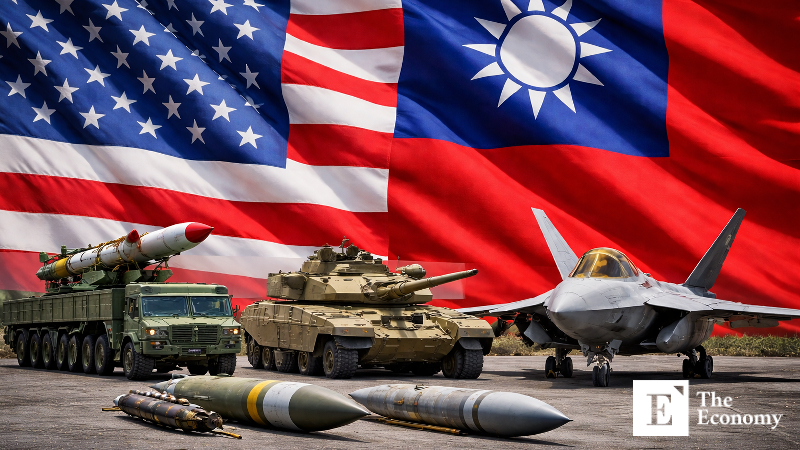
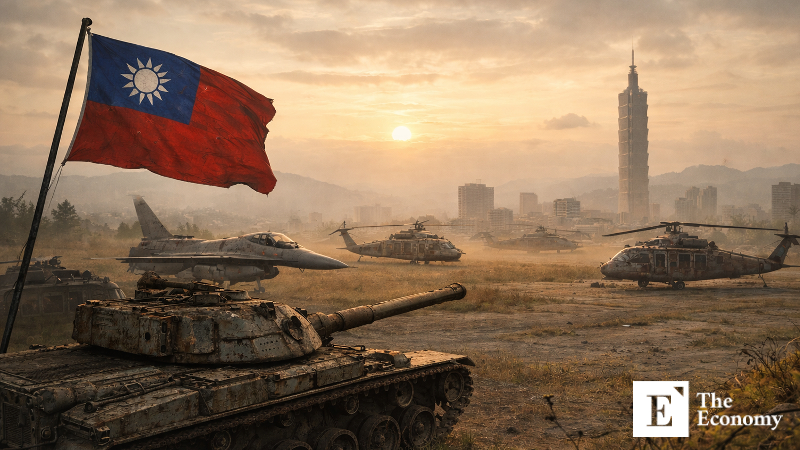
The administration of US President Donald Trump is moving ahead with a large-scale arms deal with Taiwan. Following the Joe Biden administration, which sold billions of dollars’ worth of weapons to Taipei, Trump’s second-term administration is also actively backing Taiwan’s military buildup. The move is widely seen as a meaningful turning point for Taiwan, which has been struggling with shortages of military equipment and growing diplomatic isolation.
US Approves Planned Arms Sales to Taiwan
On December 18 (local time), Taiwan’s Ministry of Foreign Affairs said it received approval from the US government for arms sales worth $11.1 billion, and that Washington has already notified Congress. This marks the largest US arms package ever approved for Taiwan. The package includes eight programs, covering M109A7 self-propelled howitzers, HIMARS multiple rocket launchers, TOW anti-tank missiles, Javelin anti-tank missiles, Altius-700M and Altius-600 loitering munitions, as well as Tactical Mission Network (TMN) software, spare parts and maintenance support for AH-1W helicopters, and follow-on support for Harpoon anti-ship missiles.
The US State Department also released a separate statement confirming the approval. It said the United States continues to support Taiwan in maintaining sufficient self-defense capabilities and in rapidly building strong deterrence and asymmetric advantages, calling this a foundation for peace and stability in the region. The department noted that the package is now in the congressional notification stage. While Congress can block or amend the sale, support for Taiwan enjoys bipartisan backing. Reuters reported that the announcement came shortly after Lin Chia-lung, Taiwan’s foreign minister, made an undisclosed visit near Washington last week to meet US officials. The specific agenda of those meetings was not disclosed.
China responded with strong opposition. At a regular briefing, Chinese Foreign Ministry spokesperson Guo Jiakun said the move “seriously violates the one-China principle and the three China–US joint communiqués,” undermines China’s sovereignty, security, and territorial integrity, and damages peace and stability in the Taiwan Strait, while sending the wrong signal to “Taiwan independence” forces. He said China firmly opposes and strongly condemns the arms sale.
The End of US “Balancing” Between China and Taiwan
This is not the first time the United States has supplied weapons to Taiwan. Even after formally recognizing China instead of Taiwan in 1979, Washington continued arms sales to Taipei under the Taiwan Relations Act. The core of the law is to sell Taiwan enough weapons to defend itself against potential Chinese aggression, while calibrating the scale so as not to destabilize US–China relations. In practice, the United States maintained this strategic ambiguity—remaining a firm supporter of Taiwan while preserving trade ties with China.
That balance, however, has shifted sharply over the past decade as the military equation between China and Taiwan tilted. The Joe Biden administration began selling weapons to Taiwan in August 2021 and steadily expanded the scale thereafter. In 2023, it approved an $80 million subsidy plan to support Taiwan’s purchases of US-made military equipment, followed in 2024 by weapons sales plans totaling $1.988 billion. Over the course of the Biden administration, US arms sales to Taiwan approached $8.4 billion.
Trump’s second-term administration has followed suit. In November, it approved a $330 million deal to sell fighter jet parts to Taiwan—the first arms sale approval since Donald Trump returned to office. The components are expected to be used to maintain Taiwan’s fleet of F-16s, C-130s, and Indigenous Defense Fighter (IDF) jets. At the time, the US Department of Defense said in a statement to Reuters that the sale would help Taiwan maintain the operational readiness of its F-16 and C-130 squadrons, enhancing its ability to respond to current and future threats.
Taiwan’s Military and Diplomatic Reality
Taiwan finds itself in a position where it can hardly help but welcome Washington’s shift in stance. The reason is a severe shortage of equipment among Taiwan’s military reserves. According to a report released by Taiwan’s Control Yuan in July, equipment availability across four areas—combat engineering, communications, surveillance, and medical support—has fallen below 60% for reserve forces. The reserves are divided into frontline coastal defense units, depth-area and urban defense units, and critical infrastructure protection units, with all three found to be suffering from serious equipment shortfalls. In the case of units tasked with protecting critical infrastructure, only 63.91% of required equipment was secured. Separately, parliamentary inquiries revealed that 50 Yunbao 8×8 wheeled armored vehicles—one of the Taiwanese military’s key assets—were found to have structural cracks caused by welding defects and metal fatigue.
Taiwan’s situation is further compounded by the fact that some geographically close countries are signaling pro-China leanings and turning their backs on Taipei. Several South Pacific nations have been severing ties with Taiwan in exchange for short-term economic support from China. Some Southeast Asian countries, including Malaysia and Singapore, have also publicly referred to Taiwan’s “peaceful reunification,” effectively adopting Beijing’s official language. If diplomatic isolation deepens and neighboring countries continue to openly align with China’s position, Taiwan will have little choice but to rely more heavily on military deterrence than diplomacy.
As Taiwan finds itself cornered militarily and diplomatically, the United States has stepped forward, and the two sides’ “honeymoon” relationship is rapidly expanding beyond defense into areas such as trade. According to data from Taiwan’s Ministry of Finance, Taiwan’s exports to the United States jumped 43.1% year on year to $61.6 billion in the January–May period this year, lifting the US share of total exports to 26.8%. Over the same period, exports to China accounted for 28.1% of the total. This marked the first time in 24 years that Taiwan’s export share to China fell below 30%, since China became Taiwan’s largest export destination in the early 2000s.
Aoife Brennan is a contributing writer for The Economy, with a focus on education, youth, and societal change. Based in Limerick, she holds a degree in political communication from Queen’s University Belfast. Aoife’s work draws connections between cultural narratives and public discourse in Europe and Asia.
Similar Post