TSMC Bets on Early Launch of U.S. 3nm Production to Fortify Defenses Against Samsung’s Catch-Up

Siobhán Delaney is a Dublin-based writer for The Economy, focusing on culture, education, and international affairs. With a background in media and communication from University College Dublin, she contributes to cross-regional coverage and translation-based commentary. Her work emphasizes clarity and balance, especially in contexts shaped by cultural difference and policy translation.
Authored On
Modified
Equipment move-in schedule at Arizona Fab 2 brought forward
Simultaneous pressure from surging AI demand and advanced packaging bottlenecks
Strategic overhaul amid signs of customer defection
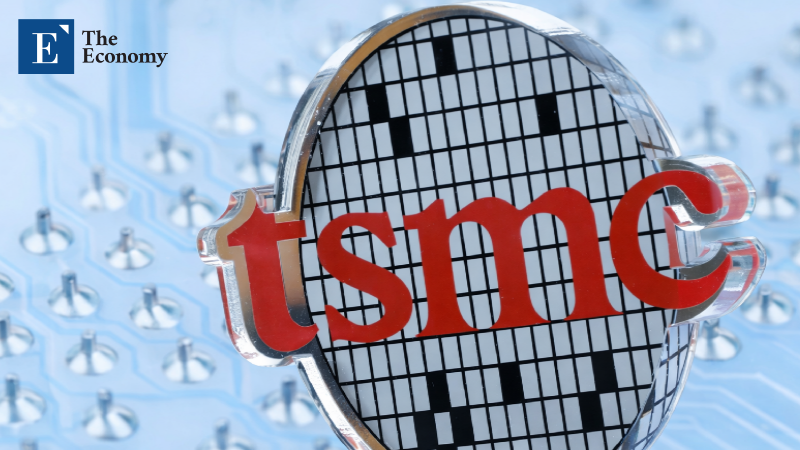
TSMC has abruptly accelerated the timeline for moving semiconductor equipment into its second Arizona fabrication plant, embarking on a major reconfiguration of its advanced-process production roadmap in the United States. The decision, premised on introducing the 3-nanometer process, is widely interpreted as a strategic pivot to adapt to shifts in its customer base. When back-calculated from the equipment installation schedule, mass production of 3-nanometer chips on U.S. soil now appears far closer than previously anticipated. The move is seen as an effort to erect an overwhelming volume barrier that rivals cannot match, leaving customers little room to consider alternative foundries.
Arizona Fab 2: Equipment Installation in 2026, Mass Production in 2027
According to Nikkei Asia on the 19th, TSMC has finalized the timeline to begin moving semiconductor equipment into its second Arizona plant in the third quarter of 2026. The facility is expected to operate a 3-nanometer (N3) production line. Given the nature of advanced semiconductor manufacturing, it typically takes about a year after equipment installation to optimize production lines and stabilize yields. Based on this timeline, full-scale mass production of 3-nanometer chips would begin in the second half of 2027. The original plan had targeted 2028 for the launch of Fab 2, meaning the schedule has been pulled forward by roughly a year.
Nikkei Asia reported that TSMC CEO C.C. Wei personally urged the company to accelerate its U.S. semiconductor production schedule by at least several quarters. TSMC currently plans to invest a total of USD 165 billion in the United States to build five semiconductor fabs, two advanced packaging facilities, and an R&D center. Once all projects are completed, approximately 30% of TSMC’s total advanced semiconductor output is expected to be produced in the U.S.
The already-operational Arizona Fab 1 is producing Apple’s mobile application processors and Nvidia’s latest Blackwell AI accelerators. In the third quarter, North America accounted for 76% of TSMC’s total revenue, up from 71% a year earlier and 75% in the previous quarter. With Nvidia, Apple, and AMD—all core customers—being U.S.-based companies, establishing a local production footprint is increasingly viewed as a matter of survival rather than choice.
Apple and Nvidia Line Up in the U.S. as Advanced Packaging Runs at Full Capacity
TSMC’s decision to accelerate operations at Arizona Fab 2 reflects mounting concerns over potential customer attrition as AI semiconductor orders surge and bottlenecks emerge in advanced packaging, a critical process. Advanced packaging, which integrates multiple chiplets to maximize AI chip performance, is widely regarded as the industry’s “holy grail.” As a result, TSMC’s next-generation packaging solutions, such as Chip on Wafer on Substrate (CoWoS), have attracted intense interest from Nvidia, AMD, Google, Apple, MediaTek, and other leading firms.
However, TSMC has reached the limits of its internal capacity to meet packaging demand. According to Taiwanese media and industry sources, TSMC’s CoWoS lines are operating at 100% utilization. With AI and high-performance computing orders from Nvidia, Google, and others surging, all CoWoS variants, including CoWoS-L and CoWoS-S, are effectively running at full tilt. Although TSMC is expanding CoWoS production by developing new facilities in Taiwan and the U.S., the pace has been insufficient to meet customers’ urgent needs.
On the supply side, TSMC has little room to maneuver. Its 3-nanometer capacity is effectively fully booked by major customers through 2027. For 2-nanometer production, Apple is reported to have secured more than half of the initial volume, with the remainder fiercely contested by Nvidia, Qualcomm, and Microsoft. Pricing and supply have become critical issues. Higher labor and equipment costs at U.S. fabs have pressured margins, prompting TSMC to raise prices for advanced processes and prioritize premium customers to protect profitability. In the process, some fabless semiconductor designers have begun to question their reliance on a single foundry, increasingly considering alternative partners. This has fueled renewed interest in Samsung Electronics as a secondary manufacturing option.
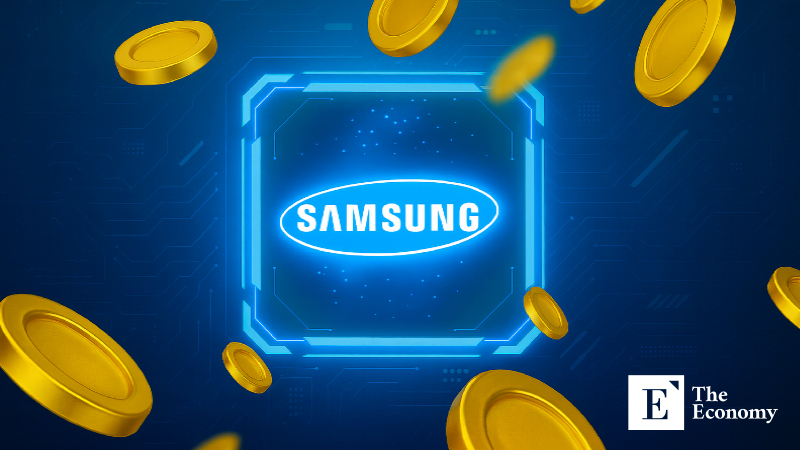
Samsung Accelerates Its Pursuit as TSMC Builds Higher Defenses
Samsung Electronics has long struggled in advanced foundry processes due to yield challenges. Since securing Apple’s A9 chip order during the 14-nanometer era, it has failed to win major mobile AP contracts, and early 3-nanometer yields also proved problematic. Recently, however, momentum has begun to shift. Samsung’s 2-nanometer yield is reportedly in the 55–60% range. While industry consensus suggests that commercial competitiveness requires yields above 70%, the current level is sufficient to begin discussions on initial mass production.
The true test for Samsung’s yield improvements lies with Tesla and Exynos. Tesla has already signed a long-term supply agreement with Samsung worth USD 16.5 billion, commissioning the production of next-generation autonomous driving and AI chips, including AI5 and AI6. Industry observers believe AI5 will be based on an enhanced 4-nanometer process, while AI6 is likely to adopt 2-nanometer technology. Samsung is reportedly reviewing plans to manufacture AI6 using a 2-nanometer process at its foundry line under construction in Taylor, Texas.
The core of Samsung’s Taylor fab strategy centers on “U.S. localization” and “early yield stability.” According to industry sources, Samsung plans to initially deploy the relatively mature 4-nanometer process to ensure stable yields, then gradually transfer know-how from its domestically optimized 2-nanometer process. The completion and operational stability of its U.S. manufacturing base will be decisive in fulfilling volumes for Tesla and Apple orders secured this year. As global foundry customers increasingly prioritize U.S.-based production, the Taylor fab’s ability to deliver stable mass production will directly shape Samsung’s competitiveness in future bidding wars.
In response, TSMC is reinforcing its dominance by fast-tracking next-generation processes at its Arizona fabs and accelerating technology transfer through personnel exchanges. According to U.S. tech outlet WCCFTech, TSMC has selected several hundred engineers currently stationed at its Arizona facilities and dispatched some of them to Taiwan. Their mission is to master the intricacies of 3-nanometer and 2-nanometer production at TSMC’s core fabs, where the forefront of next-generation lithography remains concentrated. Without such on-site training, upgrading U.S. fab capabilities would be impossible.
A similar initiative took place in 2021, when U.S.-based engineers were sent to Taiwan for up to 18 months of training. The latest dispatch, coinciding with the start of Arizona Fab 2 construction, is viewed as a timely move to secure a decisive edge in future 3-nanometer and 2-nanometer orders. Separately, TSMC is pouring massive capital into expanding production capacity in Taiwan, planning to build three additional 2-nanometer fabs at an estimated initial cost of USD 28.6 billion. Engineer training and technology upgrades at the Arizona site form a critical piece of this global manufacturing strategy, underscoring TSMC’s determination to retain leadership in the sub-2-nanometer era beyond 2028.
Siobhán Delaney is a Dublin-based writer for The Economy, focusing on culture, education, and international affairs. With a background in media and communication from University College Dublin, she contributes to cross-regional coverage and translation-based commentary. Her work emphasizes clarity and balance, especially in contexts shaped by cultural difference and policy translation.
Similar Post