[China Semiconductors] “U.S. Curbs Spurred Growth” Chinese Chipmakers Pull In Market Cash, Momentum Spreads to Robotics and Space

Authored On
Modified
Chinese Chipmakers Rush Into IPOs
Moore Threads, MetaX and Others Notch IPO Pops of Up to 6x
Tech Self-Reliance Surges — Driven by U.S. Export Curbs?
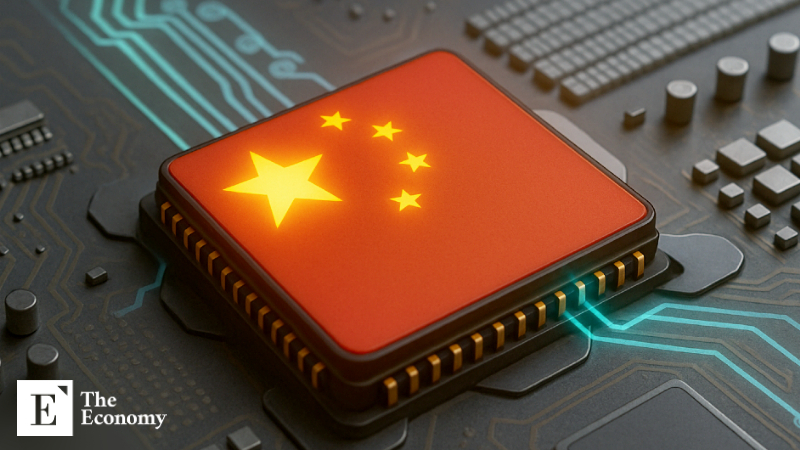
Chinese semiconductor companies are pushing ahead with a wave of initial public offerings. This month, firms such as Moore Threads and MetaX Integrated Circuits Shanghai (MetaX) have entered the stock market in quick succession, successfully raising large amounts of capital, while other domestic players are also moving to list in Hong Kong and Shanghai as they accelerate efforts toward technological self-reliance. As the boom in China’s semiconductor sector spreads rapidly across the broader advanced technology industry, markets are increasingly describing the trend as a form of blowback from the United States’ export controls on China.
China’s Semiconductor Sector Sees an IPO Rush
According to the press and securities industry on the 29th, Biren Technology, a promising Chinese GPU developer, is set to list on the Hong Kong stock exchange on January 2 next year, marking the first time a Chinese GPU company has gone public in Hong Kong. Biren plans to issue 248 million H-shares at an indicative price range of about $2.2 to $2.5 per share, aiming to raise roughly $600 million through the IPO.
China’s tech giant Baidu is also preparing a Hong Kong listing for its AI chip subsidiary Kunlunxin, which develops data-center server chips and is valued at no less than $3 billion. GPU startup Shanghai Iluvatar CoreX Semiconductor has recently filed for a Hong Kong listing as well, seeking to raise up to $300–400 million. Shanghai Enflame Technology, founded in 2018 by former AMD engineers, is pursuing a mainland China listing.
Meanwhile, Shanghai-listed GigaDevice Semiconductor and Montage Technology plan secondary listings in Hong Kong around January next year, each aiming to raise up to $1 billion. Market observers also point to potential listings by China’s largest memory maker ChangXin Memory Technologies (CXMT) and 3D NAND developer Yangtze Memory Technologies. After long shying away from IPOs that could expose internal operations, China’s semiconductor companies are now shifting course as they accelerate technology development and turn decisively toward public markets.
Rising Expectations After Moore Threads and MetaX IPO Success
Expectations for these companies are continuing to build. Two of China’s so-called “four leading GPU hopefuls,” Moore Threads and MetaX, both listed on the Shanghai stock exchange this month and successfully raised about $1.17 billion and $620 million, respectively. On their first day of trading, Moore Threads’ shares surged 425% above the IPO price, while MetaX closed up 693%.
Often dubbed “China’s Nvidia,” Moore Threads was founded in 2020 by Zhang Jianzhong, a former Nvidia global vice president and head of China operations. The company drew attention early on by recruiting large numbers of Nvidia engineers and securing investment from major Chinese institutions, reinforcing expectations for its growth potential. Moore Threads is currently focused on developing GPUs that can be used across AI, video processing, and high-performance computing. MetaX, founded in 2020 by former AMD engineers, plans to use IPO proceeds to accelerate development of high-performance GPUs for AI workloads.
At present, shares of both Moore Threads and MetaX are trading at roughly six times their IPO prices, signaling sustained investor optimism even after listing. Markets expect their strong debuts to draw more capital and talent into China’s broader technology sector. The belief is that continued share price momentum and bullish expectations will fuel further industry growth. Reflecting this trend, the STAR Market’s STAR 50 Index—home to Moore Threads, MetaX, and Cambricon, another firm often labeled “China’s Nvidia”—is up about 35% so far this year.

China’s Advanced Industries Surge, Turning U.S. Curbs Into a Springboard
As China’s semiconductor sector pulls in stock-market capital and demonstrates strong investor sentiment, some argue that U.S. technology export controls on China have instead accelerated Beijing’s push for technological self-reliance. The United States began restricting exports of Nvidia’s high-performance chips to China in October 2022, then expanded the scope to cover lower-performance chips in 2023. In April 2025—when the Trump administration escalated its trade war with China—exports of Nvidia’s China-specific H20 chips were also effectively blocked. In response, China signaled a hardened commitment to semiconductor self-sufficiency, moved to build out its domestic chip ecosystem, and has recently been seen as having effectively established its own supply chain.
The “tailwind” that began in semiconductors is now spreading quickly to other advanced industries in China, including robotics and aerospace. According to China’s state-run Global Times on December 25, 2025, the China Securities Regulatory Commission (CSRC) said on its official website on December 23 that Deep Robotics had completed its tutoring registration for a mainland A-share listing. Final review is expected to be completed between April and June 2026. Deep Robotics is a robotics company founded in 2017 by Zhu Qiuguo, a former associate professor at Zhejiang University, and is counted—alongside DeepSeek and Unitree—among the “Hangzhou Six Little Dragons,” a group of six promising tech firms based in Hangzhou.
Humanoid robotics company Unitree began the IPO tutoring process in October 2025, while LeDong Robot filed for a Hong Kong listing earlier this month. LandSpace, the private space company that drew attention for launching China’s first reusable rocket, Zhuque-3, has also completed IPO tutoring. As capital markets become more active around advanced industries, foreign money is also flowing into Chinese equities. The Institute of International Finance (IIF) estimates that foreign inflows into China’s A-share market totaled $50.6 billion from January through October 2025, the highest level in four years since 2021.
Similar Post