“China’s Total Debt Nears Three Times GDP” Local Government Bonds and Deflation Drive Leverage Higher, Structural Strains Seen Persisting Despite Stimulus

As one of the youngest members of the team, Tyler Hansbrough is a rising star in financial journalism. His fresh perspective and analytical approach bring a modern edge to business reporting. Whether he’s covering stock market trends or dissecting corporate earnings, his sharp insights resonate with the new generation of investors.
Authored On
Modified
China’s Debt Ratio Climbs to 302.3% by End-September, Liabilities Top 400 Trillion Yuan
Surge in Local Government Debt and Deflation-Driven Nominal Growth Slowdown Push Ratio Higher
Authorities Move on Debt Rollovers and Demand Stimulus, but Doubts Linger Over Short-Term Impact
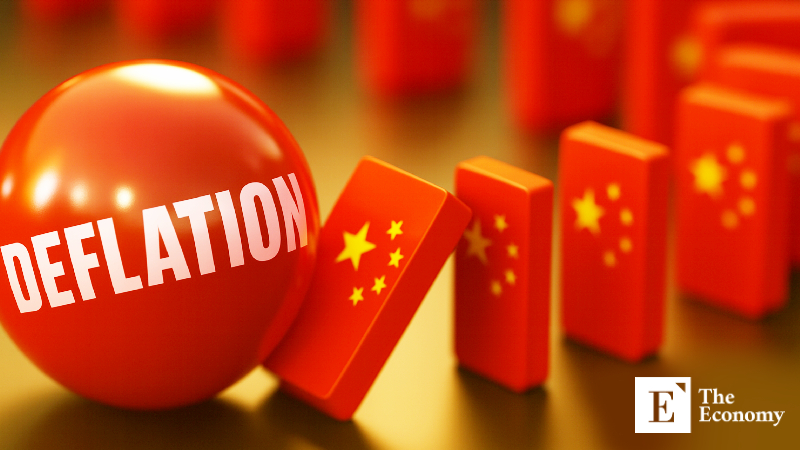
China’s total debt has been estimated to far exceed its GDP. As local governments issue large volumes of bonds in line with the central leadership’s push to address “hidden” liabilities, debt ratios are rising further amid intensifying deflation pressures and a clear slowdown in nominal growth. While authorities are deploying substantial funding to roll over local government debt and shore up domestic demand, many experts argue that structural headwinds make a quick resolution to China’s strains unlikely.
China’s Economy Strains Under Debt
On the 28th, Japan’s Nikkei reported, citing the state-backed National Institution for Finance & Development, that as of end-September, the combined debt of Chinese corporates, households, and the government—excluding financial institutions—stood at 302.3% of GDP. That is up another 1.9 percentage points from end-June, when the ratio first rose above 300%. Over the same period, the outstanding debt balance was confirmed to have exceeded about $57 trillion.
A key driver behind the rapid rise in debt is the surge in local government bond issuance. After the central government instructed local authorities to resolve liabilities tied to so-called “hidden debt,” local governments rushed to raise repayment funds by issuing large volumes of bonds. Much of the hidden debt is associated with local government financing vehicles (LGFVs), special-purpose entities set up by local governments to fund infrastructure investment and commonly treated as off-balance-sheet obligations.
A slowdown in nominal growth under deflationary pressure was also cited as a factor pushing the debt ratio higher. China’s economy is facing strong downward pressure on prices. According to China’s National Bureau of Statistics, the consumer price index (CPI) rose 0.7% year on year in November—faster than October’s 0.2% but slightly below market expectations of 0.8%. The producer price index (PPI), which reflects factory-gate prices, fell 2.2% year on year, deepening from -2.1% the previous month and extending its negative streak into a third straight year.
Deflation Drags On, Chilling Consumption and Investment
This prolonged low-inflation trend has fed into weaker nominal GDP. China’s real GDP grew 5.2% year on year in the second quarter, but nominal GDP growth came in at just 3.9% over the same period. Because nominal GDP reflects price changes, periods of inflation or deflation are directly embedded in the figure, and the wider the gap between nominal and real GDP—captured by the “GDP deflator” (nominal minus real)—the harder it becomes to take headline real growth at face value. China’s second-quarter GDP deflator was -1.3%, marking a ninth consecutive quarter in negative territory since the second quarter of 2023.
As the gap between macro indicators and on-the-ground sentiment widens, households and companies have begun to shy away from new borrowing. Falling prices can compress household income and erode asset values, while creating an environment in which higher output does not translate into stronger revenue or profits for businesses. The concern is that when consumption and investment weaken in this way, the risk of “debt deflation” rises and a vicious cycle can take hold. Debt deflation is a concept introduced by U.S. economist Irving Fisher in the 1930s to explain the Great Depression, referring to a situation in which economic agents rush to sell assets to repay debt, dragging the broader economy into deeper contraction.
In a deflationary environment, households and firms may sell assets to ease the heavier real burden of debt. That process can push already-declining asset values down further, reduce consumption, and accelerate the downturn. Reports suggest that many Chinese consumers recently have focused on deleveraging—selling homes or investment properties to repay existing loans—rather than taking on new debt to spend. Fixed-asset investment by companies, including factory construction, is also expected to decline for the first time this year.
Crisis Fears Persist Despite Government Funding
For some time, experts have argued that resolving China’s strains would require large-scale government funding. Last year, Robin Xing, chief China economist at Morgan Stanley, said China could mobilize stimulus funds totaling about $1.4 trillion over two years. He estimated that roughly $1.0 trillion could be used to expand social welfare spending for migrant workers, with the remaining $420 billion directed toward stabilizing the property market. To do so, Xing said China would need to raise its fiscal deficit from around 11% of GDP to as high as 14% each year.
In August, Christopher Beddor, deputy China research director at Gavekal Dragonomics, said China would struggle to simply replay its 2015 playbook. He argued that the core problems are broad and macroeconomic—such as weak household demand—and cannot be solved through ad hoc government interventions aimed at limiting competition in specific industries. When China faced deflationary pressure in 2015, it managed to stabilize the economy through supply-side curbs and a housing investment boom worth about $900 billion. Now, he said, the time has come to debate more substantive stimulus measures.
In practice, Beijing has already begun injecting large sums to support growth. In November, Xu Hongcai, vice chairman of the Financial and Economic Affairs Committee of the National People’s Congress, said at a press briefing that authorities had approved an increase of about $820 billion in local government debt quotas to refinance so-called hidden liabilities. As a result, China’s local government debt ceiling will rise from roughly $4.2 trillion at the end of this year to about $5.1 trillion within three years. In addition, China has decided to allocate about $110 billion each year from newly issued local government special bonds over the next five years to debt resolution, bringing total funding for local government debt restructuring to roughly $1.4 trillion.
The government’s resolve to boost domestic demand has also strengthened. At the Central Economic Work Conference held in Beijing on December 10–11, authorities set “building a strong domestic market led by internal demand” as the top priority for next year. According to state media Xinhua, the government plans to focus on stabilizing the property market to achieve a consumption-led growth model. Measures will include subsidies to spur spending, initiatives to raise urban and rural incomes, increased investment through the central government budget, and greater use of policy finance to revive weakened consumer sentiment. Authorities also plan to raise minimum wages and corporate pay, while strengthening education, welfare, and other social safety nets to expand domestic demand.
Even so, most experts believe China’s challenges are unlikely to be resolved quickly. Given deep-rooted structural factors, short-term policy responses alone are seen as insufficient to ease deflation. One market specialist said debt adjustment will take considerable time, inevitably constraining any near-term economic rebound. With population decline and aging colliding with excess manufacturing capacity, he added, low prices and weak demand are reinforcing each other, raising doubts over how effective government stimulus can ultimately be.
As one of the youngest members of the team, Tyler Hansbrough is a rising star in financial journalism. His fresh perspective and analytical approach bring a modern edge to business reporting. Whether he’s covering stock market trends or dissecting corporate earnings, his sharp insights resonate with the new generation of investors.
Similar Post