China Mandates Repatriation of Overseas IPO Proceeds, Shifting Focus to Hong Kong

Authored On
Modified
“Dollars must return home, listings under review”
Expanded control scope steers firms toward Hong Kong listings
Global IPO routes shift amid U.S.–China tensions

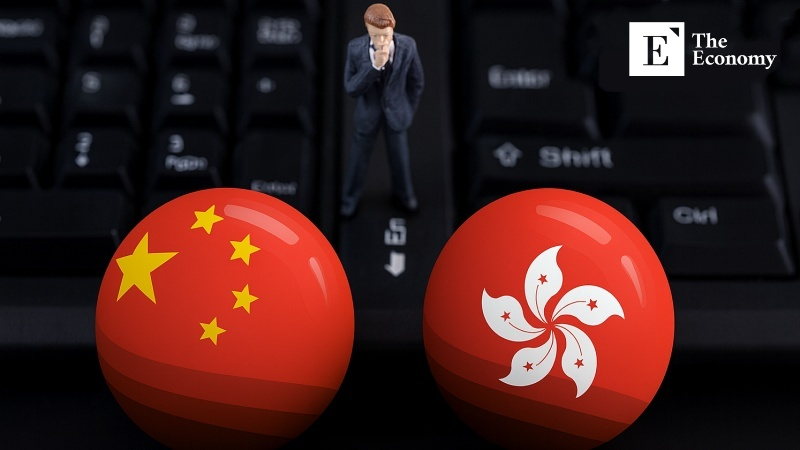
Chinese financial authorities have moved to mandate the repatriation of funds raised through overseas listings, forcing a sweeping reassessment of global listing strategies among companies seeking international expansion. As regulatory scrutiny of foreign listings intensifies, restrictions are now extending beyond listing approvals to the use of capital itself, effectively constraining the long-standing model of “U.S. listings with overseas capital deployment.” This shift is reinforcing a broader migration of overseas listing demand toward Hong Kong, raising the likelihood that the city will emerge as a primary listing venue amid ongoing U.S.–China tensions.
Objective: Tighter Oversight of Overseas Capital Storage and Use
According to Reuters on the 28th (local time), Chinese financial authorities including the People’s Bank of China (PBOC) and the State Administration of Foreign Exchange (SAFE) issued a notice on the 26th titled “Notice on Matters Concerning the Management of Funds Raised by Domestic Enterprises through Overseas Listings.” The regulation requires, in principle, that funds raised by Chinese companies through overseas initial public offerings (IPOs) or follow-on offerings be repatriated to China. Following a grace period of approximately three months, the rules will take full effect on April 1 next year, placing a wide range of companies—many of which have pursued aggressive global expansion—squarely within their scope.
The notice focuses on clearly delineating the custody and usage pathways of funds raised through overseas listings. It restricts the long-standing practice of keeping dollar-denominated capital abroad within overseas subsidiaries for discretionary use, instead requiring prior approval based on the purpose and timing of fund deployment. Companies seeking to use overseas funds for foreign direct investment, affiliate support, or intercompany lending must obtain approval from relevant authorities either before listing or prior to execution. In principle, a management framework premised on capital repatriation will apply. The move is widely seen as rolling back, after 11 years, the latitude for autonomous capital use that had been opened under the 2014 “Notice No. 54.”
Under the previous regime, large Chinese platform companies had used overseas IPO proceeds as fuel for global expansion. Firms such as Alibaba and Tencent kept tens of billions of dollars raised on U.S. and other foreign exchanges within overseas entities, deploying the capital toward mergers and acquisitions, new technology investments, and the expansion of logistics, content, and fintech businesses abroad. Immediately deployable dollar liquidity was a decisive factor shaping both the speed and scale of decision-making, and as this structure persisted over time, overseas listings themselves became a core pillar of global growth strategies. Against this backdrop, the latest decision by Chinese authorities is widely interpreted as an attempt to impose procedural constraints on corporate capital management practices as a whole.
The number of Chinese companies pursuing U.S. listings has continued to rise year after year. According to global market research firm PitchBook, 258 companies from Greater China—including mainland China, Hong Kong, Macau, and Taiwan—completed IPOs in the first half of this year, with U.S. listings accounting for 22.5 percent of the total, up 6.6 percentage points from 15.9 percent a year earlier. However, total funds raised through U.S. listings during the same period amounted to $11.2 billion, less than half of the $23.0 billion raised over the entirety of last year. The average offering size for venture capital–backed companies also shrank markedly, falling from $300 million in 2021 to $50 million in 2024. While the number of listings has increased, the trend toward smaller individual IPOs has become unmistakable.
At the same time, the regulatory environment surrounding Chinese companies in U.S. capital markets has begun to shift. In September, Nasdaq unveiled proposals to tighten listing requirements for Chinese firms. New Chinese issuers would be required to raise at least $25 million in public offerings, while general listing standards would also be raised, with the minimum publicly held market capitalization threshold increased from $5 million to $15 million. The proposals further include provisions to accelerate trading halts and delisting procedures when a company’s market capitalization falls below $5 million. Nasdaq has submitted the changes to the U.S. Securities and Exchange Commission (SEC) and is currently awaiting approval.
Reform Momentum in Overseas IPO Approval Regimes
These recent changes also align with China’s longer-standing approach of managing overseas IPO pathways amid concerns over foreign listings. In February, the Financial Times reported that the Chinese government had grown wary of Chinese companies listed on U.S. exchanges being used as vehicles for speculation and price manipulation. The concern stems from frequent episodes of extreme volatility among small-cap firms with limited capital bases and weak fundamentals. One notable example is Hong Kong–based boutique brokerage Magic Empire Global, whose share price surged to 60 times its IPO price shortly after listing on Nasdaq in 2022, only to plunge 95 percent within a single week.
Chinese authorities have concluded that repeated incidents of this nature risk damaging the country’s image and inflicting losses on investors. As a result, they have moved to tighten the overseas IPO approval process. The number of China-approved U.S. IPO applications fell from 22 in the first half of last year to 11 in the second half, and analysts broadly agree that controls have tightened further this year. The Financial Times, citing a China-based IPO lawyer, reported that U.S. listing approvals that once took as little as two months are now increasingly taking more than a year.
Earlier, in 2023, China overhauled its overseas securities listing and management framework, requiring domestic companies to obtain prior approval from multiple regulatory bodies, including the China Securities Regulatory Commission (CSRC), before listing in markets such as Hong Kong or the United States. Previously, firms needed only to complete overseas registration procedures and establish governance structures, but the revised system requires comprehensive disclosure of listing structures and capital-raising mechanisms to Chinese authorities. The reforms also brought variable interest entity (VIE) structures—commonly used as indirect overseas listing routes—under regulatory oversight, tightening controls over the listing methods employed by major technology companies such as Alibaba and JD.com.
Signals of a Hong Kong IPO Revival
Against this backdrop, China has increasingly sought to channel overseas listing demand toward Hong Kong. As U.S.–China tensions enter a protracted phase and regulatory risks tied to U.S. listings grow, mainland Chinese companies have begun reassessing Hong Kong as an alternative venue offering lower political risk and greater institutional continuity. With stricter scrutiny and repeated approval delays in U.S. listings heightening uncertainty around fundraising timelines, Hong Kong has re-emerged as a market capable of offering more predictable capital access.
Listing application data vividly illustrate this shift. According to the Hong Kong Stock Exchange, a total of 208 companies applied for new IPOs or secondary listings in Hong Kong during the first half of this year, marking an all-time high and surpassing the previous record of 189 set in the first half of 2021. Fundraising volumes also surged. Excluding special purpose acquisition companies (SPACs), total capital raised through new IPOs and secondary listings in Hong Kong reached $13.8 billion in the first half, outpacing Nasdaq’s $9.2 billion and the New York Stock Exchange’s $7.8 billion over the same period.
Changes in market structure further underscore the trend. According to KPMG, 47 of the companies that applied for Hong Kong listings this year were already listed on mainland Chinese exchanges and were pursuing secondary listings in Hong Kong. KPMG noted that secondary listings by mainland-listed firms are increasingly becoming a core driver of market activity, adding that amid domestic economic slowdown, Hong Kong is widely viewed by Chinese companies as a far more realistic option than the United States for securing funds to support overseas expansion.
Institutional reforms have also played a role in expanding Hong Kong’s IPO market. The exchange introduced Chapter 18A in 2018 to allow pre-revenue biotech companies to list, followed by Chapter 18C in 2023, which opened the door for pre-profit technology firms. In May this year, it further streamlined procedures by launching a dedicated listing track for technology companies and allowing confidential filing of listing applications. As a result, pharmaceuticals and biotechnology emerged as the largest sector in Hong Kong’s IPO market this year, accounting for 17 listings and raising approximately $3.03 billion.
Major transactions have followed these institutional changes. Contemporary Amperex Technology Co. Ltd. (CATL), China’s largest battery manufacturer, raised approximately $5.17 billion through a secondary listing in Hong Kong in May, marking the largest global IPO of the year. Hengrui Pharmaceuticals raised about $1.45 billion, while Sany Heavy Industry secured roughly $1.24 billion from Hong Kong listings. These cases illustrate that Hong Kong is no longer merely a risk-avoidance route amid U.S.–China tensions, but a fully functional platform capable of supporting large-scale capital raising.
Similar Post