China Moves to Pay Interest on the Digital Yuan, Marking the Next Phase of Its Monetary Experiment

Authored On
Modified
Credit and payment guarantees aligned with sovereign currency
Stablecoins excluded from the official policy track
Europe and others expand efforts to counter private digital money
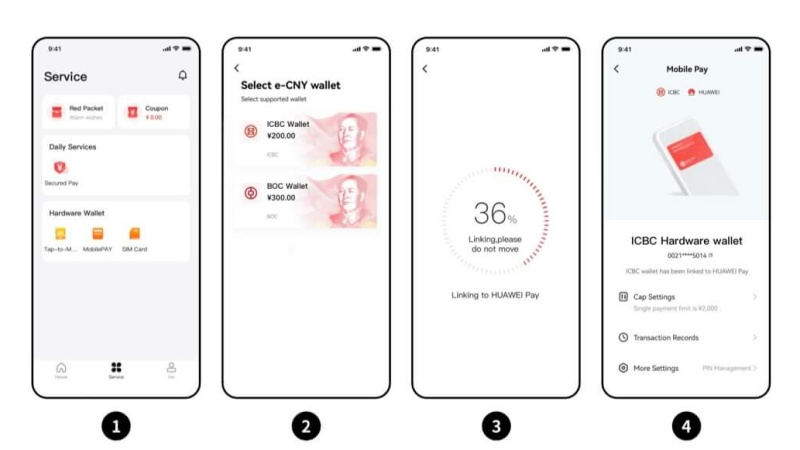
China has decided to pay interest on its central bank–issued digital yuan, elevating the legal status of the currency by another step. As the digital currency is formally incorporated into commercial banks’ asset and liability management frameworks, the institutional boundary between it and traditional bank deposits is beginning to dissolve. China has long excluded privately issued stablecoins while concentrating policy resources on a state-led digital currency infrastructure, a trajectory that now appears to be echoed in other major currency blocs, including Europe, as they move to strengthen public-sector digital payment systems.
From Payment Tool to Deposit Function
According to Bloomberg on the 29th (local time), Lu Lei, deputy governor of the People’s Bank of China, said in a column published in the Financial News that commercial banks operating digital yuan (e-CNY) wallets will begin paying interest on customer balances starting January 1, 2026. The move goes beyond viewing the e-CNY as payment-oriented “digital cash,” signaling an effort to grant it status equivalent to deposits. “With this measure, the e-CNY will move from a cash-like version 1.0 to a deposit-money version 2.0,” Lu said.
The core of the policy lies in clearly defining the e-CNY as deposit money. Under the implementation plan, e-CNY wallet balances will be incorporated into commercial banks’ regular asset and liability management systems, with interest paid in accordance with existing deposit rate regulations. The balances will also be covered by the deposit insurance scheme, ensuring the same level of safety as ordinary bank deposits. The central bank plans to include e-CNY operations within the reserve requirement framework, meaning that e-CNY holdings at commercial banks will count toward reserve calculations. Nonbank payment institutions managing e-CNY will likewise be required to place equivalent guarantee deposits.
Taken together, the form and function of the e-CNY closely resemble state-issued deposit money. Credit ultimately rests with the state, given that issuance is handled by the central bank, while distribution and management by commercial banks mirrors the structure of traditional deposits. With interest payments, deposit insurance coverage, and inclusion in the reserve system, the e-CNY now possesses all the core attributes of a safe asset that distinguish it from other digital currencies. In effect, the institutional framework for paying interest on government-issued money has been formally established.
Market reactions, however, are mixed. Ordinary deposit rates at major Chinese banks have fallen to around 0.05 percent in recent years amid a sustained easing cycle, raising questions about how attractive the interest on e-CNY balances will be for consumers. Bloomberg noted that while household savings in China are rising and loan growth has fallen to record lows—leaving banks wary of managing large deposit balances—the introduction of interest represents a significant institutional shift that transforms the e-CNY into a currency “worth holding.”
Accepting Dollar Stablecoins Equals Indirect Recognition of Dollar Dominance
Since the late 2010s, the People’s Bank of China has concentrated policy resources on advancing a state-led digital currency framework, part of a long-term strategy to restructure issuance, circulation, and payment infrastructure under central bank control. After launching central bank–level digital currency research in 2014, China progressively redesigned its payment and settlement architecture around the e-CNY. With private platforms such as Alipay already dominating everyday transactions, Beijing’s push for a central bank–driven project reflects a determination to keep monetary sovereignty firmly in state hands.
During this process, China briefly examined the global debate over stablecoins but ultimately chose not to adopt them as policy. Officials feared that formally permitting privately issued stablecoins would allow circumvention of the systems and institutions built at significant cost around the e-CNY. There was also concern that, given the dominance of dollar-linked stablecoins in international payments, embracing them would effectively reaffirm a U.S.-centric financial order in digital form.
Instead, China opted to build an independent payment infrastructure centered on central bank digital currency. A key example is the overhaul of cross-border settlement systems aimed at supporting yuan internationalization. To reduce reliance on the SWIFT network, China launched the Cross-Border Interbank Payment System (CIPS) in 2015 and is now working to integrate the e-CNY into CIPS. Lu said that cross-border financial infrastructure for the e-CNY is “already entering a mature stage,” underscoring that much of the technical groundwork has been completed.
The recent opening of an international e-CNY operations center in Shanghai fits squarely within this strategy. The center launched alongside platforms for cross-border digital payments and blockchain services, designed to bring direct connections with overseas financial institutions, real-time settlement, and currency conversion within central bank infrastructure. Given Shanghai’s role as China’s financial hub, the center is likely to serve as a forward base for yuan internationalization.
By the numbers, China’s digital currency experiment has already reached considerable scale. As of the end of June, the People’s Bank of China reported 261 million e-CNY users, with cumulative transaction volumes totaling 7.4 trillion yuan. This suggests that, contrary to external assessments that the e-CNY remains in a pilot phase, substantial real-world usage data and experience have already been accumulated. Ultimately, China’s decision to exclude stablecoins reflects not technological conservatism but a strategic choice to reshape the digital financial order around the monetary and payment infrastructure it has already built.

Signals of a Gradual Reshaping of the Global Payments System
China is not alone in seeking to counter the dollar-centric monetary order and the spread of dollar-linked stablecoins in digital form. European monetary authorities are also accelerating efforts to introduce central bank–led digital currencies in order to reduce dependence on private payment networks and dollar-based systems. In October, the European Central Bank announced plans to begin piloting a “digital euro” with a target launch in 2027, contingent on legislative approval expected next year.
The ECB’s push reflects concerns over Europe’s reliance on foreign payment infrastructure. Most card and online payments in Europe currently depend on networks operated by U.S. companies such as Visa, Mastercard, and PayPal. The ECB has warned that the need for a public digital payment instrument to complement cash is becoming increasingly urgent, arguing that a digital euro would help safeguard Europe’s monetary sovereignty and economic security. The intent to bring payment data and systems under central bank oversight is explicit.
Market perceptions of the digital euro remain divided. Key concerns include data privacy and the potential for deposits to flow out of commercial banks. In a survey conducted by Germany’s Bundesbank, 49 percent of respondents said they would not use a digital euro even if introduced, while 44 percent of respondents in France said they were unfamiliar with the concept altogether. Across Europe’s financial sector, worries persist that without limits on digital euro holdings, commercial banks’ deposit bases could be weakened.
Even so, Europe has not stepped back from the initiative, driven by changes in the global payments landscape. The Bank for International Settlements has noted that more than 99 percent of stablecoins in circulation worldwide are pegged to the dollar. Against this backdrop, Europe has chosen to preserve payment sovereignty through a public digital currency rather than simply accepting private stablecoins. While China’s e-CNY and Europe’s digital euro differ in implementation, both stem from a shared concern over the unchecked expansion of private digital money.
Similar Post