Rare Earths Expose a Weak Link in the U.S. Defense Industry, Putting Decoupling Supply Chain Strategy to the Test

Stefan Schneider brings a dynamic energy to The Economy’s tech desk. With a background in data science, he covers AI, blockchain, and emerging technologies with a skeptical yet open mind. His investigative pieces expose the reality behind tech hype, making him a must-read for business leaders navigating the digital landscape.
Authored On
Modified
Dependence on rare earths embedded in advanced weapons systems confirmed
No immediate alternatives for the U.S., supply chain overhaul to take at least five years
Supply uncertainty rises amid diplomatic friction with China

As China’s rare earth export controls enter a prolonged phase, concrete cases are revealing vulnerabilities in the U.S. defense supply chain. With supplies of rare earth elements used in key weapons systems—including guided missiles and fighter jets—cut off, U.S. defense contractors have been forced to rush decades-old stockpiles out of storage to keep production lines running. While analysts warn that rebuilding the supply chain will take years at a minimum, the situation also highlights a broader reality: even countries that have made significant progress toward self-sufficiency, such as Japan, still find themselves opting for diplomatic de-escalation when confronted with geopolitical pressure.
Intense Pressure on Production Schedules
According to The Seattle Times on the 29th (local time), production lines for some of the most advanced guided weapons in the United States have come close to grinding to a halt due to China’s rare earth export restrictions. The newspaper reported that samarium—an essential component in high-performance magnets used for precision missile guidance—has become virtually unobtainable following tighter Chinese export controls, triggering cascading disruptions to existing production plans. Some defense contractors are now weighing the possibility of renegotiating contracts and delaying deliveries simultaneously.
Samarium is a critical material for samarium–cobalt magnets, which retain magnetic strength under extreme heat and pressure. These magnets are widely used in Tomahawk cruise missiles, F-35 fighter jets, and various precision-guided munitions and radar systems. Because U.S. defense manufacturers have long relied heavily on Chinese supplies of samarium, they have been unable to avoid significant fallout from Beijing’s export controls. China accounts for more than 90 percent of the global samarium–cobalt magnet market, while Japan holds less than 10 percent. Given that China has designated rare earths as strategic national assets and continues to invest heavily in production capacity, Japan’s share is expected to shrink further.
On the 26th, China’s Ministry of Foreign Affairs announced sanctions against U.S. defense companies and executives in response to U.S. approval of arms sales to Taiwan. The measures targeted 20 defense-related entities, including Northrop Grumman, L3Harris’ maritime division, Boeing’s St. Louis operations, and Gibbs & Cox, freezing their assets in China and banning transactions with Chinese firms. The move went beyond earlier rare earth export controls by directly targeting U.S. defense companies, raising concerns that the impact could be even more far-reaching.
As supply disruptions became more visible, U.S. defense firms scrambled to activate emergency sourcing efforts across the globe. In one case, British rare earth company Less Common Metals located decades-old samarium nitrate stockpiles stored at a Solvay facility in La Rochelle, France. Accumulated since the 1970s and disconnected from normal commercial supply chains, the material had survived largely untouched. U.S. defense suppliers purchased the entire stock, processed it into metal in the U.K., and then shipped it back to the United States through a complex logistical route.
Such emergency measures, however, amount to little more than a stopgap. A defense industry executive said the newly secured material would sustain production for only about a year, adding that further disruptions would be unavoidable if Chinese supplies do not resume. The episode underscores how vulnerable global defense supply chains remain to the export policies of a single country—and how limited short-term response capacity truly is.
Mining and Refining Require Long Lead Times
Studies suggesting that it will take at least five years for the United States to meaningfully reduce dependence on Chinese rare earths reinforce pessimism within the industry. In a report published last month, the U.S. Department of Energy warned that building alternative supply chains for rare earth elements such as gallium and germanium could take anywhere from five to ten years. Developing new mines requires years of environmental reviews and permitting, followed by the step-by-step construction of downstream processes including refining, separation, alloying, and magnet production.
Post-mining stages are where time pressure becomes most acute. According to the U.S. Geological Survey, China controls about 38 percent of global rare earth ore production, 84 percent of refining capacity, and 92 percent of magnet manufacturing. Even if the United States secures domestic mining capacity, bottlenecks are likely to reemerge at the refining and magnet stages. MP Materials, the only major rare earth miner in the U.S., has historically relied on Chinese facilities for most of its refining after extracting ore in California.
Recognizing the severity of the issue, the U.S. government has intervened directly. In July, the Department of Defense signed a 10-year supply agreement with MP Materials, guaranteeing a price floor of $110 per kilogram for neodymium–praseodymium (NdPr). Under the arrangement, the federal government became a major shareholder, effectively overseeing production and pricing. Government capital has also flowed into refining and recycling firms such as Vulcan Elements and REE-Alloys. Still, industry consensus holds that these measures are insufficient to close the short-term gap.
As a result, diplomatic options are increasingly part of the discussion. With Chinese supply restrictions and licensing delays dragging on, there is growing recognition that cooperation with allies alone may not fully offset the shortfall. Past episodes—such as a more than 40 percent spike in global prices when China halted gallium exports—are frequently cited as evidence of how fragile alternative supply chains remain. Given the immediate pressure to maintain production, many in both diplomatic and industrial circles believe the U.S. may have little choice but to signal a degree of de-escalation toward China until a full supply chain overhaul is achieved.
Diplomatic Risk Persists Despite Partial Self-Sufficiency
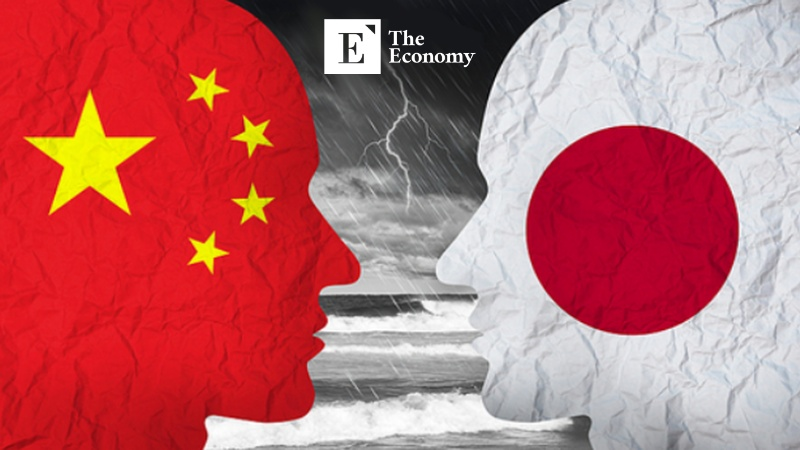
Japan’s experience, having moved earlier than the U.S. to diversify supply chains, illustrates the practical limits of decoupling from China. Japan directly experienced China’s rare earth export restrictions during the 2010 Senkaku Islands dispute, when supply disruptions lasting nearly two months sent shockwaves through its manufacturing sector. The episode highlighted how blocking access to specific elements could destabilize entire production processes. In response, Japan designated rare earths as strategically managed resources and invested heavily in diversification over the following decade.
As a result, Japan’s dependence on Chinese rare earths has fallen from 85 percent in 2010 to around 60 percent today—significantly lower than South Korea (over 80 percent), the United States (over 75 percent), and Europe (around 95 percent). Since October, Japan has further reduced reliance by sourcing heavy rare earths from Australian miner Lynas, which refines dysprosium and terbium in Malaysia before supplying Japan. This marked Japan’s first import of heavy rare earths from outside China.
Even so, partial diversification has not insulated Japan from diplomatic risk. With more than half of supplies still tied to China, uncertainty remains. Following remarks by Prime Minister Sanae Takaichi regarding potential intervention in a Taiwan contingency, Japanese firms reportedly experienced delays in Chinese export licensing procedures. While government officials said it was difficult to determine whether the delays were intentional, industry sources noted that even procedural slowdowns force companies to adjust inventories and production schedules.
Ultimately, Prime Minister Takaichi struck a conciliatory tone in a media interview, stating that Japan would pursue a “comprehensive strategic and mutually beneficial relationship” with China and expressing regret over remarks that had sparked friction. Emphasizing the importance of communication, she said that coordination between leaders would be essential to achieving broader goals. The episode illustrates a sobering reality: even after substantial diversification, diplomatic considerations can still outweigh supply chain resilience when strategic materials are at stake.
Stefan Schneider brings a dynamic energy to The Economy’s tech desk. With a background in data science, he covers AI, blockchain, and emerging technologies with a skeptical yet open mind. His investigative pieces expose the reality behind tech hype, making him a must-read for business leaders navigating the digital landscape.
Similar Post