Retail Polarization Spreads Across the Sector: A Growing “$740 Million Club” and the Disappearance of Small and Mid-Sized Stores

Siobhán Delaney is a Dublin-based writer for The Economy, focusing on culture, education, and international affairs. With a background in media and communication from University College Dublin, she contributes to cross-regional coverage and translation-based commentary. Her work emphasizes clarity and balance, especially in contexts shaped by cultural difference and policy translation.
Authored On
Modified
Department store sales increasingly concentrated in a handful of ultra-large flagship locations, intensifying the pull toward Seoul
Beyond restructuring, the retail industry enters a phase of fundamental business model reconfiguration amid shifting consumption patterns
Post-pandemic underperformance at U.S. Macy’s reversed through a successful premiumization strategy
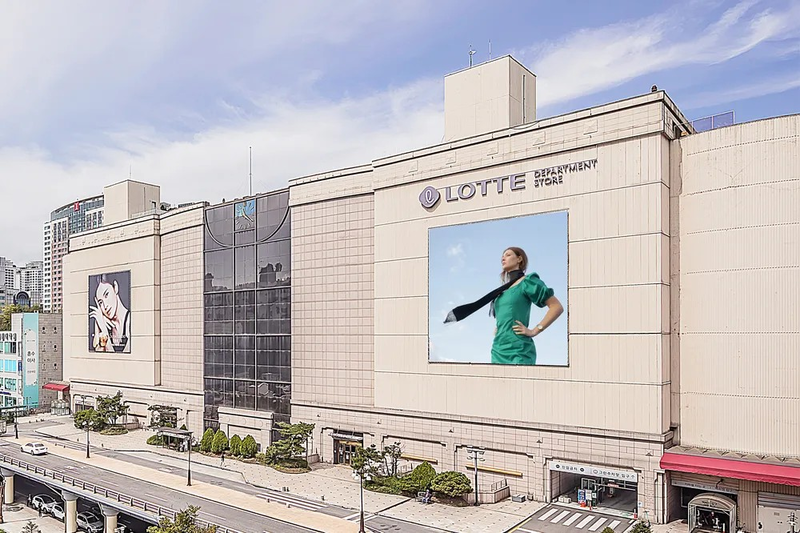
Last year, the number of department store locations posting annual sales exceeding approximately $740 million rose to 13, up one from the previous year, while two Seoul-based stores shut down due to deteriorating profitability—underscoring the deepening sales polarization within Korea’s department store industry. As consumption bifurcates and online channels expand, ultra-large core stores continue to absorb demand and grow, while less competitive outlets are steadily pushed out of the market. Industry insiders increasingly view this shift not as a temporary adjustment, but as a clear signal that a full-scale reconfiguration of the retail business structure is underway, driven by a market increasingly split between ultra-premium and ultra-low-price strategies.
Two Department Store Closures Last Year, No New Openings
According to the retail industry on the 7th, the number of department store locations surpassing roughly $740 million in annual sales reached a record high of 13 last year. Shinsegae Department Store Art & Science in Daejeon joined the ranks just four years after opening, expanding the so-called “$740 million club” by one store year on year. Stores exceeding approximately $2.22 billion in annual sales remained unchanged at two—Shinsegae Gangnam and Lotte Jamsil. The number of locations generating more than about $1.48 billion increased to five, with Hyundai Department Store Pangyo newly added to the list. Notably, Hyundai Pangyo recorded a 16% year-on-year sales increase, entering the “$1.48 billion club” just 10 years and four months after opening—the fastest pace among Korean department stores.
By operator, Shinsegae led with five locations, followed by Hyundai with four, Lotte with three, and Galleria with one. Regionally, Seoul accounted for 61.5% of all stores in the $740 million club. Specifically, eight Seoul-based locations made the list, including top-ranked Shinsegae Gangnam, Lotte Jamsil and Main Store, Hyundai Trade Center and Main Store, The Hyundai Seoul, Shinsegae Main Store, and Galleria Luxury Hall. Outside Seoul, Busan had two locations—Shinsegae Centum City and Lotte Busan Main Store—while Daegu, Daejeon, and Gyeonggi Province each had one, namely Shinsegae Daegu, Shinsegae Art & Science, and Hyundai Pangyo.
Meanwhile, following the closure of Lotte Masan in 2024, restructuring across the department store sector gained momentum, with two additional closures last year: Grand Department Store Ilsan and Hyundai D-Cube City. No new department stores opened during the year. In March this year, Lotte Bundang will cease operations after 26 years. Once Lotte Department Store’s first location in Gyeonggi Province and a former regional flagship, Bundang gradually lost competitiveness amid shifting consumption patterns and prolonged domestic demand weakness. As of 2024, its sales stood at approximately $120 million, ranking 58th among 68 department stores operated by Korea’s five major chains.
The industry views this polarization not as a short-term restructuring cycle but as a fundamental transformation of the department store format itself. The convergence of online expansion, population decline, and consumption bifurcation is accelerating a reality in which low-margin small and mid-sized stores exit the market, leaving only ultra-large hub stores with strong drawing power. In fact, locations exceeding roughly $740 million in annual sales accounted for more than half of total transaction value last year. Despite a 3.4% decline in the number of stores, average sales per store rose 16.3%. As these flagship locations continue to drive overall performance, the department store sector has posted growth for five consecutive months since July last year.
Saks Fifth Avenue Also Faces Crisis Amid Financial Strain
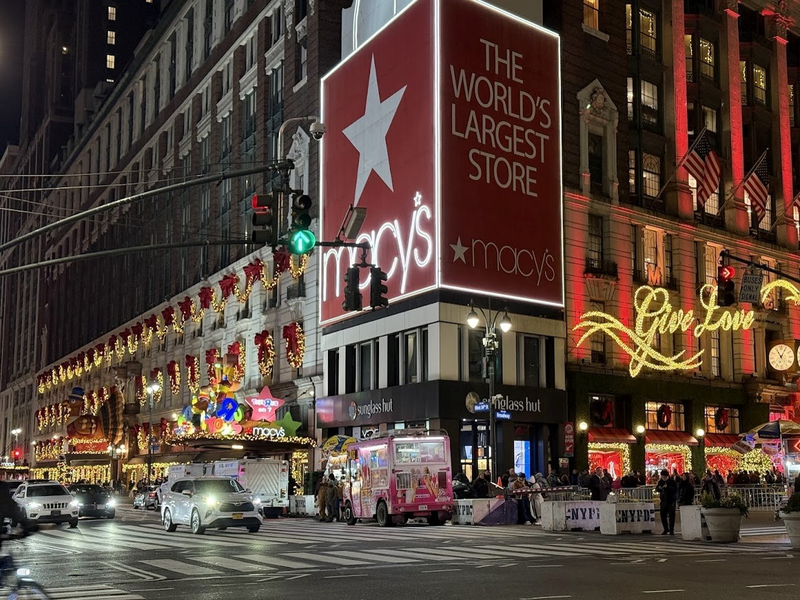
Business model reconfiguration is not unique to Korea. In the United States, Saks Global—the parent company of luxury department store chain Saks Fifth Avenue—is reportedly reviewing restructuring options, including bankruptcy protection, as liquidity conditions deteriorate to the point where it struggles to service interest payments. The financial burden intensified during its 2024 acquisition of fellow luxury chain Neiman Marcus, and despite consolidating major North American luxury department store brands under its umbrella, sales have failed to rebound meaningfully, rapidly eroding financial stability. Earlier this month, the company abruptly replaced its CEO as part of emergency self-rescue measures.
Macy’s, one of America’s most iconic department store chains, also remains at the center of restructuring. Founded in 1902, Macy’s was hit hard by the surge in online shopping and the COVID-19 pandemic, closing 125 stores in 2020 alone. By 2026, another 150 stores are slated for closure, reducing its footprint from nearly 1,000 locations at its peak to roughly 350. Performance has continued to lag. In 2023, annual revenue declined 5.5% year on year to $23.1 billion, while comparable store sales fell 6.9%. Even online sales dropped 7%, reinforcing assessments that the issue extends beyond offline channels to the erosion of overall brand competitiveness.
Market sentiment has been equally unforgiving. Macy’s real estate assets are estimated at $8.5 billion, yet the acquisition offer it received last year amounted to just $5.8 billion—effectively valuing the company below its property holdings. Against this backdrop, newly appointed CEO Tony Spring unveiled a strategy dubbed “New Chapter,” centered on restructuring the business around luxury-focused stores targeting high-income consumers, while modernizing existing locations and expanding smaller-format stores in parallel.
Encouragingly, the strategy began delivering visible results in the second half of last year. Macy’s third-quarter revenue, announced last month, reached $4.71 billion, exceeding market expectations of $4.62 billion. Adjusted earnings per share came in at $0.09, defying forecasts of a $0.14 loss and marking a return to profitability. Comparable store sales rose 3.2% company-wide, and 3.4% at core stores excluding those slated for closure—its strongest growth momentum since the turnaround strategy was fully implemented.
Retail Industry Splits Between Premium and Value-for-Money Strategies
Experts argue that Macy’s visible success through premiumization will likely reinforce similar strategic direction in Korea’s department store sector. Demand for mid-priced products is rapidly shrinking, while consumers increasingly make explicit choices between “value for money” and “premium” offerings. Shinsegae and Lotte, targeting VIP customers who account for roughly half of total sales, are expanding ultra-luxury assortments, including global brands such as Hermès, Louis Vuitton, and Chanel, alongside high-end jewelry labels like Graff, Van Cleef & Arpels, and Jacob & Co. Hyundai Department Store and Hanwha Galleria are also stepping up efforts to attract high-end clientele through expanded luxury brand lineups, larger stores, and enhanced experiential spaces.
Conversely, large discount marts and convenience stores are doubling down on ultra-low-price strategies focused on daily necessities. Daiso saw cosmetics sales surge 80% year on year after products priced below about $4 gained viral traction across social media and online communities. Major hypermarkets are accelerating the expansion of low-priced product lines. E-Mart, in collaboration with LG Household & Health Care, launched basic skincare products priced around $3, and recently rolled out “Wow Shop,” an ultra-low-price curated zone offering roughly 1,340 household items priced between about $0.75 and $3.75. Lotte Mart has also introduced skincare products priced around $3.70, now sold across 80 stores nationwide.
Strengthening private-label (PB) products has emerged as another core strategy. The share of PB items in total sales at the three major convenience store chains has steadily increased from 26–27% in 2022 to nearly 30% as of the third quarter last year, with double-digit annual growth rates. Hypermarkets show a similar trend, with PB products increasingly replacing national brands. At Lotte Mart, a PB seaweed soup ramen topped sales charts at 10 foreigner-focused stores last year, surpassing leading national brands, while E-Mart’s PB sweet rice drink and milk chocolate have become long-running bestsellers.
Siobhán Delaney is a Dublin-based writer for The Economy, focusing on culture, education, and international affairs. With a background in media and communication from University College Dublin, she contributes to cross-regional coverage and translation-based commentary. Her work emphasizes clarity and balance, especially in contexts shaped by cultural difference and policy translation.
Similar Post