U.S. accelerates lithium push to curb China-linked battery supply, Korean makers eye ESS upside

Authored On
Modified
U.S. steps up lithium output, takes direct equity stakes in mines
“Protect defense and advanced industries” strategy aims to curb reliance on China-led battery supply chains
Korean battery makers accelerate shift to local ESS, could policy tailwinds reshape the market
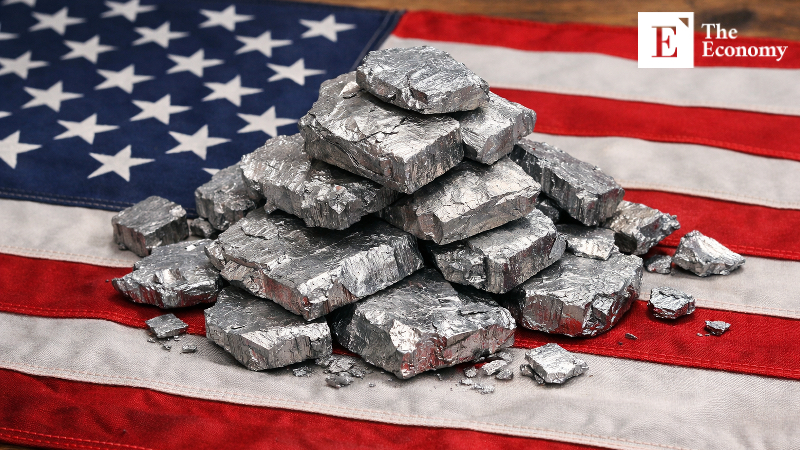
The U.S. government is ramping up aggressive investment in lithium after designating it a core national security asset. It is moving faster to build a stable lithium supply chain, including by taking direct equity stakes in mining projects that have traditionally been left to the private sector. The strategy is widely seen as an effort to reduce reliance on China, which leads the global lithium-ion battery market, and to minimize risks to advanced industries and national security.
U.S. expands equity stakes in lithium
On January 11 (local time), global energy analysis outlet Oil Price reported that the U.S. Department of Energy (DOE) recently acquired a 5% stake in Lithium Americas (LAC), which is leading development of Thacker Pass, North America’s largest known lithium deposit. The move signals that the government intends to go beyond funding support and participate directly as a project stakeholder to help drive success. Alongside roughly $2.23 billion in loan guarantees, the government secured a 5% equity stake (warrants) and plans to produce 40,000 tons a year of lithium carbonate at the Thacker Pass mine in Nevada, with construction expected to peak in 2026.
A similar structure was used in a deal between the U.S. War Department (DOW) and Canadian mineral exploration firm Trilogy Metals. In October last year, DOW purchased about 8.2 million Trilogy Metals shares at $2.17 per unit, with each unit consisting of one common share and three-quarters of a 10-year warrant. After completion of the Ambler Access Project (the Ambler Road) in Alaska, DOW will be able to purchase one common share at an exercise price of $0.01.
The U.S. government is seen as using this approach to build long-term cooperation with the companies it backs. Exercising warrants early can secure shareholder rights, but it also means taking on project risks that can arise during execution, including permitting delays. In effect, the structure creates conditions in which the U.S. government must remain in close communication and continue providing support until the warrant-backed projects succeed.
Funding flows into overseas firms and projects
The same investment structure has also been applied to Korea Zinc. The U.S. government secured warrants allowing it to purchase up to a 14.5% stake in Korea Zinc’s U.S.-based operating entity for an integrated non-ferrous smelter at an exercise price of $0.01 per share, and also set conditional warrants for an additional 20% stake. Under the terms, if the operating entity’s valuation exceeds about $15.9 billion, the government can pay an amount corresponding to that valuation and acquire the shares. Korea Zinc’s U.S. smelter is slated to be built in Tennessee, and the project is said to involve roughly $7.6 billion in investment.
The U.S. push for aggressive lithium investment is also showing up elsewhere. A notable case is Ukraine’s recent decision to sell development rights for a large lithium deposit—considered a strategic national asset—to a consortium that includes Ronald S. Lauder, a billionaire and longtime friend of President Donald Trump. According to The New York Times, the consortium—made up of Lauder and TechMet, an energy investment firm partly owned by the U.S. government, among others—passed bid screening by a Ukrainian government committee on the 8th.
The asset in question is the Dobra lithium mine in Ukraine’s central Kirovohrad region. In addition to lithium, the site is said to contain niobium, tin, rubidium, tantalum, cesium, beryllium, tungsten, and gold. Under the competitive bidding terms previously approved by the Ukrainian government, the minimum required investment for geological exploration at Dobra is $12 million, and if the project advances to industrial production, investors must commit an additional $167 million, bringing the total minimum investment to $179 million.
A strategy to counter China’s battery dominance
The United States’ push to secure lithium reflects growing concern that battery shortages—following rare earths—have emerged as a strategic vulnerability. Batteries are essential not only for AI data centers at the forefront of advanced-technology competition, but also for manufacturing and operating advanced weapons such as drones and laser systems. The problem is that China, a geopolitical rival of the United States, currently leads the global lithium-ion battery market. Defense industry analytics firm Govini estimates that roughly 6,000 battery-related components used in U.S. military systems depend on Chinese supply chains. The New York Times has also noted that Chinese-made batteries account for a significant share of energy storage systems (ESS), a core component of AI data centers.
That balance, however, may begin to shift this year. Industry observers say Korean battery makers are rapidly converting EV battery production lines to ESS, capitalizing on Washington’s new policy direction. The “One Big Beautiful Bill” (OBBBA), passed last year, sharply reduced incentives for EV purchases while maintaining or strengthening investment tax credits (ITC) for ESS manufacturing and installation. In addition, FEOC (Foreign Entity of Concern) rules taking effect this year exclude batteries using Chinese components or minerals from tax benefits.
After EV purchase incentives were slashed under OBBBA, LG Energy Solution, SK On, and Samsung SDI moved to retool underutilized EV battery lines into ESS-focused lithium iron phosphate (LFP) lines. According to analysis by Intertek CEA, an energy supply-chain management and technology consultancy, Korean companies are expected to account for more than 80% of ESS cell supply in the U.S. that complies with FEOC rules this year. Wood Mackenzie estimates U.S. ESS installation demand at about 49 GWh in 2026, adding that output redirected by Korean manufacturers alone would be sufficient to meet 100% of that demand, with roughly 10% excess capacity remaining.
Similar Post