South Korea’s central bank faces mixed signals ahead of its first policy meeting of the year

Authored On
Modified
High likelihood of reaffirming the existing policy stance
“Raise rates and hurt domestic demand, cut rates and fuel assets”
Limits of a single-policy-rate solution come into focus

As the Bank of Korea approaches its first Monetary Policy Board meeting of the year, market attention has focused on the direction of the benchmark interest rate. Pressures from the exchange rate and asset markets constrain any accommodative move, while domestic demand and employment indicators signal an economy ill-equipped to absorb further tightening. At the same time, the spread of artificial intelligence (AI) has lowered labor unit costs and concentrated capital in specific assets and industries, weakening the traditional channels through which interest-rate adjustments were transmitted to consumption and employment.
Expectations favor a fifth consecutive hold
According to the Bank of Korea on the 12th, the Monetary Policy Board will convene on the 15th for its first policy-direction meeting of the year to decide whether to adjust the benchmark rate. The policy rate currently stands at 2.50% per year, and the board has kept rates unchanged for four consecutive meetings since July last year. Persistent constraints—including surging housing prices in the Seoul metropolitan area and elevated exchange-rate pressure—have made rate adjustments difficult. In general, monetary authorities raise rates to manage liquidity when inflation pressure and asset overheating intensify, and cut rates to support demand when economic slowdowns or domestic demand contraction deepen.
With room for adjustment still narrow, markets widely expect the Monetary Policy Board to hold rates again at this meeting. The exchange rate, asset markets, and economic indicators are sending signals in opposing directions. On the 9th, USD/KRW closed at 1,457.6 in onshore trading. Although intervention by authorities briefly pushed the rate down into the 1,420s, it has resumed an upward trend since the start of the year and remains elevated. With exchange-rate pressure unresolved, a premature rate move could amplify volatility in currency markets, directly constraining policy decisions.
Signals from within the central bank also lean toward a hold. In its “2026 Monetary and Credit Policy Operating Direction” report released earlier this month, the Bank of Korea indicated that the current rate-hold phase could persist for a considerable period. Rather than shifting policy direction in the short term, the bank signaled an intention to maintain the current stance while comprehensively monitoring exchange-rate movements, asset markets, and inflation trends. This raises the likelihood that the upcoming meeting will reaffirm the existing policy stance rather than mark a turning point.
International oil prices and broader financial conditions also weigh on the rate outlook. Dubai crude futures fell from about 47.95 dollars per barrel in September last year to 41.79 dollars per barrel on the 9th. This is already below the government’s assumed average oil price of 42.47 dollars for this year’s growth outlook. Lower oil prices ease import-cost pressure, reducing the urgency to stimulate inflation through additional rate cuts. With exchange-rate risks lingering while inflationary pressure has eased, expectations for a rate hold have gained strength.
Why calls for hikes and cuts coexist
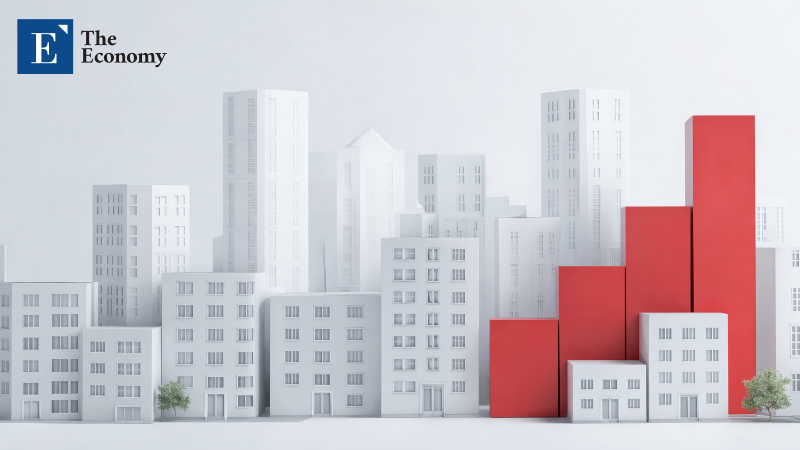
From the third quarter of last year, debate over the interest-rate outlook intensified, driven by housing-price trends in Seoul. According to KB Real Estate’s monthly housing price data, the average apartment transaction price in Seoul reached about 40,580 dollars per 3.3 square meters in December last year, up more than 6,160 dollars from a year earlier at about 34,250 dollars. Gangnam District recorded the highest price at roughly 84,160 dollars per 3.3 square meters, followed by Seocho District at about 76,560 dollars and Songpa District at around 61,910 dollars. In contrast, Geumcheon District at about 19,990 dollars, Gangbuk District at roughly 19,700 dollars, and Dobong District at around 18,550 dollars remained in the low-20,000-dollar range. Even within Seoul, asset-price disparities have widened to extremes.
This polarization in the housing market complicates monetary-policy decisions. Kim Hyo-seon, senior real estate analyst at NH Nonghyup Bank, noted that successive tightening of lending regulations has left the market dominated by cash-rich end-users and asset holders, adding that demand is likely to remain concentrated in core areas such as the three Gangnam districts. In this environment, some market participants argue that rate cuts could further intensify demand concentration, reinforcing calls for tighter policy. Alongside the exchange rate, rising Seoul housing prices and household debt have pushed the policy environment into a phase where rate cuts are difficult.
Domestic demand and employment, however, are sending very different signals. Bank of Korea Governor Rhee Chang-yong’s reference to a “K-shaped recovery” in his New Year’s address captures the economy’s duality. He warned that while certain export industries led by semiconductors continue to grow, domestic demand and employment are failing to keep pace, adding that excluding the IT sector, economic growth this year could remain around 1.4%. The implication is that the current export-led strength may not amount to a sustainable recovery, and rate hikes under such conditions would inevitably place additional strain on domestic demand.
Official data support these concerns. According to the Bank of Korea’s analysis of quarterly GDP growth contributions, exports improved from minus 0.3 percentage points in the first quarter last year to plus 2.0 points in the second quarter and 0.7 points in the third quarter. Private consumption contributions, however, remained subdued at minus 0.1 points in the first quarter, 0.2 points in the second, and 0.6 points in the third. Considering that the third-quarter figure reflects the impact of consumption coupons distributed in July and September, the underlying recovery in domestic demand remains limited. As exports drive growth, domestic demand continues to lag.
A further concern is that the burden of high interest rates, exchange-rate pressure, and elevated prices is concentrated on low-income households and self-employed workers. With mortgage rates approaching 6% per year, household interest burdens have risen, while exchange-rate pressure feeds through with a lag into higher prices for essentials such as food and energy, eroding real purchasing power. The Household Finance and Welfare Survey shows that the top 20% of households by income accounted for 47.3% of net assets, up from 46% a year earlier, while the asset shares of the remaining 80% declined across the board. In this environment of deepening asset and income polarization, rate hikes carry the risk of amplifying domestic demand contraction and social strain.
Debate expands to the need for policy combinations
The monetary-policy environment itself has been fundamentally altered by changes in the labor market accompanying the spread of AI. As automation and generative AI adoption expand, unit labor costs for both routine and mid-skilled work have fallen rapidly, weakening the traditional growth mechanism in which wage increases supported consumption. Productivity has risen, but the gains have not been evenly distributed across wages and employment, concentrating income growth among high-skilled workers and capital holders. Falling labor costs and income concentration distort the channels through which rate changes are transmitted to consumption and investment.
Capital accumulated through this process has tended to concentrate in specific asset classes such as real estate and financial assets rather than spreading through broad-based consumption or capital investment. As the benefits of AI innovation accrue to particular industries and firms, asset prices have become increasingly detached from real economic conditions, with housing and equity markets repeatedly experiencing price pressures unrelated to income levels. As capital circulates within asset markets rather than through production and employment, rate cuts are more likely to inflate asset prices than to revive domestic demand.
Global policy conditions combining financial repression and expansionary fiscal policy have reinforced this pattern. Many countries have maintained interest rates below nominal growth rates to ease debt burdens while channeling fiscal spending into strategic sectors such as semiconductors, AI, and infrastructure. Under these conditions, liquidity has flowed disproportionately into policy-favored industries, large corporations, and related assets. As the traditional mechanism by which rate adjustments balanced overall consumption has broken down, lower-income households’ real incomes and spending capacity have failed to improve.
In this environment, achieving asset-market stability, domestic-demand recovery, and exchange-rate management simultaneously through a single instrument—the policy rate—is increasingly unrealistic. Cutting rates risks heightening asset-price inflation and exchange-rate volatility, while raising rates threatens to suppress domestic demand and employment first. In an economy shaped by automation, AI innovation, and deep polarization, the transmission of monetary policy is prone to distortion, limiting its effectiveness. The long-held assumption that interest rates alone can manage all market variables is beginning to unravel.
Similar Post