From G7 coordination to deep-sea mining, Japan counters China’s rare-earth dominance amid dissolution risks

As one of the youngest members of the team, Tyler Hansbrough is a rising star in financial journalism. His fresh perspective and analytical approach bring a modern edge to business reporting. Whether he’s covering stock market trends or dissecting corporate earnings, his sharp insights resonate with the new generation of investors.
Authored On
Modified
Japan steps up response to China’s weaponization of rare earths, declares supply-chain overhaul with G7
Supply-chain self-reliance push dating back to the 2010s expands to deep-sea mining
Political calculations cited amid parliament dissolution and early election prospects
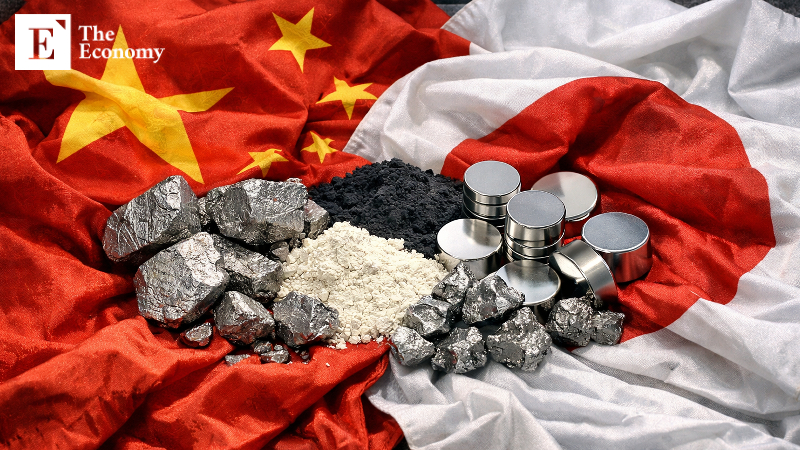
Japan has declared that it will dismantle China’s dominance in rare earths and, together with the G7 and other partners, build a new supply chain. With China’s weaponization of rare earths flaring again after Japanese Prime Minister Sanae Takaichi’s recent remarks about intervening in a Taiwan contingency, Tokyo is moving faster to restructure and localize its rare-earth supply chain. Some observers also argue that Japan’s push reflects domestic political calculations, including the possibility of dissolving parliament and calling an early election.
China–Japan rare earth dispute intensifies
According to a Nikkei Asia report on January 11 (local time), Japanese Finance Minister Satsuki Katayama said Japan must work with the United States and Europe to build a new supply chain to counter China’s weaponization of rare earths. She warned that unless China’s monopoly over key metals—and its use of that leverage—is broken, Japan’s broader industrial base will face persistent threats. Katayama is set to attend a meeting of finance ministers from major mineral-producing countries in Washington, D.C., on the evening of January 12, where she will discuss solutions to critical-mineral supply issues with G7 members as well as participants including Korea, India, Australia, the European Union, and Mexico.
China had already restricted rare-earth exports last April in retaliation for U.S. tariffs, triggering production disruptions at manufacturers including Suzuki Motor in Japan. After Prime Minister Sanae Takaichi recently suggested possible Japanese involvement in a Taiwan contingency, Beijing further escalated pressure by tightening export controls on dual-use items bound for Japan. On January 6, China’s Ministry of Commerce announced a ban on exports of all dual-use materials destined for Japanese military users, military purposes, or other end uses that could contribute to enhancing Japan’s military capabilities.
Japanese media report that China moved quickly to enforce the measures. Kyodo News said on January 10 that some Chinese state-owned firms exporting rare earths decided immediately after the January 6 announcement not to sign new contracts with Japanese companies, and were even considering terminating existing agreements, citing anonymous sources. It marked the first confirmed case in which Japanese firms seeking to purchase rare earths were turned away following China’s announcement of tighter dual-use export controls.
On January 11, the Yomiuri Shimbun and Asahi Shimbun reported noticeable delays in Chinese approval processes for civilian rare-earth exports to Japanese companies. That contrasts with the Chinese Commerce Ministry’s stance that civilian-use rare earths are not subject to the new restrictions. Asahi warned the measures could have wide-ranging implications for Japan’s manufacturing sector. Yomiuri, however, noted that export-approval delays had been occurring even before January 6 and said a direct link to the latest controls remains unclear.
Japan’s supply-chain overhaul efforts
Japan is also stepping up efforts to strengthen a separate rare-earth supply chain. Its push to rework rare-earth sourcing has continued since China cut off supplies during the 2010 Sino-Japanese territorial dispute. In 2011, the Japan Oil, Gas and Metals National Corporation and trading house Sojitz signed a deal to provide Australia-based rare-earth producer Lynas with $250 million in loans and equity investment, securing a long-term supply source outside China. As a result, Japan’s share of rare-earth imports from China—estimated by the industry to have been close to 90% at the time of the 2010 dispute—has now fallen to around 60–70%.
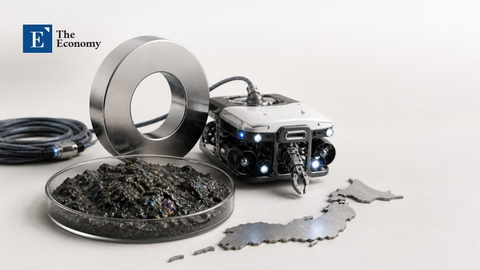
More recently, Japan has moved to full-scale test drilling of rare earths in the deep sea of the South Pacific. JAMSTEC’s research vessel Chikyu is scheduled to depart Shimizu Port in Shizuoka Prefecture on the morning of the 12th, heading to Minamitorishima, about 1,950 km from Tokyo. Japan previously discovered mud containing high concentrations of rare earths on the seabed at a depth of around 6,000 meters within its exclusive economic zone (EEZ) near Minamitorishima in 2012. Analysis by the University of Tokyo and others estimates rare-earth reserves in the area at roughly 6.8 million tons.
The vessel will conduct work to lift deep-sea mud containing rare earths from an area about 150 km southeast of Minamitorishima, with test drilling set to run through February 14. If the initial test drilling concludes successfully, Japan plans to increase daily mud collection to up to 350 tons starting in February 2027 to verify commercial viability. If sufficient development potential is confirmed, Japan will dewater the mud at Minamitorishima, transport it to the mainland, and attempt rare-earth extraction and refining.

Why Japan’s LDP is sticking to a hardline anti-China strategy
Some observers argue that Japan’s tough stance on rare earths is driven in part by domestic political considerations. Since the launch of the Takaichi administration in October, approval ratings have climbed to around 70%, fueling speculation over a possible dissolution of parliament. Against this backdrop, the Liberal Democratic Party (LDP), which has rallied public support through a hardline approach toward China, is seen as doubling down on its strategy with an eye on securing an outright majority. According to a recent report by the Yomiuri Shimbun, Prime Minister Sanae Takaichi has begun reviewing the option of dissolving the House of Representatives early in the upcoming regular Diet session set to convene on the 23rd.
Japan’s legislature consists of the House of Councillors, which has a six-year term, and the House of Representatives, which has a four-year term. While the upper house cannot be dissolved, the prime minister has the authority to dissolve the lower house at any time. Used effectively, this power can help solidify a prime minister’s political base, but an early dissolution also carries the risk of a backlash if the ruling party loses the ensuing general election. Former Prime Minister Shigeru Ishiba dissolved the lower house shortly after taking office in October last year, only to see the LDP lose the election, resulting in a divided government and difficulties in policy execution.
Citing government sources, Yomiuri reported that if the House of Representatives is dissolved early in the regular Diet session, two election timelines are being considered: a January 27 campaign launch followed by a February 8 vote, or a February 3 campaign launch with voting on February 15. The paper added that Takaichi appears to believe an early electoral test is needed to stabilize her political footing, and that securing a victory would strengthen cohesion at home as Japan braces for prolonged tensions with China and seeks greater leverage in dealing with Beijing.
As one of the youngest members of the team, Tyler Hansbrough is a rising star in financial journalism. His fresh perspective and analytical approach bring a modern edge to business reporting. Whether he’s covering stock market trends or dissecting corporate earnings, his sharp insights resonate with the new generation of investors.
Similar Post