F-35 availability at 50% exposes operational limits of the “world’s strongest” U.S. Air Force

Authored On
Modified
Spare-parts shortages overload maintenance systems
Repeated failures in post-procurement management and upkeep
Operational deployment constraints make combat power erosion unavoidable
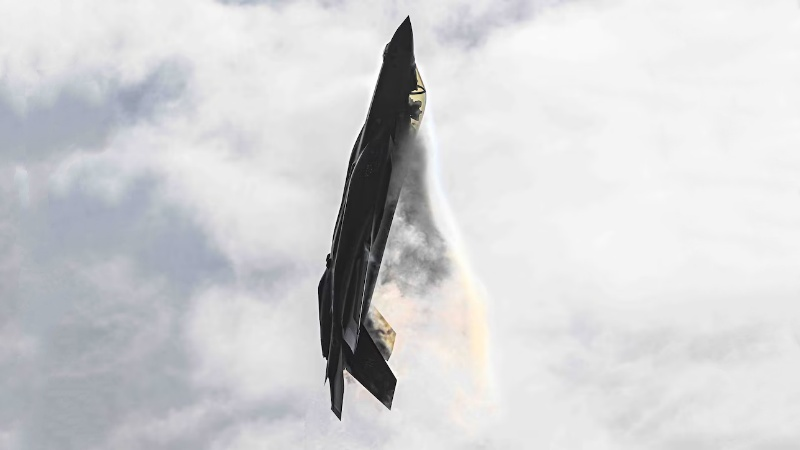
The F-35 fighter, regarded as a core pillar of U.S. military power, is failing to secure stable operational capability despite its technological sophistication. In the field, maintenance delays and spare-parts shortages overlap, while procedures meant to manage and oversee contract performance have failed to translate into results, leaving only about half of the fleet actually available for use. As problems in U.S. weapons management come to the surface, comparisons with how other countries operate their weapon systems are expanding the debate over the criteria used to assess military power.
Deficiencies in oversight and management come to light
According to a report by the U.S. Department of Defense Inspector General cited on the 11th (local time) by the U.S. security publication The National Interest, the average mission-capable rate of F-35 aircraft held by the U.S. military stood at just 50% in fiscal year 2024 (October 1, 2023 to September 30, 2024). This was 17 percentage points below the minimum performance benchmark set by the Department of Defense at the time, meaning that effectively one out of every two F-35s was confined to a hangar. The Inspector General criticized the situation, stating that “management failures, inseparable from technical issues, have undermined overall operational reliability.”
The report attributed the low availability not to aircraft performance itself but to problems in the operations and sustainment phase. Maintenance units were unable to secure necessary parts in a timely manner, leading to the routine practice of removing components from functioning aircraft to keep grounded jets flying—a so-called “cannibalization” practice. While this temporarily sustained sortie rates, it eroded the long-term operability of the overall fleet. As parts delays accumulated, maintenance wait times lengthened and the rotation of deployable aircraft was disrupted. The Inspector General concluded that the F-35’s 50% availability could not be dismissed as the result of a single defect or a temporary disruption.
The report also highlighted flaws in oversight mechanisms. Because sustainment contracts were not directly tied to improvements in availability, poor performance did not trigger meaningful penalties under existing contract structures. The Inspector General noted that the Department of Defense failed to adequately oversee contractor performance or hold contractors clearly accountable for substandard results. This meant that even as operational indicators deteriorated, the same contracting framework remained in place. By fiscal year 2024, cumulative payments made by the Department of Defense to F-35 manufacturer Lockheed Martin had reached 17 billion dollars.
With total program costs reaching 2 trillion dollars, the F-35 program is classified as the most expensive procurement project in Department of Defense history. Yet in the actual operational phase, mission-capable rates have remained around 50%, and despite massive payments to the manufacturer, fighter readiness has not entered a sustained improvement phase. The audit findings underscored that without the ability to maintain a stable level of availability, advanced specifications and design concepts have limited meaning in real-world force operations.
Gap between defense spending and operational reality
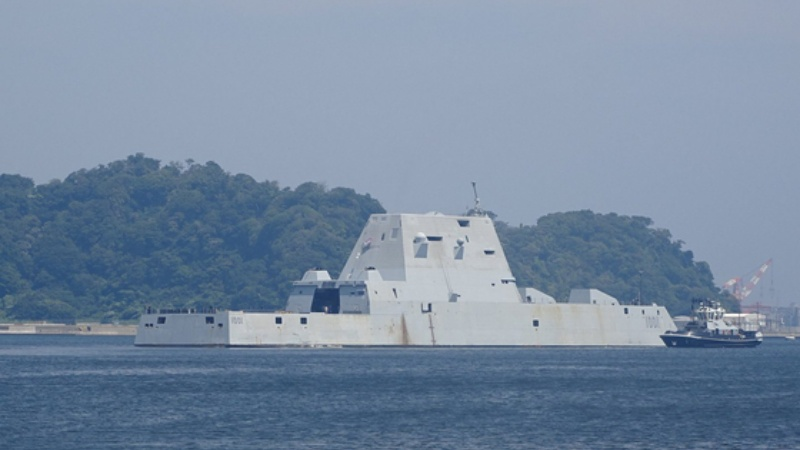
Controversy over U.S. weapons management failures is not confined to the F-35. A representative case is the USS Michael Monsoor, a Zumwalt-class stealth destroyer that was docked at Yokosuka Port in Japan last August. Photos shared on social media platform X by Japanese military influencer Michiya Murata showed the vessel with paint peeling extensively from its outer hull, along with multiple holes that appeared to be caused by corrosion. In some areas, traces believed to be oil leaks were also visible. Although the Michael Monsoor entered service in 2019 and is considered a relatively new asset, its outward condition suggested significant deterioration.
The Zumwalt-class destroyer program originally aimed to build 32 ships, but budget constraints and mission changes reduced the total to just three. During this process, the 155-millimeter gun designed as the ship’s core weapon was effectively rendered inoperable due to soaring ammunition costs, leaving the ships without usable rounds. Despite a per-ship construction cost of about 9 billion dollars, the class has struggled with major weapons constraints and visible maintenance issues. The U.S. Navy has said the exterior damage does not affect performance, but concerns have persisted given the emphasis stealth vessels place on concealment and upkeep.
Similar management and quality issues have repeatedly surfaced in aviation assets as well. In November 2023, a U.S. military Osprey aircraft crashed off the coast of Yakushima, Japan, with investigators citing the vulnerability of metals used in component manufacturing as one of the contributing factors. The crash killed eight crew members, prompting the U.S. military to impose a temporary grounding of about 400 Osprey aircraft across all variants. Subsequent investigations revealed extensive defect histories associated with the proprotor gearbox, a core technology that transmits engine power to the aircraft’s rotors. Over the decade prior to the accident, 609 gearbox units had undergone separate repairs, and 60 related incidents were reported within five years. Despite these recurring defects, directives to mitigate risk were deemed insufficient.
These cases illustrate a recurring pattern of failure in the post-procurement management phase of U.S. weapons systems. As precision in managing component lifecycles, control over maintenance personnel and schedules, and the upward sharing of risk information weaken, the effective value of military assets declines rapidly. Even as defense spending expands, inadequate management during the operational phase constrains actual combat capability.
Performance failure versus sustainment failure
Venezuela’s experience is also cited as a textbook case that directly exposes performance and reliability problems of weapons systems in real combat environments. Over recent years, Venezuela invested heavily in Chinese-made air-defense equipment, claiming to have built “the most modern air-defense system in Latin America.” Yet during a surprise U.S. military strike on Caracas in the early hours of the 3rd, which culminated in the capture of President Nicolás Maduro, Venezuela’s air-defense network failed to mount a meaningful response. Systems promoted by China as having “counter-stealth” capabilities did not function effectively at any stage—detection, warning, or interception—under actual operational conditions.
Concerns over the quality and management of Chinese weapons systems are also supported by specific data and cases. A 255-page report on China’s Rocket Force published in 2023 by the China Aerospace Studies Institute under the U.S. Air University stated that “some ballistic missiles were loaded with water instead of fuel, and defects in silo cover mechanisms could disrupt launch processes.” The report concluded that quality control was failing across production, inspection, storage, and management stages, warning that “regardless of technological sophistication during development, force reliability can already be compromised before deployment.”
By contrast, U.S. weapons systems are characterized less by fundamental performance flaws than by sustainment burdens and operating costs that constrain deployment. Advanced aircraft and ships have demonstrated a baseline level of performance during design and testing phases, but have struggled to maintain stable readiness over extended operational periods. Complex maintenance procedures, high sustainment costs, and persistent spare-parts delays have undermined reliable force availability. This has created a gap between the number of assets possessed and the number actually deployable, ultimately weighing down operational planning and force management as a whole.
Although the paths to capability loss differ by country, the implications converge. Whether weapons fail to perform as designed in combat, or perform adequately but cannot be sustained over time, the result is unavoidable degradation in combat power. Recent cases suggest that the criteria for evaluating military strength are shifting away from single-weapon performance or specifications toward the question of how reliably assets can be deployed and sustained in real operational environments. Modern military competitiveness, in other words, is increasingly determined not by the excellence of equipment alone, but by the sustainability of its operation.
Similar Post