Trump expands pressure on Iran into third countries and trade, warning of “25% tariffs on all trading partners”

Stefan Schneider brings a dynamic energy to The Economy’s tech desk. With a background in data science, he covers AI, blockchain, and emerging technologies with a skeptical yet open mind. His investigative pieces expose the reality behind tech hype, making him a must-read for business leaders navigating the digital landscape.
Authored On
Modified
China and India targeted as key energy trade counterparts
Measures aimed at weakening external support for the Iranian regime
Accumulated hardline stance toward the U.S. accelerates Iran’s isolation
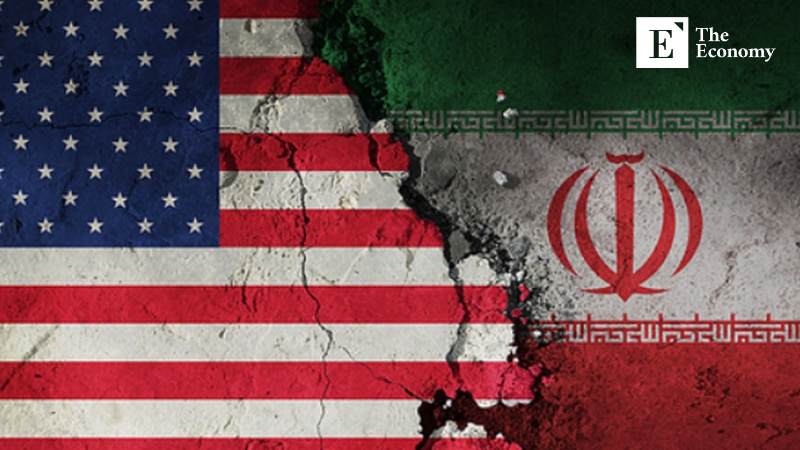
U.S. President Donald Trump announced that all countries maintaining trade relations with Iran would face a 25% tariff on trade with the United States, signaling a shift in sanctions strategy from direct penalties to indirect pressure. Coming amid large-scale anti-government protests inside Iran, harsh crackdowns by the regime, and explicit warnings from Washington, the tariff threat is increasingly being interpreted not merely as a trade measure but as a tool of political coercion. The international community broadly agrees that the move is likely to further deepen Iran’s diplomatic and economic isolation.
Sanctions targeting the cost of U.S. trade
On the 12th (local time), Trump wrote on his social media platform Truth Social that “any country that trades with Iran will be subject to a 25% tariff on trade with the United States,” adding that the measure “takes effect immediately.” By clearly specifying both the tariff rate and timing, Trump underscored his intent to pressure third countries engaged in commerce with Iran through the U.S.-centered trade system. Iran has already faced extensive Western sanctions across finance and energy, including restrictions on access to dollar-based payment systems, controls on oil exports, and long-standing barriers to investment in key industries.
Against this backdrop, the declaration of additional tariffs for “trading with Iran” appears less about changing Tehran’s behavior directly and more about forcing a reassessment by external partners that have continued doing business with Iran. Countries with the most active trade ties with Iran include China, India, and Türkiye. While Trump did not specify what types of transactions would qualify, diplomatic sources widely believe the primary targets are countries that have continued importing Iranian oil and energy despite Western sanctions.
China is often cited as Iran’s largest trading partner, accounting for roughly 30% of its total foreign trade and around 90% of its oil exports. Even under U.S. sanctions, China has continued large-scale imports of Iranian crude, making Iran an important component of China’s energy supply structure. India is also classified as a country maintaining long-standing commercial ties with Tehran. If these countries are required to absorb a 25% tariff across their broader trade with the United States in exchange for maintaining ties with Iran, their strategic options would narrow sharply. As a result, the measure is expected to function both as a tool to isolate Iran and as a direct blow to the export competitiveness of China and India in the U.S. market.
The additional 25% tariff is particularly significant in that it shifts the cost of sanctions onto third countries. Trump described the move as “final and decisive,” signaling little room for retreat. The United States has already raised the possibility of tariffs of up to 50% in response to India’s purchases of Russian oil, while average tariffs on Chinese products have been cited at around 47.5%. Adding a penalty-style tariff tied to Iran-related trade would further deteriorate the trade environment for both China and India. In effect, the move brings a geopolitical issue surrounding Iran into the trade domain, applying layered pressure on Beijing and New Delhi simultaneously.
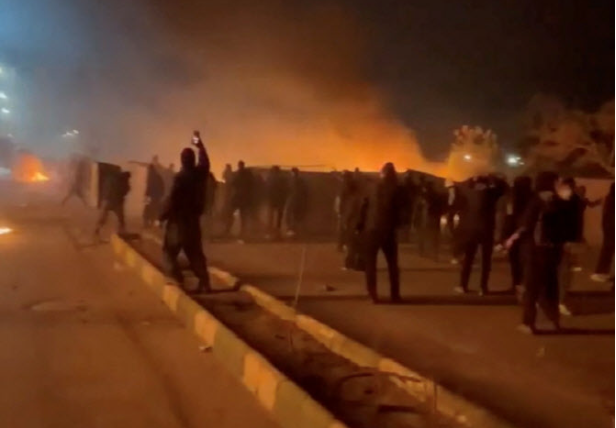
From livelihood grievances to anti-government protests
The international community has paid close attention to the timing of Trump’s remarks, which came as tensions inside Iran were escalating. Anti-government protests that began on the 28th of last month have entered what analysts describe as an unprecedented phase in the 47-year history of the Islamic Republic. The demonstrations spread from Tehran to major cities and smaller regions nationwide, with fatalities rising at a faster pace than in previous protest waves. According to the Iran Human Rights organization, at least 544 people have been killed in the current unrest, a figure approaching the 552 deaths recorded over three months during the 2022 protests against mandatory hijab rules.
The protests initially erupted over currency collapse and economic hardship. Iran’s inflation rate, based on official statistics, reached 48.6% year-on-year as of October last year. Merchants in Tehran’s central Grand Bazaar shut their shops in protest over the sharp fall of the rial against the dollar and surging prices, and demonstrations quickly spread to poorer western provinces such as Ilam and Lorestan. As thousands took to the streets, grievances rooted in livelihoods evolved into overt political demands. Protesters chanted “death to the dictator,” calling for the resignation of Supreme Leader Ayatollah Ali Khamenei and the current system.
Despite starting from economic distress, the protests rapidly expanded into a broader challenge to the political order. Iranian sociologist Elie Khorasandfar explained that “the 2022 protests began with women’s rights issues and lost momentum after peaking, but the current protests started with economic grievances and have grown increasingly intense as they converged on a shared political message.” Tensions have been further inflamed by public expressions of support from Reza Pahlavi, crown prince of the former Pahlavi dynasty ousted in the 1979 revolution, who has voiced backing for the protests from abroad.
The U.S. stance has emerged as a key variable in this environment. Trump has openly expressed support for protesters while warning Iran against violent repression. Speaking to reporters on the 10th, he said, “Too many people are dying,” adding that “we are looking at very strong options,” a remark widely interpreted as leaving military action on the table. This contrasts sharply with the U.S. approach during Iran’s 2009 Green Movement, when then-President Barack Obama expressed condolences for victims but refrained from direct involvement to avoid the appearance of interference in Iran’s internal affairs.
Scenario of Iran’s isolation within global trade networks
Iran’s current economic crisis is rooted in the prolonged sanctions imposed after the Trump administration withdrew from the Joint Comprehensive Plan of Action in 2018. Following the U.S. exit, Iran’s oil export channels narrowed sharply, slashing foreign currency inflows. In September, additional pressure was added when nuclear-related sanctions were reinstated at the United Nations level through a “snapback” mechanism led by the United Kingdom, France, and Germany. The resulting shortage of foreign currency fed directly into exchange-rate instability. The Iranian rial has fallen to around 1.45 million rials per dollar, compared with roughly 32,000 rials per dollar at the time of the nuclear deal in 2015, a forty-fourfold collapse over a decade.
The currency breakdown has immediately threatened daily life. According to local outlet Iran News Update, the price of whole milk rose from 340,000 rials at the start of last year to around 520,000 rials within a year, while a 30-egg carton jumped from 1.75 million rials to 2.45 million rials. One shopkeeper was quoted as saying, “Wages paid in rials turn to ashes the moment workers go shopping,” capturing how currency devaluation is crushing real consumption. In some cases, shops have begun listing prices in dollars instead of rials, further underscoring the strain on households.
Iran’s external environment has also deteriorated. Last June’s “12-day war” with Israel and subsequent U.S. strikes on nuclear facilities further disrupted already fragile trade flows. On the 29th of last month, Trump warned that “Iran will pay a heavier price” if it attempts to rebuild nuclear facilities or restock missile capabilities. Since then, Washington has repeatedly signaled that it is reviewing a range of options, including stronger support for anti-government movements inside Iran, cyber operations, and additional sanctions.
Against this backdrop, the new tariff threat is expected to function as another mechanism to isolate Iran within global trade networks. Countries maintaining close energy and commercial ties with Tehran now face immediate cost burdens in their trade with the United States, effectively cutting off channels that have helped sustain Iran’s economy. While some analysts argue that the absence of a credible alternative leadership and the cohesion of ruling elites reduce the likelihood of regime collapse, the accumulation of U.S. trade pressure, sanctions, and military threats is widely seen as pushing Iran into deeper diplomatic and economic isolation.
Stefan Schneider brings a dynamic energy to The Economy’s tech desk. With a background in data science, he covers AI, blockchain, and emerging technologies with a skeptical yet open mind. His investigative pieces expose the reality behind tech hype, making him a must-read for business leaders navigating the digital landscape.
Similar Post