China Moves to Operationalize “Satellite Tactics” as SpaceX Dominates, Signaling Ambitions to Command Orbital Supremacy

Siobhán Delaney is a Dublin-based writer for The Economy, focusing on culture, education, and international affairs. With a background in media and communication from University College Dublin, she contributes to cross-regional coverage and translation-based commentary. Her work emphasizes clarity and balance, especially in contexts shaped by cultural difference and policy translation.
Authored On
Modified
State-owned CSN Filed Preliminary Application with ITU in December
If Realized, Five Times Larger Than Starlink’s Planned 40,000 Satellites
Strategic Advantage in Securing Long-Term Footholds in Space Defense and Communications Infrastructure
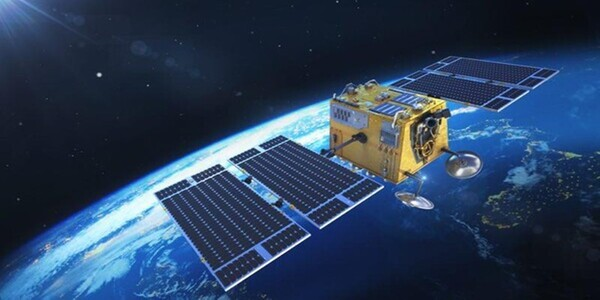
As Elon Musk-led U.S. space company SpaceX spearheads private-sector satellite launches through its Starlink program, China has unveiled plans to deploy a massive constellation of up to 200,000 satellites by filing with an international body. The scale far exceeds Starlink’s stated target, representing more than five times its planned constellation, and is widely interpreted as a calculated strategic move to dominate Earth’s orbital communications infrastructure. A series of successful low-Earth orbit (LEO) satellite launches over the past year underscores that China’s space ambitions have entered an operational deployment phase, heightening tensions within the global security order.
Large-Scale Orbital and Spectrum Filings with the ITU
According to reports by Shanghai Securities News and other Chinese media on the 13th, a review of the International Telecommunication Union (ITU), a United Nations agency, shows that China submitted applications last month for frequency and orbital resources covering more than 200,000 satellites. The filings were led by a newly established entity, the Radio Development, Utilization and Technological Innovation Research Institute, founded in Hebei Province late last month. The institute submitted applications for two projects—CTC-1 and CTC-2—each comprising 96,714 satellites, for a combined total exceeding 190,000.
Other Chinese satellite plans filed with the ITU include Beijing-based Guodian Gaoke’s Tianqi-3G constellation of 1,132 satellites, China Mobile’s M1 constellation of 144 satellites, and Emposat—previously known as SatelliteHerd—with 106 satellites under its YX-5 project. In addition, private space startup GalaxySpace has outlined the Galaxy-SAR-2 network of 96 satellites and the Black Spider-3 constellation of 81 satellites. Further applications from China Mobile for 2,520 satellites, Yuanxin Satellite for 1,296 satellites, and Guodian Gaoke for another 1,132 bring the aggregate total beyond 200,000.
This scale is roughly five times SpaceX’s ultimate target of 42,000 satellites. On the 9th (local time), the U.S. Federal Communications Commission approved SpaceX’s request to launch an additional 7,500 second-generation Starlink satellites. With this approval, the number of operational satellites is expected to reach 15,000 by the end of 2031. Starlink currently operates around 10,000 satellites, serving more than 7 million users across 115 countries.
Under ITU rules, satellite systems must begin operations by launching at least one satellite within seven years of initial filing, deploy 10% of the constellation within two additional years, and complete full deployment within seven years. If China adheres to this schedule, it could deploy 200,000 satellites by 2033. LEO satellite internet services operate at altitudes of roughly 300 to 1,000 kilometers, offering lower latency and more favorable conditions for real-time communications than geostationary satellites positioned at approximately 36,000 kilometers. However, the limited coverage area of each satellite necessitates massive constellations to achieve global coverage.

China’s Two Emerging Mega-Constellation Networks
China’s aggressive push reflects its assessment that LEO satellites constitute critical infrastructure for future industries, including autonomous driving, urban air mobility, and military communications. The country established state-owned StarNet in 2021 to operate the Guowang (National Network) LEO satellite project, making the current orbital land grab a natural extension of that initiative. Guowang is a national project led by the China Satellite Network Group (SatNet) under the State Council, with plans to deploy 13,000 satellites at altitudes of 500–600 kilometers and 1,145 kilometers. The roadmap calls for 400 satellites by 2027, 1,300 by 2029, 6,500 by 2032, and full network completion by 2035.
In parallel, China is advancing the Qianfan (“Thousand Sails”) project, which aims to provide global internet services by 2027. Backed by the Shanghai municipal government and led by Shanghai Spacecom Satellite Technology (SSST), Qianfan is a commercial mega-constellation of 15,000 satellites to be deployed in high LEO at around 1,160 kilometers. Marketed internationally under the brand “Sailspace,” the project targets overseas telecommunications markets. SSST plans to deploy 1,300 satellites to launch initial services by 2027, with full network completion by 2030.
Taken together, these initiatives are widely interpreted as a bid by China to assert control over Earth’s orbital communications networks. Space has become indispensable to daily life on Earth, underpinning weather forecasting, positioning services, navigation, Earth observation imagery, and a wide range of civilian applications. Militarily, satellites play a central role in target detection, guidance, reconnaissance imagery, and signal interception. Frank Rose, Principal Deputy Administrator of the U.S. National Nuclear Security Administration, noted in a report that “space-based assets play a core role in the projection of U.S. global military power.”
In the United States, space development was historically driven by government and the military, but around 2015 the paradigm shifted toward a private-sector-led “New Space” era. Whereas “Old Space” primarily served geopolitical and military objectives of major powers, New Space is increasingly shaped by commercial imperatives. A decisive catalyst for this transition was the dramatic reduction in launch costs. SpaceX’s successful first reuse of the Falcon 9 rocket in 2017 slashed the cost of launching small LEO satellites to nearly one-tenth of previous levels, opening access to space for countries and startups with limited technological capabilities.
Within this New Space era, LEO small-satellite constellations have emerged as one of the fastest-growing segments due to their substantial economic impact. Unlike traditional geostationary communications satellites operating at roughly 35,786 kilometers, LEO systems offer significantly faster data transmission thanks to their proximity to Earth. An estimated 4 billion people worldwide without access to high-speed internet represent a vast potential customer base, while such networks provide foundational infrastructure for autonomous vehicles, artificial intelligence, and the hyper-connected Fourth Industrial Revolution.
Record Surge in LEO Constellation Launches, 92 Government and Commercial Missions Last Year
Competition between the United States and China has intensified sharply in the LEO small-satellite constellation arena. While rapid private-sector innovation continues in the United States, China has accelerated its own development efforts in parallel. Under strong government encouragement tied to its “space power” agenda, dozens of emerging companies have entered a domain once monopolized by the military.
The successful deployment of LEO internet satellites last year marked a pivotal milestone, signaling that China’s space ambitions have moved into mass production and operational deployment. On December 6, China successfully launched 14 LEO internet satellites using a Long March-8A carrier rocket from the Hainan commercial space launch site. This was followed on December 9 by the successful deployment of 15 LEO satellites via a Long March-6A rocket, and on December 12 by another 16 satellites launched aboard a Long March-12 rocket. Progress was also reported on the Qianfan constellation project, China’s answer to Starlink.
China closed out the year with another launch. On December 31, China Aerospace Science and Technology Corporation (CASC) launched a Long March-7A rocket carrying two Shijian-29 satellites, designed for space object tracking, from the Wenchang Satellite Launch Center on Hainan Island. This marked China’s 92nd rocket launch of the year, a 35% increase from 68 launches in 2024. The image of China as the only country launching a rocket on the final day of the year has been widely seen as emblematic of its relentless drive toward space superpower status.
China’s annual rocket launch count, which hovered around 10 through the mid-2000s, began to rise sharply after private investment in the space industry was permitted in the mid-2010s. As private firms rushed into rocket development and satellite launches, China briefly surpassed the United States in total annual launches by the late 2010s. Private companies now account for roughly 20–30% of Chinese launches. Combined with government-led initiatives such as the Tiangong space station and successive lunar exploration missions aimed at establishing a moon base, China’s launch cadence continues to trace a steep upward trajectory. Experts project that China’s space industry, powered by the alignment of policy, technology, and capital, is poised for sustained high-speed growth in the coming years.
Siobhán Delaney is a Dublin-based writer for The Economy, focusing on culture, education, and international affairs. With a background in media and communication from University College Dublin, she contributes to cross-regional coverage and translation-based commentary. Her work emphasizes clarity and balance, especially in contexts shaped by cultural difference and policy translation.
Similar Post