Trump’s Overreach in Undermining the Fed Emerges as a Trigger for Global Asset Reallocation

Anne-Marie Nicholson is a fearless reporter covering international markets and global economic shifts. With a background in international relations, she provides a nuanced perspective on trade policies, foreign investments, and macroeconomic developments. Quick-witted and always on the move, she delivers hard-hitting stories that connect the dots in an ever-changing global economy.
Authored On
Modified
Dimon, BNY CEO issue joint warnings: “Federal Reserve independence is the bedrock of markets”
Trump renews public attacks, branding Powell “incompetent and corrupt,” signals intent to press ahead with successor nomination
Financial sector alarm grows as erosion of Fed independence threatens the dollar’s global standing
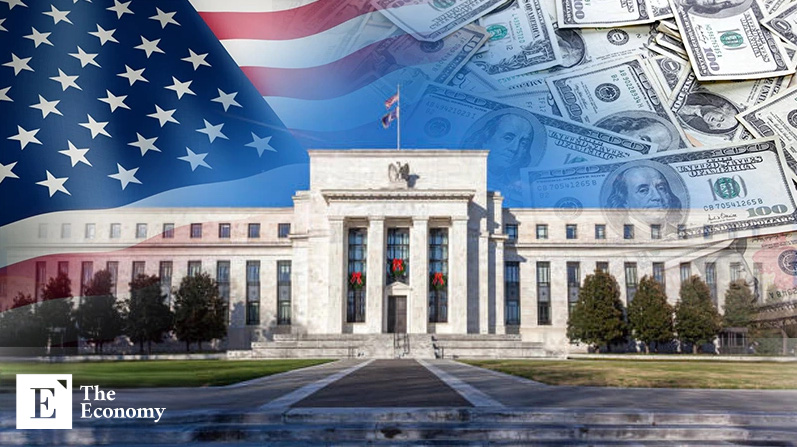
Wall Street leaders have stepped forward to openly criticize U.S. President Donald Trump’s mounting pressure on the Federal Reserve, rallying to defend the central bank’s independence. As warnings mount that political interference could fuel inflation expectations and push long-term interest rates higher, a direct confrontation between Trump and the financial establishment is taking shape. The fact that the Fed chair has become the subject of a criminal investigation is increasingly viewed as a destabilizing force undermining the institutional foundations of the U.S. financial system.
Wall Street chiefs unite to defend independence amid Trump pressure
According to Reuters on the 13th (local time), JPMorgan Chase CEO Jamie Dimon said during the bank’s fourth-quarter earnings briefing that the Justice Department’s issuance of a grand jury subpoena targeting the Federal Reserve was “probably not a good idea,” adding that “everyone we know believes central bank independence matters.” He warned that such actions could raise inflation expectations and, over time, drive interest rates higher. Dimon, one of the most influential figures in U.S. finance and previously floated as a potential Treasury secretary under a Trump administration, has repeatedly stressed that “the independence of the Federal Reserve is absolutely critical.”
BNY CEO Robin Vince echoed those concerns at the same-day earnings call, criticizing efforts to indict Chair Jerome Powell by stating that policymakers should not “undermine the foundations of the bond market or do things that could potentially raise rates.” He added that confidence in central bank independence appeared to be eroding. Vince emphasized that an independent central bank capable of setting monetary policy autonomously is a well-established institution and vital to the long-term interests of the U.S. economy. JPMorgan CFO Jeremy Barnum likewise warned that “a loss of Fed independence would steepen the yield curve and undermine sustained economic vitality,” adding that the broader risk extends to the U.S. economic outlook and, by extension, global economic stability.
Powell himself issued a public statement on the 11th, saying he now faces the prospect of investigation and indictment by the Trump administration over renovation work at the Federal Reserve’s headquarters. He characterized the probe as an unprecedented threat to the Fed’s independence. The Justice Department alleges that Powell committed perjury by understating renovation costs during testimony before the Senate Banking Committee.
Powell, however, has argued that the renovation issue is merely a pretext, and that the prosecutorial pressure represents retaliation for resisting Trump’s demands for rate cuts. He said the “extraordinary action” must be viewed in the context of sustained pressure and intimidation from the executive branch, asserting that the threat of criminal prosecution stems from the Fed’s decision to set rates based on its assessment of the public interest rather than presidential preference.
Trump has openly pressed the Fed for rate cuts since returning to office in January last year, while Powell has maintained an independent course. Over the past year, the Fed has lowered rates by a cumulative 0.75 percentage points, bringing the benchmark range to 3.5–3.75 percent. Trump has derided Powell as “Mr. Too Late” for failing to ease policy more aggressively.
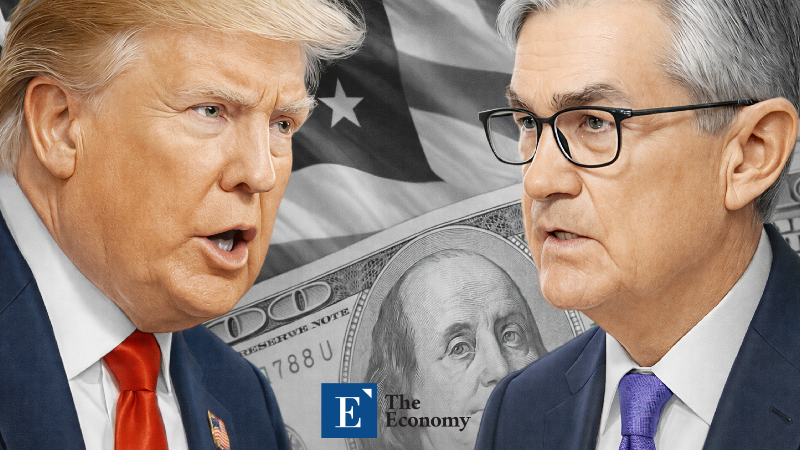
Trump escalates rhetoric: “Bad Powell should leave”
The episode, in which the president mobilized one state institution—the Justice Department—to attack the head of another—the Federal Reserve—has drawn sustained criticism not only from Wall Street but also across U.S. political and economic circles. Former Fed chairs Ben Bernanke, Alan Greenspan, and Janet Yellen, along with 13 economists, issued a joint statement on the 12th condemning the investigation as “an assault on the independence of the Federal Reserve” and warning that it would carry deeply negative consequences for inflation and economic functioning.
Opposition has also emerged within Trump’s own party. Senate Republican Leader John Thune said it was “really important” that the matter be resolved quickly and not be perceived as political interference in the Fed. International support for the central bank has followed. Leaders of the European Central Bank, as well as the central banks of South Korea, the United Kingdom, Sweden, Denmark, Switzerland, Australia, Canada, and Brazil, along with officials from the Bank for International Settlements, issued a joint statement backing Powell and the Fed. They stressed that “central bank independence is essential to price stability, financial stability, and economic stability in the interest of citizens.”
Trump has remained defiant. On the 13th, during a visit to a Ford Motor plant in Detroit, he told reporters that Powell “doesn’t know what he’s doing, or worse,” and said he hoped the Fed chair would step down soon. He reiterated that the country has “a bad Fed chair,” particularly criticizing Powell for keeping rates too high. Trump also attacked the headquarters renovation project, claiming that “the most expensive renovation in history” was underway and asserting that he could have done it for $25 million, while Powell was spending billions. He labeled Powell a “real stiff” and a “jerk,” adding that he wants someone who can cut rates during strong markets and predicting that Powell “will be leaving soon.”
In a subsequent interview with CBS, Trump dismissed concerns that even prominent conservatives viewed the investigation as political retaliation, saying that “some conservatives like it” and that supporters outnumber critics. He added that perceptions were beyond his control and announced plans to unveil a nominee for the next Fed chair within weeks, signaling his intent to push ahead with the appointment despite concerns that the Justice Department probe could complicate the confirmation process.
Dollar’s institutional pillar shaken by government–central bank conflict
At its core, the controversy underscores the risk that the U.S. central bank may face sustained political pressure going forward. The prospect of a central bank chief becoming the target of criminal investigation is widely regarded as extraordinary in modern U.S. history. This is why major international media have warned that “the institutional pillar supporting the dollar is being put to the test.”
Analysts note that the dollar’s dominance does not rest solely on the size of the U.S. economy. Its international status reflects the interaction of three pillars: interest rate differentials, institutional stability, and the credibility of monetary policy. Confidence that the Federal Reserve operates independently underpins policy predictability and allows U.S. Treasuries to function as a global risk-free asset. The current episode is seen as undermining all three simultaneously. If markets come to believe that politics can shape monetary policy, the dollar’s core advantages—its interest rate premium and safe-haven premium—could erode in tandem.
Recent foreign exchange market moves reflect this dynamic. Following Powell’s remarks on the 11th, the dollar index, which tracks the currency against six major peers—the euro, yen, pound, Canadian dollar, Swedish krona, and Swiss franc—fell 0.37 percent to around 98.8, with intraday declines of roughly 0.2–0.3 percent. As Trump intensified pressure on the Fed, risk-averse investors increased selling of U.S. assets.
Should concerns over Fed independence persist, the dollar’s position could become more precarious. A survey by UBS Asset Management of reserve managers at more than 40 central banks found that 29 percent planned to reduce exposure to U.S. assets, citing weakening confidence in the Federal Reserve among the reasons. A report from the International Finance Center last year similarly concluded that Trump’s sustained attacks on the Fed risk pushing long-term Treasury yields higher at a time of fragile demand, weakening the dollar and exerting negative pressure on equity markets.
Historically, central bank independence has been a critical determinant of price stability and monetary credibility. An analysis of data from 155 countries by the International Finance Center showed that reforms strengthening central bank independence reduced inflation by 0.5 to 1 percentage point in subsequent years, with similar effects observed from reforms enhancing independence in the appointment and dismissal of central bank officials. Over the longer term, reserve currency demand is the more consequential variable. The willingness of central banks worldwide to hold large shares of reserves in dollars rests on trust in the independence and legal stability of U.S. monetary policy. If that trust erodes, diversification pressures could intensify. A structural decline in dollar demand would imply that depreciation pressures could extend beyond short-term adjustments into a broader systemic shift.
Anne-Marie Nicholson is a fearless reporter covering international markets and global economic shifts. With a background in international relations, she provides a nuanced perspective on trade policies, foreign investments, and macroeconomic developments. Quick-witted and always on the move, she delivers hard-hitting stories that connect the dots in an ever-changing global economy.
Similar Post
















