[Super Buyer China] China Expands ‘Buyer Power’ From Iron Ore to Semiconductors on the Back of Massive Demand

Oliver Griffin is a policy and tech reporter at The Economy, focusing on the intersection of artificial intelligence, government regulation, and macroeconomic strategy. Based in Dublin, Oliver has reported extensively on European Union policy shifts and their ripple effects across global markets. Prior to joining The Economy, he covered technology policy for an international think tank, producing research cited by major institutions, including the OECD and IMF. Oliver studied political economy at Trinity College Dublin and later completed a master’s in data journalism at Columbia University. His reporting blends field interviews with rigorous statistical analysis, offering readers a nuanced understanding of how policy decisions shape industries and everyday lives. Beyond his newsroom work, Oliver contributes op-eds on ethics in AI and has been a guest commentator on BBC World and CNBC Europe.
Authored On
Modified
China Mineral Resources Group (CMRG) Exerts Unprecedented Price Negotiating Power Through Centralized Purchasing
Secures Its Own Supply Base With the Simandou Mine by 2028
Pressures Suppliers in the Semiconductor Market by Wielding the Option Not to Buy
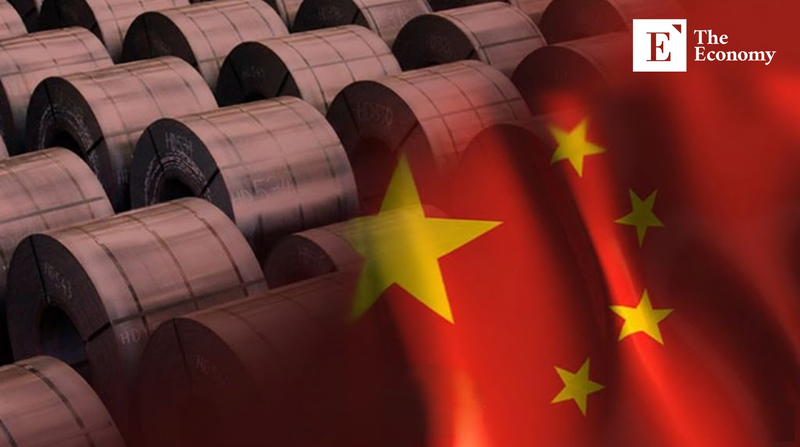
China’s state-owned China Mineral Resources Group (CMRG) is emerging as a ‘super buyer’ reshaping the global raw materials market. Leveraging China’s dominance as the world’s largest consumer of iron ore, CMRG has begun to push buyer power to the forefront, demanding unprecedented price cuts from major Australian and Brazilian mining companies and effectively reconfiguring the structure of transactions themselves. China has already established a track record in semiconductor equipment and advanced chip markets, where it entered supply chains by exploiting massive demand, then expanded control through technology accumulation and internalization. Analysts say a similar pattern is now being replicated in the iron ore market.
“CMRG Is the Single Greatest Risk Factor in the Iron Ore Market”
On the 14th (local time), the Financial Times (FT) reported that CMRG is seizing the initiative in iron ore price negotiations by capitalizing on China’s status as the world’s largest commodities consumer, exerting intense pressure on global mining companies. CMRG is an iron ore trading company established in 2022 with the explicit purpose of unifying China’s iron ore import channels into a de facto joint purchasing system. Its core mandate is to aggregate demand from Chinese steelmakers to enhance bargaining power, while mitigating price spikes through diversified import sources and state-led stockpiling and inventory management.
Despite consuming 70% of the world’s iron ore, China has long expressed dissatisfaction with its heavy dependence on Australian and Brazilian miners and the extreme volatility of prices. In response, the Chinese government and the China Iron and Steel Association (CISA) in 2021 designated iron ore as a strategic security resource and pushed for expanded overseas mine investments, increased domestic production, greater use of scrap, and the establishment of a centralized purchasing body. Founded under this framework, CMRG now controls roughly half of China’s annual iron ore imports, positioning itself as the country’s largest trader and a dominant intermediary in the market.
These shifts are being perceived as a growing threat by the global mining industry. Dino Otranto, CEO of Australia’s Fortescue, the world’s fourth-largest iron ore producer, told the FT that “the single greatest risk factor in the global iron ore market right now is CMRG,” adding that “with supply expanding and demand weakening, negotiating leverage has shifted to buyers.” He further noted that “this is the optimal moment for buyer groups to demonstrate their power.” Major miners including Australia’s BHP and Brazil’s Vale are reportedly engaged in protracted negotiations with CMRG over this year’s sales contracts. According to industry sources, CMRG is demanding price cuts of up to 20% year-on-year, an unprecedented level.
Iron Ore Price Standoff Triggers Sharp Drop in Australian Mineral Exports
CMRG’s core tactic is a segmented negotiation strategy designed to pit suppliers against one another. By consolidating import channels that were previously handled by individual steel mills, CMRG has strengthened its bargaining position through a divide-and-conquer approach against giants such as BHP and Vale. Kan Fecker, an analyst at Royal Bank of Canada (RBC), observed that “CMRG is selectively targeting mining companies and encouraging competition among them as part of its strategy.” In practice, CMRG recently suspended purchases of certain Australian products, a move widely interpreted as an effort to pressure suppliers and discipline them to gain the upper hand in price talks.
China’s grip on negotiation leverage is already producing visible economic repercussions in Australia. According to the Australian Bureau of Statistics, the country’s exports fell 3% month-on-month last month, with metal and mineral exports plunging 9%. Ashwin Clarke, chief economist at Commonwealth Bank, attributed the decline to “reduced export volumes stemming from the pricing dispute between BHP and CMRG.” Australian Prime Minister Anthony Albanese voiced concern, stating that “we hope Australian iron ore can be exported to China without obstruction,” but Canberra has struggled to identify a clear solution in the face of China’s resource weaponization strategy.
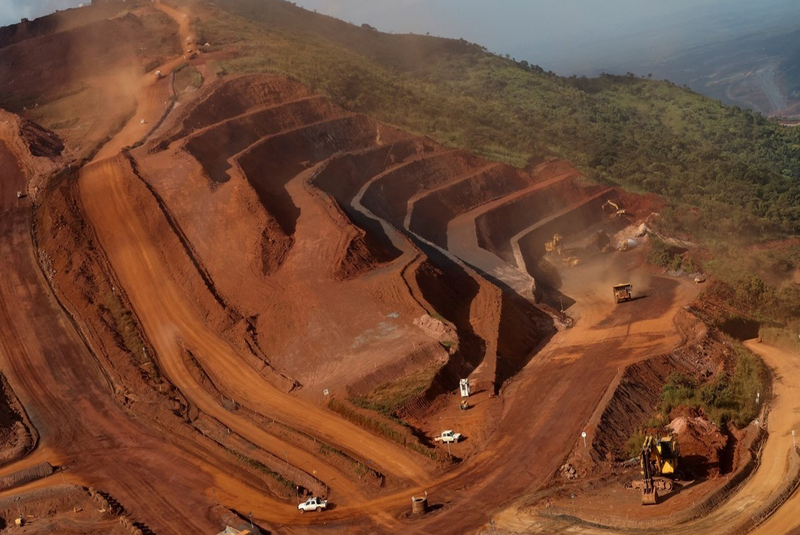
China’s ability to sustain such a hardline stance is underpinned by the Simandou mine. Located in Guinea, the Simandou project is expected to supply approximately 7% of global iron ore output from 2028 onward. The ore is particularly high-grade, with iron content exceeding 65%, making it well suited to reducing carbon emissions in steel production amid tightening environmental regulations. With Chinese entities holding more than 70% of the project’s equity, China will be able to influence market prices through direct production rather than relying on costly imports from foreign suppliers.
Market participants see the full-scale launch of Simandou as a pivotal moment that could reshape iron ore pricing structures. While prices currently hover around $100 per ton, forecasts suggest they could fall to around $85 per ton once Simandou volumes enter the market. Experts note that “China is simultaneously deploying two levers—centralized purchasing through CMRG and a new supply source in Simandou—to alter the balance of the global iron ore market,” adding that “by 2028, leadership in the iron ore market is likely to shift decisively from suppliers to the buyer, China.”
Securing Control in the Semiconductor Equipment Market Through Technology Internalization
China’s conduct in the iron ore market does not represent a novel phenomenon. In the past, China has repeatedly leveraged massive purchasing power to establish itself as a super buyer and then absorbed control over supply chains. A prime example is the semiconductor equipment industry. As China pursued its semiconductor self-sufficiency drive through large-scale capital expenditure, it emerged as a core revenue market and strategic hub for global equipment suppliers, including the Netherlands-based ASML. Before the United States and the Netherlands imposed export controls on China, Beijing used its buyer status to forge close relationships with equipment vendors and expand access to advanced technologies.
Over time, however, this dynamic eroded suppliers’ negotiating leverage. The technology leakage incident involving ASML’s China subsidiary underscored the risks global equipment makers face as dependence on the Chinese market deepens. Industry observers believe that even if China cannot immediately replace cutting-edge equipment, it is highly likely to pursue medium- to long-term localization based on operational experience and accumulated technical knowledge gained through purchases. This reflects a classic pattern in which China enters markets as a super buyer and gradually absorbs the control once held by incumbent suppliers.
The same trajectory is now unfolding in the artificial intelligence semiconductor market. Although the Donald Trump administration recently allowed exports of Nvidia’s AI chip H200 to China, Beijing has introduced internal guidelines that effectively restrict imports. Chinese authorities have stated that purchases of the H200 will be permitted only for specific needs such as university research institutes, while leaving the criteria deliberately vague, signaling de facto import controls. This approach preserves policy flexibility in response to shifts in U.S.-China relations while preemptively curbing excessive reliance on foreign advanced chips.
China’s strategy prioritizes long-term industrial leadership over short-term gains. Rather than expanding imports of Nvidia chips, Beijing is placing strategic emphasis on nurturing its domestic AI chip ecosystem led by companies such as Huawei and Cambricon. Semiconductor industry insiders point out that China is using the “option not to buy” itself as a bargaining chip against Nvidia, whose revenue exposure to the Chinese market remains significant. For global suppliers, the prospect of losing access to China exerts substantial pressure, while China, having already advanced considerably in technology absorption and internalization, is entering a phase where reducing or restricting purchases may prove strategically advantageous.
Oliver Griffin is a policy and tech reporter at The Economy, focusing on the intersection of artificial intelligence, government regulation, and macroeconomic strategy. Based in Dublin, Oliver has reported extensively on European Union policy shifts and their ripple effects across global markets. Prior to joining The Economy, he covered technology policy for an international think tank, producing research cited by major institutions, including the OECD and IMF. Oliver studied political economy at Trinity College Dublin and later completed a master’s in data journalism at Columbia University. His reporting blends field interviews with rigorous statistical analysis, offering readers a nuanced understanding of how policy decisions shape industries and everyday lives. Beyond his newsroom work, Oliver contributes op-eds on ethics in AI and has been a guest commentator on BBC World and CNBC Europe.
Similar Post