Trump keeps tariffs but opens the door to factories: the calculus behind “Chinese cars made in America”

Niamh O’Sullivan is an Irish editor at The Economy, covering global policy and institutional reform. She studied sociology and European studies at Trinity College Dublin, and brings experience in translating academic and policy content for wider audiences. Her editorial work supports multilingual accessibility and contextual reporting.
Authored On
Modified
Potential competitive pressure on global automakers rises
Safety concerns point to limited demand
Vietnam’s VinFast failure resurfaces as a cautionary case
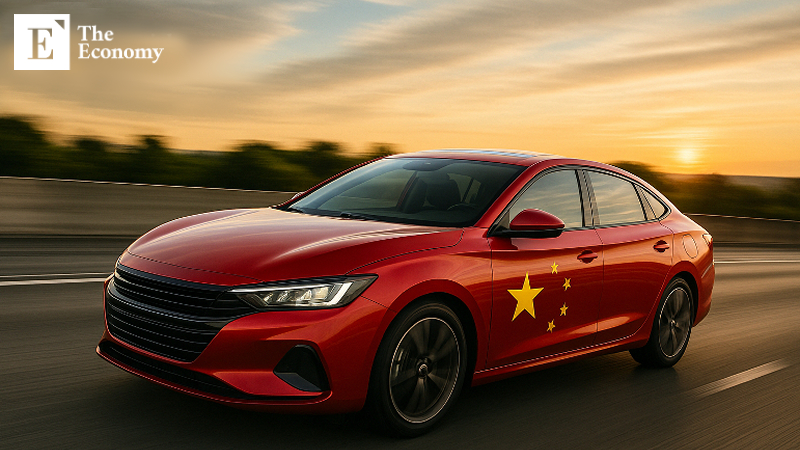
U.S. President Donald Trump has indicated that Chinese automakers could be allowed to enter the U.S. market provided they commit to domestic production and job creation, shifting attention toward the possibility of local manufacturing. The remarks—maintaining tariff barriers while leaving an indirect pathway open—are widely interpreted as a message aimed at simultaneously protecting U.S. manufacturing and expanding employment. The shift has drawn renewed scrutiny of China’s export-dependent auto industry, as well as past cases in which Asian automakers faltered in the U.S. market over safety and quality issues.
Geely, BYD seen accelerating U.S. entry
According to the Wall Street Journal on the 18th (local time), Trump visited Michigan on the 13th ahead of the Detroit Auto Show and said, “The United States is open to foreign automakers building factories here,” adding that “China will not be blocked from entering the market if it builds plants here and hires American workers.” The statement runs parallel to his existing stance of maintaining 100% tariffs on Chinese-built vehicles, reflecting a pragmatic approach that preserves import restrictions while pursuing the political goal of manufacturing job creation.
For Chinese automakers—many of which, including Geely, had already been exploring U.S. entry—the remarks present a clear trade-off: a pathway to avoid tariffs, paired with the burden of substantial upfront investment. Earlier this month at CES 2026 in Las Vegas, Geely Automobile Group CEO Jerry Gan said the company would “seek to expand production in the United States within the next 26 to 34 months.” He explained that the plan could involve leveraging Volvo’s South Carolina plant or sharing production lines with Polestar to bring China-made vehicles produced in the U.S. to market in the near term.
BYD, the world’s top electric vehicle maker, is also closely watching the U.S. market. After capturing a 72% market share across parts of South America, including Brazil, in the second half of last year, BYD had been weighing a strategy to bypass the 100% tariff on Chinese vehicles through production in Mexico. Now, however, the company is said to be actively reviewing the option of manufacturing directly in the United States. Battery giant CATL is likewise considered likely to expand into North America. The WSJ noted that “U.S. EV makers competing with internal combustion vehicles on price may conclude that importing or partnering with CATL batteries is unavoidable.”
Japan’s auto industry has also been put on alert. Japanese automakers had structured their North American strategies on the assumption that Chinese EVs would be effectively blocked by tariffs from entering the U.S. market. If a “local production” workaround becomes viable, however, price-competitive Chinese EVs could emerge as direct rivals. Nikkei Asia observed that Trump’s call for China to “build cars in America” could disrupt existing market dynamics, adding that the implications extend not only to Japan but also to South Korean automakers that have built integrated production networks across the United States and Mexico.
As a result, South Korea’s automakers and battery companies are also viewing the situation with caution. If Chinese EVs gain U.S. market access under the banner of domestic production, defending market share will become more complex for established players such as Hyundai Motor. Concerns are further amplified by speculation that Chinese manufacturers could equip locally produced vehicles with lithium iron phosphate batteries sourced from China, potentially affecting South Korea’s three major battery makers—LG Energy Solution, SK On, and Samsung SDI—which have positioned the U.S. as a key growth market.
A contest decided by consumers
China’s auto industry is grappling with severe overcapacity. Annual production capacity is estimated at around 55 million vehicles, roughly 1.8 times projected demand. The export-push strategy long employed by Chinese authorities and manufacturers has run into resistance as major markets erect higher trade barriers. The European Union imposed tariffs of up to 43.5% on Chinese vehicles at the end of 2024, while the United States applied a 100% tariff. Against this backdrop, China has little choice but to press for easing trade restrictions in core markets, including the U.S.
Analysts argue that this industrial reality underpins Trump’s conditional openness to local production. Washington’s calculation appears less rooted in confidence about the sales power of Chinese vehicles than in the belief that, even with lower barriers, the final outcome will be determined by consumer choice. Joe McCabe, CEO of AutoForecast Solutions, said, “It’s only a matter of time before Chinese companies enter the U.S. market. If products with strong quality and price competitiveness are offered, consumers will respond to value rather than national origin.”
At the same time, long-standing concerns about safety—often cited as a weakness of Chinese vehicles—have resurfaced. Critics argue that even with competitive pricing, Chinese brands will struggle to win consumer trust without robust performance in crash safety and driver-assistance systems. In the European New Car Assessment Programme (Euro NCAP), known for its stringent standards, four Chinese models—the Geely EX5, BYD Sealion 7, Hongqi E-HS9, and Zeekr 7 PHEV—earned the top five-star rating, but detailed assessments revealed multiple shortcomings.
The EX5 failed to meet Euro NCAP requirements for child presence detection, and welds near the lower A-pillar were found to detach. The E-HS9 showed cracking in the driver’s airbag, while frontal crash tests indicated weak head protection. The 7 PHEV was found to have side curtain airbags trapped in the C-pillar trim during frontal impact tests, impairing deployment. Zeekr said the issue stemmed from improper airbag fastening during production and pledged immediate improvements.
Similar issues were identified in South Korea. In the Korea New Car Assessment Program (KNCAP) conducted by the Korea Transportation Safety Authority, BYD’s Atto 3 received an overall four-star rating. While it scored relatively well in pedestrian-detecting automatic emergency braking and blind-spot monitoring, its rear cross-traffic collision avoidance system earned only five out of ten points, highlighting weaknesses across advanced driver-assistance systems. These findings have reinforced expectations that even partial easing of tariff barriers may not translate into strong U.S. demand for Chinese vehicles.
High risk of an early misstep
Among Asian automakers, Vietnam’s VinFast stands out as a cautionary example of how rapid entry into the U.S. market can backfire. VinFast drew intense attention after listing on the Nasdaq in August 2023, briefly reaching a market capitalization of around 140 billion dollars and earning the nickname “Vietnam’s Tesla.” Investor enthusiasm was fueled by ambitions for swift U.S. market penetration, but the company quickly ran up against market realities, triggering a sharp stock decline.
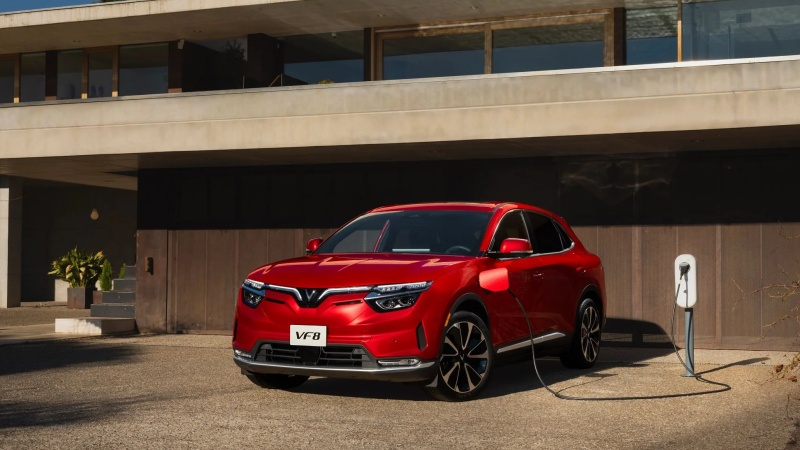
With minimal brand recognition, VinFast attempted to establish a premium image by launching relatively expensive electric SUVs such as the VF8 and VF9 in the U.S. Software glitches, charging failures, and performance issues surfaced immediately, drawing harsh reviews from automotive media and consumers alike. Most sales were concentrated within Vietnamese expatriate communities, with very limited deliveries to mainstream buyers, undermining the initial strategy of building trust through rapid market expansion.
Whistleblower allegations compounded the damage. An engineer at Tata Technologies, a VinFast partner who worked on chassis engineering for the VF6, VF7, VF8, and VF9, claimed that design flaws in suspension and chassis components could lead to serious control failures. He warned that loosely connected front struts and knuckles could cause wheels to detach while driving, alleging that VinFast concealed the issues to meet launch schedules.
Amid mounting controversy, VinFast effectively scaled back its U.S. strategy. Models such as the VF8 were fully recalled, and 38 company-operated retail stores across 16 states were closed. The company shifted its focus to Asia, designating Southeast Asia and India as core growth markets where brand recognition is relatively stronger. VinFast is currently building an assembly plant in Tamil Nadu, India, scheduled to begin operations in June this year.
Niamh O’Sullivan is an Irish editor at The Economy, covering global policy and institutional reform. She studied sociology and European studies at Trinity College Dublin, and brings experience in translating academic and policy content for wider audiences. Her editorial work supports multilingual accessibility and contextual reporting.
Similar Post