Final Push to ‘Capture the Fed’ Amid Pressure on Chair Powell, Rate Cuts Enter Clear View

Siobhán Delaney is a Dublin-based writer for The Economy, focusing on culture, education, and international affairs. With a background in media and communication from University College Dublin, she contributes to cross-regional coverage and translation-based commentary. Her work emphasizes clarity and balance, especially in contexts shaped by cultural difference and policy translation.
Authored On
Modified
Fed Independence as a Global Collective Defense Line
Markets Focus on Next Fed Chair Appointment
Pro-Trump Dove Kevin Warsh Emerges as Front-Runner
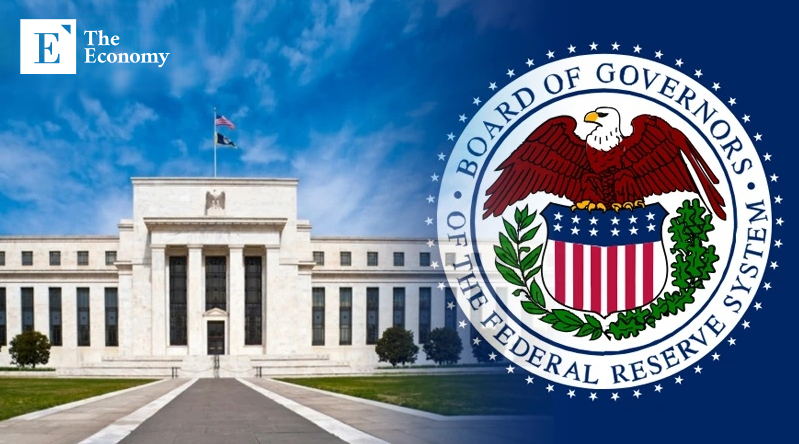
As controversy surrounding the criminal investigation of U.S. Federal Reserve Chair Jerome Powell escalates into broader concerns over the erosion of the Fed’s independence, criticism has been mounting both inside and outside the United States. What began as a monetary policy dispute has been elevated into the realm of institutional confrontation, heightening market unease. Still, markets increasingly view the turmoil as temporary, given that Powell’s term is nearing its end. Global financial markets have already priced in the Donald Trump administration’s rate-cutting stance, and sentiment is growing that the true inflection point in U.S. monetary policy will align with the appointment of the next Fed chair.
Republicans, Wall Street, and Global Central Banks Speak in Unison: “Defend Fed Independence”
According to the Financial Times (FT) on the 18th (local time), some Republican lawmakers and figures across global finance have stepped forward to defend Powell, emphasizing the need to safeguard the Federal Reserve’s independence. The clash between the federal government and the central bank leadership was triggered when Powell publicly disclosed and sharply criticized what he described as criminal prosecution efforts by the Trump administration directed at him.
In a video released on the 11th, Powell stated, “On the 9th, I received a grand jury subpoena and threats of criminal indictment from the Department of Justice related to my congressional testimony last June regarding the renovation of the Fed’s headquarters.” This indicated that an investigation had been launched into the costs associated with refurbishing the central bank’s building.
The renovation issue has long served as a focal point for President Trump’s attacks on Powell. In July last year, Trump made an unprecedented visit—while serving as president—to the renovation site of the Fed headquarters in Washington, DC. At the time, Trump remarked, “It looks like the budget is around $3.1 billion. It went up a little—actually, it went up a lot,” pointing out that costs had risen from $2.7 billion to $3.1 billion. A Department of Justice spokesperson later said Attorney General Pam Bondi had instructed prosecutors to prioritize investigations into any misuse of taxpayer funds.
Powell, however, argued that the renovation costs were merely a pretext and that the real motive was retaliation and pressure stemming from his resistance to Trump’s calls for rate cuts. “This unprecedented action must be viewed in the context of threats and sustained pressure from the administration,” Powell said, adding, “This is a pretext.” He further asserted that the threat of criminal prosecution arose precisely because the Fed had set interest rates based on what it judged to be in the public interest rather than the president’s preferences.
Following Powell’s remarks, Wall Street and central banks around the world issued statements in support of the Fed. JPMorgan Chase CEO Jamie Dimon warned that undermining Fed independence would backfire by driving up inflation expectations and pushing interest rates higher. European Central Bank President Christine Lagarde, along with central bank governors from the UK, Canada, Australia, South Korea, and a total of ten countries, issued a joint statement declaring that “central bank independence is the cornerstone of price stability, financial stability, and economic stability.” Former Fed chairs Janet Yellen, Ben Bernanke, and Alan Greenspan, along with former Treasury secretaries and White House Council of Economic Advisers chairs, also released a statement criticizing the situation as “a model of monetary policymaking seen in institutionally fragile emerging markets” and warning that such actions have no place in the United States, where the rule of law underpins economic success.
Political backlash has intensified as well. Senator Thom Tillis (Republican, North Carolina) of the Senate Banking Committee said, “President Trump’s advisers are deliberately trying to weaken the Fed’s independence,” and stressed that he would not cooperate with the confirmation of any Fed chair nominee put forward by Trump until the Justice Department investigation is resolved. Senator John Kennedy (Louisiana) said, “Litigation between the Fed and the U.S. government will raise rates, not lower them,” calling it “about as unnecessary as drilling a hole in your head.” Senator Lisa Murkowski (Alaska) urged Congress to investigate whether the administration was attempting to force deeper rate cuts, while Senate Minority Leader John Thune (South Dakota) emphasized that any investigation into Powell must be substantive and serious, adding that the issue must be resolved quickly to ensure the Fed’s independence remains intact without political interference.
Kevin Warsh Surges in Prediction Markets
Even so, some market participants argue that Powell’s tenure is already effectively in its wind-down phase. From this perspective, the current episode is seen less as personal pressure on Powell and more as a signal aimed at shaping the next Fed regime. Powell’s term runs through May, giving President Trump the ability to nominate a successor in the near term. Some financial executives suggest the investigation could be intended to imprint political expectations on the next chair. One financial firm CEO remarked, “Trump is not fighting the last battle—he’s preparing for the next phase.”
Indeed, as the contours of the succession race become clearer, market attention is shifting accordingly. According to CNBC, political betting platform Kalshi now shows former Fed Governor Kevin Warsh as the clear front-runner to become the next Fed chair. Kevin Hassett, director of the White House National Economic Council (NEC) and previously considered the strongest contender, has fallen behind.
Warsh’s rise past Hassett followed remarks by President Trump. On the morning of the 16th, Trump said, “Hassett will remain my economic adviser,” effectively ruling him out of contention without explicitly naming a preferred successor. Trump added that he prefers Hassett to stay on as his top economic adviser.
During a White House speech later that day, Trump said, “I see Kevin [Hassett] in the audience, and I want to say thank you.” He added, “You were fantastic on TV today,” and continued, “If you want the truth, my instinct is that you stay exactly where you are.” Turning to White House Chief of Staff Susie Wiles, Trump said, “We don’t want to lose him, Susie, but we’ll see how it goes.”
Following these remarks, Hassett’s odds on Kalshi plunged to 14%, while Warsh’s surged to 59%. Another leading contender, Fed Governor Christopher Waller, rose to 18%, overtaking Hassett. As recently as the 14th, Warsh and Hassett had been neck and neck on Kalshi, but by the 16th the contest had effectively ended in Warsh’s favor. A similar pattern emerged on Polymarket, where Warsh led with a 58% probability versus Hassett’s 11%, while Waller stood at 16%.
‘Trump Bloc’ Consolidation of the Board Seen as Inevitable, Rate-Cut Odds Rise
As the succession picture sharpens, markets are increasingly treating the prospect of aggressive rate cuts this year as a foregone conclusion. The next Fed chair nominated by Trump is likely to fill the seat of Governor Steven Myron, whose term expires on the 31st. This would allow Trump to have his chosen chair participate in policy meetings as early as March and April, ahead of the official start of the new term in mid-May. With Powell’s term ending in May, there are three remaining Federal Open Market Committee (FOMC) meetings—January, March, and April.
Warsh, the strongest candidate, was also a leading contender alongside Powell during Trump’s first-term Fed chair selection and was later mentioned as a potential Treasury secretary under Trump’s second administration. Although he once displayed hawkish tendencies, Warsh is widely regarded as a dove favoring monetary easing and rate cuts.
At the same time, the Trump administration’s efforts to secure a numerical advantage on the seven-member Fed Board are nearing completion. In August last year, after Democratic-leaning Governor Adriana Kugler resigned, Trump promptly nominated Steven Myron, then chair of the Council of Economic Advisers (CEA), to fill the vacancy. Myron is widely described as Trump’s economic mentor and strategist. With Myron joining Michelle Bowman and Christopher Waller—both Trump appointees from his first term—the number of pro-Trump governors has risen to three. Bowman and Waller have openly supported preemptive rate cuts since July last year, while Myron called for a “big cut” of at least 0.5 percentage points at his first FOMC meeting in September. All three emphasize growth and employment over inflation.
Trump has also taken the unprecedented step of moving to remove a sitting Fed governor. In late August last year, he abruptly notified Governor Lisa Cook of her dismissal, citing allegations of past mortgage fraud. Cook challenged the move in court and retained her position through two lower-court rulings, but on November 18 Trump petitioned the Supreme Court to allow her removal. If the conservative-leaning Supreme Court sides with Trump, he would secure a majority of four seats on the Fed Board. Combined with Powell’s early departure and Warsh’s appointment as chair, this would effectively place the Fed under the control of the Trump bloc.
The importance of numerical dominance within the Fed is clear. With a majority, pro-Trump figures could exert indirect influence over the appointment of regional Federal Reserve Bank presidents, who are nominated by boards and approved by the Fed. These presidents are subject to review every five years, with the next review cycle scheduled for February this year. Moreover, Trump’s ambitions extend beyond rate cuts. The Fed controls quantitative easing and tightening through balance sheet policy, sets capital and lending regulations for financial institutions, and can increase liquidity by lowering the interest rate on reserves (IORB) paid to banks. It also has the authority to deploy special lending facilities to support specific industries or regions. This opens the possibility of channeling support to Trump-friendly areas such as the Rust Belt or agricultural cities, shaping an economic environment favorable to electoral outcomes.
Siobhán Delaney is a Dublin-based writer for The Economy, focusing on culture, education, and international affairs. With a background in media and communication from University College Dublin, she contributes to cross-regional coverage and translation-based commentary. Her work emphasizes clarity and balance, especially in contexts shaped by cultural difference and policy translation.
Similar Post