[China Semiconductors] China’s Grip on Legacy Chips, Korea’s Paradox of Ceding the Base While Chasing the Frontier

Oliver Griffin is a policy and tech reporter at The Economy, focusing on the intersection of artificial intelligence, government regulation, and macroeconomic strategy. Based in Dublin, Oliver has reported extensively on European Union policy shifts and their ripple effects across global markets. Prior to joining The Economy, he covered technology policy for an international think tank, producing research cited by major institutions, including the OECD and IMF. Oliver studied political economy at Trinity College Dublin and later completed a master’s in data journalism at Columbia University. His reporting blends field interviews with rigorous statistical analysis, offering readers a nuanced understanding of how policy decisions shape industries and everyday lives. Beyond his newsroom work, Oliver contributes op-eds on ethics in AI and has been a guest commentator on BBC World and CNBC Europe.
Authored On
Modified
TSMC, Samsung Electronics scale back 8-inch lines to focus on advanced nodes
Chinese foundries expand “control” by securing volume and pricing power
Korea’s semiconductor crisis as AI chip race costs it the legacy market
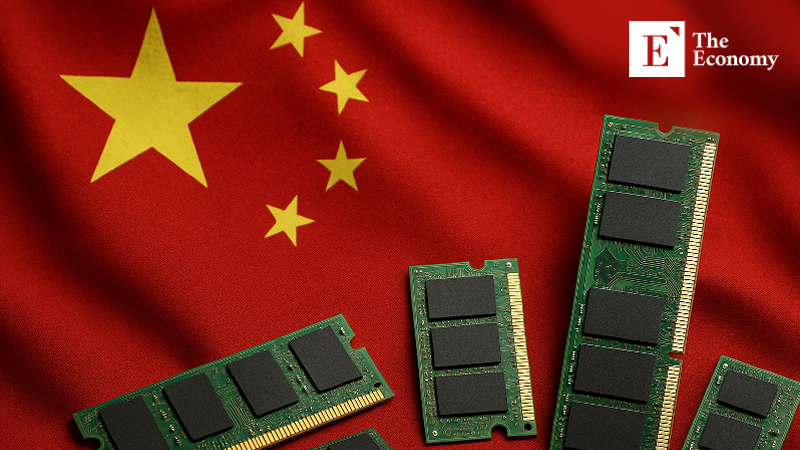
As global foundry leaders such as TSMC and Samsung Electronics concentrate resources on advanced process nodes and progressively scale back legacy production lines, including 8-inch (200mm) wafers, China has rapidly moved to fill the void, simultaneously securing volume and pricing power. As a result, leadership in the legacy semiconductor market is increasingly shifting toward China. Industry observers point out that, in the race to catch up with global leader TSMC, Korea’s strategy of prioritizing AI-driven advanced nodes has paradoxically led to ceding the legacy chip market to China, exposing a structural dilemma for the Korean semiconductor industry.
Surging demand for 8-inch processes, prices up 5–20%
According to industry sources on the 19th, TSMC has reportedly informed customers that it will shut down 6-inch (150mm) and 8-inch production lines starting next year. Samsung Electronics is also understood to be planning a phased reduction of certain 8-inch production lines. Market research firm TrendForce estimates that, following the decision by TSMC and Samsung Electronics to gradually cut back 8-inch wafer production lines, global 8-inch wafer output this year will decline by approximately 2.4% year-on-year.
These decisions are widely interpreted as moves to concentrate resources on higher-margin advanced processes. During an earnings conference call on the 15th, TSMC announced it would invest between $52 billion and $56 billion in capital expenditures this year to meet AI-driven demand, a figure exceeding market expectations by more than 20%. It also raised its projected compound annual revenue growth rate through 2029 to 20–25%. Samsung Electronics is likewise accelerating its focus on sub-3-nanometer processes as it ramps up orders from global big tech clients.
While 8-inch processes yield fewer chips per wafer than the mainstream 12-inch (300mm) processes, they are well suited for high-mix, low-volume production and remain the core domain of mid-sized and smaller foundries. Power semiconductors used in home appliances, automobiles, and data centers are predominantly manufactured using 8-inch processes. With the rapid expansion of the AI industry driving higher chip content per device and increasing demand for power management, utilization rates at producers have remained elevated.
As supply from the top two foundries, TSMC and Samsung Electronics, declines amid surging demand, the market is projecting price increases of 5–20% this year for legacy processes, including 8-inch wafers. TrendForce noted that “many foundries are currently reviewing price hikes for mature processes,” while adding that “actual increases may be limited, given uncertainty in end-demand markets and cost pressures stemming from rising memory and advanced process prices.”
China weaponizes the legacy semiconductor supply chain
Against this backdrop, industry participants expect many Chinese firms capable of supporting 8-inch demand to reap significant windfall gains. In China, SMIC, Hua Hong Semiconductor, and CR Microelectronics currently provide such processes. SMIC has already raised 8-inch process prices by around 10% in response to a flood of orders, while Hua Hong Semiconductor has reportedly seen utilization rates at some 8-inch production lines approach 100% as manufacturing demand from automotive chip leaders such as Infineon and ON Semiconductor concentrates.
China’s accelerated expansion of legacy semiconductor production capacity is rooted in escalating U.S.–China tensions. U.S. restrictions have effectively blocked China’s access to extreme ultraviolet (EUV) lithography equipment from Dutch firm ASML, closing off entry into cutting-edge processes below 7 nanometers. In response, China has revised its strategy, channeling massive state subsidies into mature nodes of 28 nanometers and above. According to TrendForce, China’s share of the global legacy semiconductor market is projected to approach 40% by 2027. In the 28-nanometer segment, market share is expected to exceed 32% by 2028.
Experts warn that China’s legacy semiconductor strategy goes beyond a simple contest for market share and could evolve into a structural risk capable of destabilizing the global supply chain itself. Chris Miller, author of Chip War, said in a recent interview with Nikkei that “the legacy semiconductor market is now facing a threat more severe than past rare-earth disputes.” While the world focuses on AI and sub-3-nanometer competition, China is rapidly consolidating control over legacy chips that are core components in automobiles, appliances, and industrial equipment, effectively turning them into strategic leverage.
These concerns have already materialized in practice. The Nexperia case stands as a prominent example. Although Nexperia is headquartered in the Netherlands, it is owned by China’s Wingtech. When the Dutch government attempted to intervene in its management last October on national security grounds, China responded swiftly by restricting exports of certain semiconductors produced at Chinese plants that account for roughly 80% of Nexperia’s total output. As a result, European automakers, including Volkswagen, faced the worst-case scenario of factory shutdowns.
DB HiTek shows strength, but limits to market power
Within Korea’s semiconductor industry, DB HiTek, which specializes in 8-inch wafers, is seen as benefiting in the short term from supply reductions by large foundries. As 8-inch volumes shift toward mid-sized players, DB HiTek has seen improvements in both factory utilization rates and pricing leverage, alongside earnings gains driven by rising demand for power semiconductors.
However, there is skepticism over whether these gains translate into a fundamental strengthening of competitiveness. While DB HiTek has secured a stable profit model in 8-inch processes, clear limits remain on large-scale capacity expansion and market dominance. As such, DB HiTek’s performance is widely viewed as insufficient to signal stability for Korea’s broader semiconductor industry. The more pressing concern lies in the entrenchment of a structure in which, amid an inability to close the gap with the global leader in advanced nodes, even legacy processes increasingly rely on the competitiveness of a handful of firms. As China’s volume-driven offensive in legacy semiconductors translates into pricing power, Korea’s semiconductor industry is entering a phase where both cost structures and profitability face simultaneous pressure. One industry source warned that “if Korea’s foundry sector fails in its strategy of selective focus, it will struggle to secure clear leadership in any domain.”
These repercussions are already spreading across Korea’s AI semiconductor ecosystem. Chinese firms are bundling ultra-low-cost components for products such as solid-state drive (SSD) controllers, AI accelerators, and on-device AI system-on-chips (SoCs), placing domestic fabless companies at a disadvantage in both price competitiveness and supply stability. In AI semiconductors in particular, overall system performance hinges not only on high-performance compute chips but also on the stable integration of surrounding components. If these peripheral chips are increasingly supplied by ultra-cheap Chinese products, concerns are mounting that finished-product strategies built around Korean chips will steadily lose their footing.
Oliver Griffin is a policy and tech reporter at The Economy, focusing on the intersection of artificial intelligence, government regulation, and macroeconomic strategy. Based in Dublin, Oliver has reported extensively on European Union policy shifts and their ripple effects across global markets. Prior to joining The Economy, he covered technology policy for an international think tank, producing research cited by major institutions, including the OECD and IMF. Oliver studied political economy at Trinity College Dublin and later completed a master’s in data journalism at Columbia University. His reporting blends field interviews with rigorous statistical analysis, offering readers a nuanced understanding of how policy decisions shape industries and everyday lives. Beyond his newsroom work, Oliver contributes op-eds on ethics in AI and has been a guest commentator on BBC World and CNBC Europe.
Similar Post